


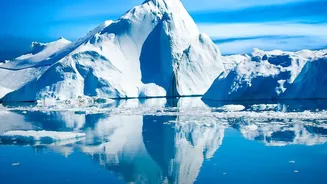
A Million Square Kilometres Missing
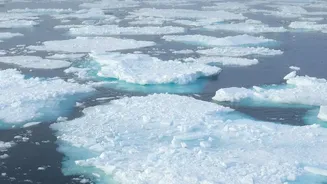
Scientists at the US National Snow and Ice Data Center (NSIDC) have confirmed the sobering numbers. On September 14, 2026, Antarctic sea ice reached its maximum winter extent of 17.59 million square kilometres. While that sounds immense, it is approximately
one million square kilometres below the long-term average—an area roughly twice the size of Spain has failed to freeze. This makes 2026 the third-lowest winter maximum since satellite records started in 1979. More alarmingly, this continues a worrying trend: the four lowest winter ice peaks on record have all occurred in the last four years. This recent pattern of record-lows, both in winter and summer, is causing scientists to question if the Antarctic system is undergoing a fundamental change.
A Sudden and Worrying Shift
For decades, Antarctica’s sea ice behaved differently from its Arctic counterpart. While the Arctic has been in a state of steady decline, Antarctic sea ice was relatively stable and even saw periods of slight expansion until around 2015. This complexity made it a puzzle for climate scientists. However, the system seems to have flipped. Since 2016, the continent has experienced a sharp and persistent decline, with record lows becoming the new norm. Scientists are now concerned that this isn't just natural variability at play. Dr. Walt Meier, a senior scientist at the NSIDC, noted that having the four lowest maximums in the last four years is a “very clear indication of a system that has changed.” This rapid reversal has researchers scrambling to understand the forces now at play at the bottom of the world.
What's Causing the Decline?
There isn't one simple answer, but rather a combination of powerful forces. A leading theory is that warmer ocean water, which has been building up in the deeper layers of the Southern Ocean for decades, is now being mixed up to the surface. Stronger winds, potentially intensified by climate change, are helping to pull this warmer water upwards, where it melts ice from below and makes it harder for new ice to form. Natural climate patterns like El Niño are also thought to contribute by altering atmospheric circulation. This year, for instance, changes in winds led to unusual patterns, with some areas like the Amundsen Sea seeing significant ice loss late in the growth season. This combination of warmer water and shifting winds has created a feedback loop that appears to be locking Antarctica into a new, low-ice state.
Why a Frozen Continent Matters to India
What happens in Antarctica does not stay in Antarctica. The continent acts as a colossal regulator for the planet's climate. While the melting of floating sea ice doesn't directly raise ocean levels, its absence has a dangerous knock-on effect. Sea ice acts as a protective buffer for the massive land-based ice sheets and glaciers that fringe the continent. Without it, these glaciers are more exposed to erosion from ocean waves and warming, accelerating their slide into the sea. The Antarctic Ice Sheet holds enough water to raise global sea levels by nearly 60 meters, and its melting is already speeding up. For a country like India with a 7,500-kilometre coastline and numerous low-lying cities, this is a direct and long-term threat. Furthermore, the temperature balance between the poles and the tropics is a key driver of global ocean and atmospheric currents that influence weather systems like the Indian monsoon. A rapidly changing Antarctic could have unpredictable effects on these vital weather patterns.
Is This the New Normal?
The scientific community is increasingly concerned that Antarctica may have crossed a critical threshold, or tipping point. After years of record lows, experts are cautious about predicting a quick return to previous levels. The persistence of the decline suggests a fundamental shift rather than a temporary blip. The concern is that the continent is changing from a buffer against global warming—reflecting sunlight with its vast white surface—to an amplifier of it. As dark ocean water is exposed, it absorbs more heat, which in turn melts more ice. This cycle is difficult to reverse. While scientists continue to gather more data to understand if this is truly a permanent structural shift, the repeated records are a stark warning sign from one of Earth’s most important and sensitive regions.