





A Planet of Drastic Extremes
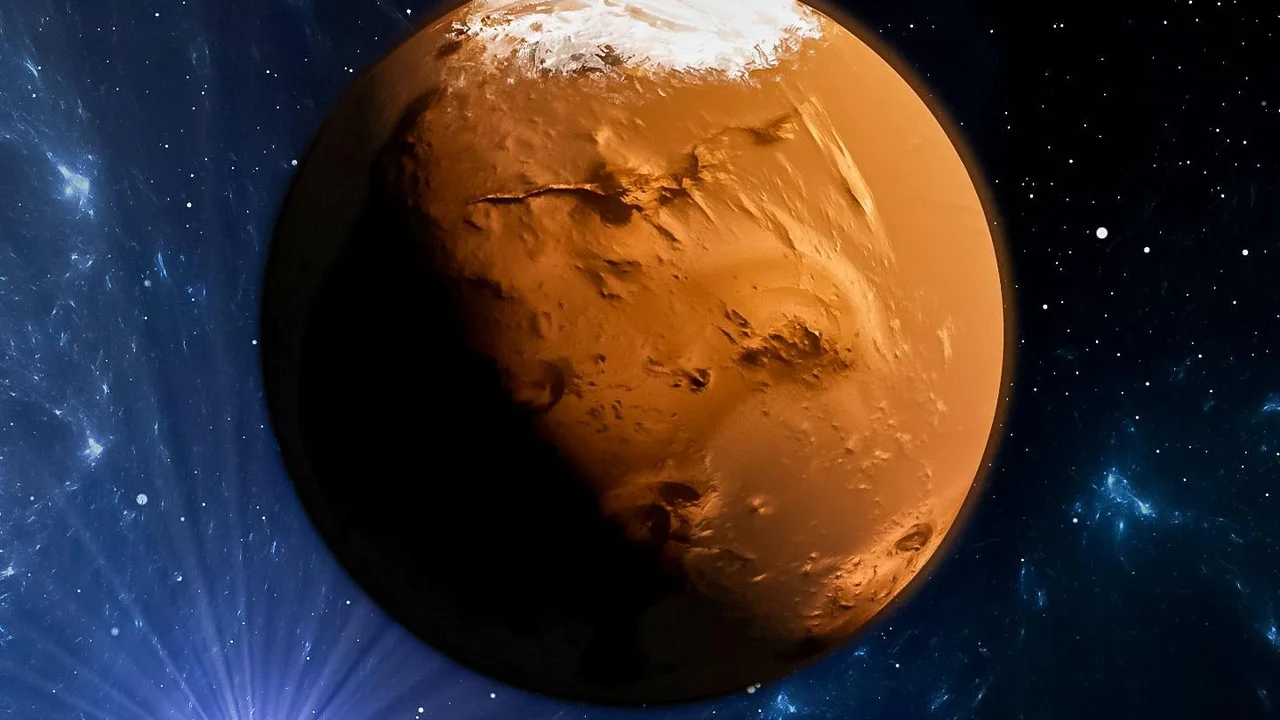
Mars is a world of dramatic contrasts. While its average temperature is a frigid -63°C, this figure doesn't tell the whole story. Near the equator during a summer day, temperatures can reach a comfortable 20°C, similar to a spring afternoon on Earth.
But as night falls, the warmth vanishes almost instantly, with temperatures plunging to around -73°C. Near the poles in winter, it gets even more extreme, dropping as low as -125°C. NASA has even recorded temperatures as low as -153°C. This is a temperature swing of over 90°C in a single day, a phenomenon unheard of in most places on Earth. Even a bizarre scenario exists where at the equator, it might feel like spring at your feet and winter at your head simultaneously due to the thin air's inability to distribute heat.
The Culprit: A Thin Atmospheric Blanket
The main reason for these brutal temperature shifts is Mars' incredibly thin atmosphere. The atmospheric pressure on the Martian surface is, on average, less than 1% of Earth's. To experience that kind of pressure here, you would need to ascend to an altitude of about 45 kilometres. This wispy envelope of air, composed of 95% carbon dioxide, is simply too sparse to act as an effective insulator. During the day, the ground absorbs solar radiation and heats up. But without a substantial atmosphere to trap that heat, it radiates away into space almost as soon as the sun goes down. Think of it like a camper with a very thin sleeping bag on a cold night; the warmth just doesn't stick around.
How Earth's Atmosphere Protects Us
To understand Mars's situation, it helps to look at our own planet. Earth's much thicker atmosphere, rich in nitrogen and oxygen, acts like a global thermal blanket. Greenhouse gases, like water vapour and carbon dioxide, absorb the heat radiated from the surface and re-radiate some of it back down, keeping our nights from becoming catastrophically cold. Furthermore, our dense atmosphere and vast oceans are excellent at storing and circulating heat. Ocean currents and wind patterns move warm air and water from the equator towards the poles and distribute thermal energy across the globe. This massive system of heat regulation is why most places on Earth don't experience 90-degree temperature drops every evening. Mars, lacking both a thick atmosphere and liquid water on its surface, has no such moderating system.
Designing for Survival
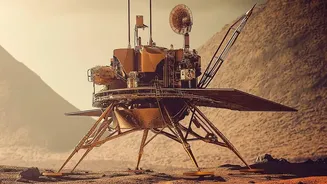
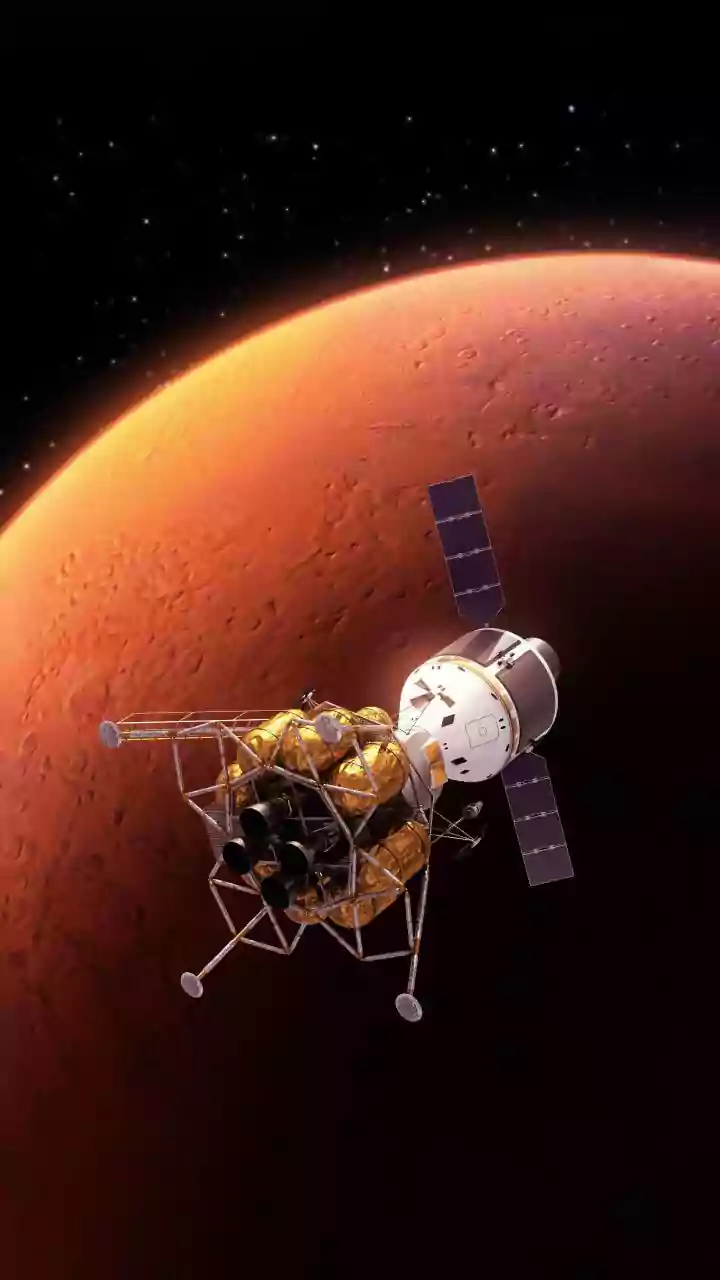
These extreme temperature swings pose a significant engineering challenge for missions to Mars. Rovers and future human habitats must be designed to withstand these daily thermal shocks. Critical electronics are housed in a 'Warm Electronics Box' (WEB), and a combination of insulation and heaters are used to keep components from cracking in the extreme cold. For nuclear-powered rovers like Curiosity and Perseverance, waste heat from their radioisotope thermoelectric generators (MMRTGs) is cleverly used to keep systems warm during the frigid Martian nights. For solar-powered rovers, managing power for heaters becomes a delicate balancing act, especially during winter or planet-engulfing dust storms that block out the sun. These challenges highlight just how hostile the Martian surface is and the ingenuity required to explore it.