








Master Your Air Conditioner Settings
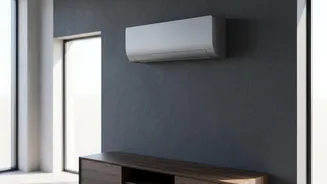
The air conditioner is often the single biggest contributor to high electricity bills in Indian households. Many people believe that setting the AC to 18°C cools a room faster, but this is a common misconception. An AC cools at a constant rate; a lower
temperature setting just forces the compressor to work longer and harder, consuming significantly more power. The Bureau of Energy Efficiency (BEE) recommends a default temperature of 24°C as the ideal balance between comfort and energy efficiency for the Indian climate. For every degree you increase the temperature, you can save approximately 6% on your AC's energy consumption. Shifting from 18°C to a more moderate 24°C can lead to substantial savings over a summer season. Combining your AC with a ceiling fan can also enhance cooling and air circulation, allowing you to set the thermostat a degree or two higher without sacrificing comfort.
Slay the Phantom Power Drain
Have you ever heard of 'vampire power' or 'phantom load'? This refers to the electricity consumed by your electronic devices even when they are turned off but still plugged in. Gadgets with standby modes, remote controls, or continuous digital displays—like your television, set-top box, Wi-Fi router, microwave, and phone chargers—are constantly sipping power. While a single device might not draw much, the cumulative effect of dozens of such appliances can account for 5-10% of your total household electricity usage. The solution is simple: unplug devices when they are not in use. For convenience, consider plugging multiple devices into a single power strip with a switch. This allows you to cut off power to several appliances at once, effectively slaying these energy vampires and preventing unnecessary charges on your bill.
Choose Your Appliances Wisely
When it's time to buy a new appliance, paying attention to the BEE star rating can lead to significant long-term savings. This government-certified label rates appliances on a scale of 1 to 5 stars based on their energy efficiency—the more stars, the less electricity it consumes. This is particularly crucial for high-consumption appliances that run for long hours, such as refrigerators, air conditioners, and geysers. A 5-star AC, for instance, can consume 25-30% less electricity than a 1-star model of the same capacity. While higher-rated models might have a slightly higher initial purchase price, the savings on your electricity bills can often recover that extra cost within a few years. The BEE periodically makes these standards stricter, so a newer 5-star model is even more efficient than one from a few years ago.
Cultivate Power-Saving Habits
Beyond major appliances, small changes in your daily routine can collectively make a big impact. Switch to LED bulbs, which use up to 75% less energy and last much longer than traditional incandescent bulbs. Be mindful of your geyser usage; heating water is energy-intensive, so turn it off when not needed and consider using solar water heaters where feasible. When using your washing machine, opt for full loads and use cold water whenever possible to save on heating energy. Regularly cleaning AC filters, defrosting your refrigerator, and ensuring there's proper ventilation behind it also helps these appliances run more efficiently and consume less power. Finally, make the most of natural light during the day by keeping curtains open, and turn off lights and fans whenever you leave a room—it's the simplest energy-saving habit of all.