




The Essence of Red Tea
At its heart, Ronga Saah is simplicity itself. The name literally translates to 'red tea' in Assamese, a reference to the rich, reddish-brown liquor produced when high-quality Assam tea leaves are steeped in hot water. Unlike the masala chai popular across
the country, Ronga Saah is served black—no milk, no sugar, and traditionally, no spices. This practice isn't about deprivation; it's about celebration. The goal is to taste the tea itself: its bold, malty character, its briskness, and the subtle notes that speak of the region's unique soil and climate. For many in Assam, this unadorned brew is what tea is meant to be, a pure expression of the leaf. It's considered the local equivalent of an espresso shot: concentrated, efficient, and packed with bold flavour.
A Pillar of Assamese Culture
Ronga Saah is more than just a beverage; it's a cornerstone of Assamese life and hospitality. It is the default offering to any guest, a constant companion through long conversations, and the fuel for daily life. Roadside tea stalls, or 'chah ghar', are a common sight across the state, serving up steaming glasses of red tea to friends and colleagues at all hours. The ritual of drinking Ronga Saah—sipping the piping hot liquid slowly—is a social glue that binds communities. While the British established the large-scale tea plantations, the indigenous relationship with the plant has its own history. Serving tea in its pure, unadulterated form is a matter of cultural pride, showcasing the quality of the local produce that defines the state's global identity.
How to Brew the Perfect Cup
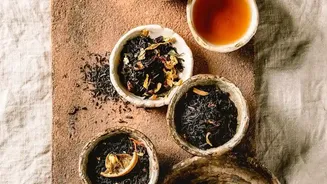
Making authentic Ronga Saah at home is straightforward, but it requires attention to detail. The key is to use good quality, fresh Assam tea leaves, preferably whole-leaf orthodox or at least a good grade of CTC (Crush, Tear, Curl). Start by boiling fresh water in a pan or kettle. Add one to two teaspoons of tea leaves to the boiling water and let it simmer briefly before turning off the heat. Allow the leaves to steep for about three to five minutes. The steeping time can be adjusted depending on how strong you like your tea, but be careful not to over-brew, which can result in a bitter taste. Once steeped, strain the liquor into a cup. While traditionally served plain, some enjoy it with a touch of sugar, honey, or a squeeze of 'kaji nemu', Assam's unique lemon, for a different flavour dimension.
Beyond the Flavour
Choosing Ronga Saah over its milky counterpart comes with several perceived benefits. Drinking black tea is often associated with a cleaner, more sustained energy boost without the jitteriness that can come from coffee. The absence of milk makes it a lighter choice that is less likely to cause acidity, especially for those who drink multiple cups a day. Assam black tea is rich in antioxidants like flavonoids and polyphenols, which are linked to various health benefits. Studies suggest these compounds can support heart health by helping to manage cholesterol and blood pressure levels. Furthermore, the tannins in black tea may aid digestion by supporting good gut bacteria. This makes a cup of Ronga Saah not just a cultural experience, but a potentially healthy habit to cultivate.