






Unlocking Key Minerals
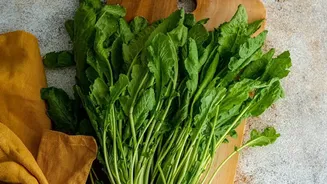
Some of the most powerful benefits of cooking leafy greens involve compounds you can't even see. Many raw greens, like spinach and Swiss chard, contain oxalic acid, or oxalates. This natural compound can bind to minerals like calcium and iron in your
gut, preventing your body from absorbing them effectively. The good news is that heat helps break down these oxalates. When you steam or sauté your spinach, its cellular walls soften, releasing the bound calcium and making it more available for your body to use. So, while raw spinach is still nutritious, cooking it can give you a bigger mineral boost from each bite.
An Antioxidant Advantage
Cooking doesn't just help with minerals; it can also make certain antioxidants more potent. Antioxidants are compounds that protect your cells from damage. Carrots, for example, are famous for their beta-carotene, an antioxidant your body converts into Vitamin A, which is crucial for vision and immune health. Studies show that cooking carrots actually increases the amount of beta-carotene your body can absorb. The same principle applies to the lycopene in tomatoes and other antioxidants in greens like kale. The heat breaks down tough cell walls, releasing these protective compounds and allowing your system to take full advantage of them.
The Nutrient Trade-Off
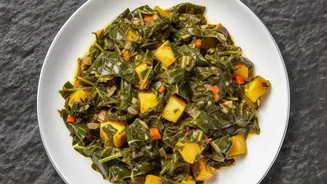
Of course, cooking isn't a one-way street to better nutrition. The primary downside is the loss of certain water-soluble vitamins, most notably vitamin C and some B vitamins like folate. These nutrients are sensitive to heat and can degrade the longer they are cooked. Boiling is often the biggest culprit, as these valuable vitamins can leach out into the cooking water. However, the loss isn't always as dramatic as you might think. For instance, even after being boiled, collard greens can still retain a significant amount of their vitamin C. This is why the best approach isn't to choose raw or cooked exclusively, but to incorporate both to get the full spectrum of vitamins and minerals.
Smarter Cooking for Maximum Health
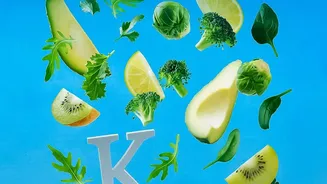
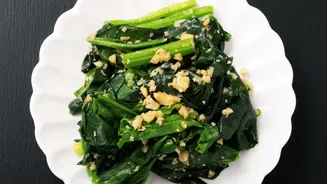
How you cook your greens matters just as much as whether you cook them at all. To preserve the most nutrients, opt for quick cooking methods that use minimal water. Steaming is a fantastic choice because it gently cooks the vegetables without submerging them, reducing the loss of water-soluble vitamins. A light sauté in a healthy oil like olive oil is another excellent method that can actually help your body absorb fat-soluble vitamins like A, E, and K. Blanching—a quick boil followed by an ice bath—can soften tougher greens like kale and collards while minimizing nutrient degradation. The key is to avoid overcooking; aim for tender but still vibrant greens.
Making Dietary Variety Delicious
Beyond the micronutrient science, one of the biggest benefits of cooking leafy greens is practical: it helps you eat more of them. A huge pile of raw spinach can cook down to just a small mound, making it far easier to consume a larger quantity in one sitting. This opens up a world of culinary possibilities, supporting true dietary variety. Cooked greens can be stirred into pastas, added to soups and stews, blended into sauces, or served as a simple, flavourful side dish. By embracing different preparation methods, you're not just changing the texture and taste; you're also making it easier to meet your daily vegetable intake and benefit from the rich fiber, minerals, and phytonutrients that greens provide.