



A River of Iron Miles Below
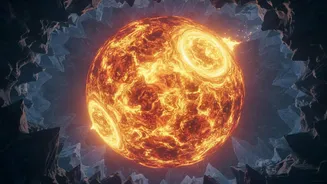
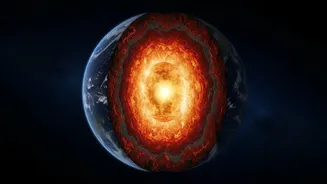
Imagine an ocean of superheated, liquid iron and nickel, thousands of kilometres thick, churning deep within the Earth. This is the outer core, a dynamic and intensely hot region that begins about 2,200 kilometres below the surface. The constant, swirling
motion of this metallic fluid acts like a giant dynamo, generating powerful electric currents. These currents create Earth's magnetic field, an invisible shield that extends far into space, protecting us from harmful solar radiation and allowing life to thrive. For years, scientists believed the flow within this molten ocean was relatively stable, with large currents moving in a predominantly westward direction. This understanding was based on subtle changes observed in the magnetic field from the surface.
The Pacific's Puzzling U-Turn
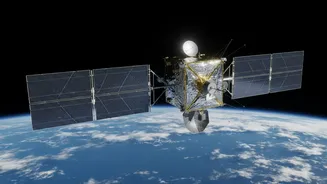
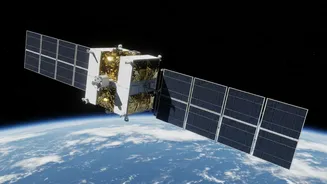
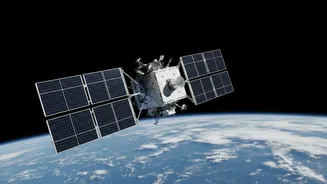
Around 2010, scientists noticed something completely unexpected. A huge section of this core flow, located deep beneath the Pacific Ocean, began to change. Instead of its weak westward drift, it started moving strongly eastward. This abrupt reversal baffled researchers, challenging the long-held belief that the core's dynamics changed only very slowly over vast timescales. The event was not a minor eddy; it was a large-scale shift in a system previously thought to be more stable. The discovery was made possible by analysing nearly three decades of data, from 1997 to 2025, collected by ground-based observatories and a fleet of advanced satellites, including the European Space Agency's (ESA) Swarm mission. These satellites can precisely measure the planet's magnetic field, allowing scientists to infer the motion of the liquid core far below.
Fresh Clues from Above
The latest research, combining all this data, has provided the clearest picture yet of this dramatic event. Scientists from institutions like the University of Edinburgh have been able to map the reversal in detail, confirming its rapid emergence. The new clues suggest that the core is far more turbulent and can change much more quickly than previously thought, with regional shifts happening in as little as a decade. Interestingly, the data also indicates that the strong eastward flow has been weakening since 2020. This has led scientists to question whether the reversal was a temporary fluctuation, part of a longer, repeating cycle, or the beginning of a new stable pattern for the core's circulation. Continued monitoring is essential to understand where this trend is heading.
Connecting the Core to the Surface
While an event happening thousands of kilometres underground might seem remote, it has real significance. The geodynamo is the engine that powers our planetary shield, and understanding its behaviour is crucial. Changes in the core's flow can affect the magnetic field's strength and shape over time. While this specific reversal poses no immediate danger to life on the surface, it highlights how dynamically our planet is changing from the inside out. Some researchers hypothesize that this change in the outer core might be linked to changes in the solid inner core's behaviour, suggesting a deep connection between Earth's different layers that we are only just beginning to grasp.
An Unfolding Geological Mystery
The Pacific core-flow reversal remains a profound mystery. Scientists don't yet know why it happened, but the discovery has opened up exciting new avenues for research. It forces a major rethink of how the planet's deep interior works and interacts. Every new piece of data helps build a more complete model of the geodynamo. This isn't just an academic exercise; a better understanding of the core helps us predict long-term changes to the magnetic field, which is vital for everything from satellite navigation to protecting our technological infrastructure from space weather. The Earth's heart is not a steady, predictable machine but a complex and sometimes chaotic engine, and we are finally getting the tools to listen in on its secrets.