


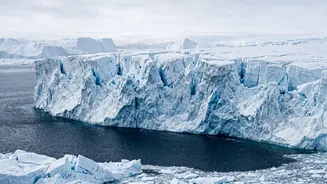
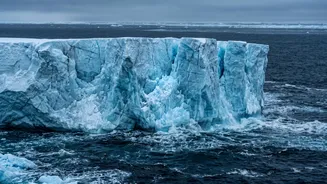
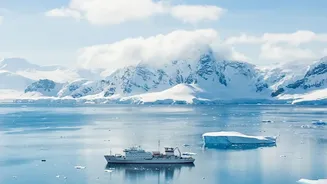
Why Thwaites Is The 'Doomsday Glacier'
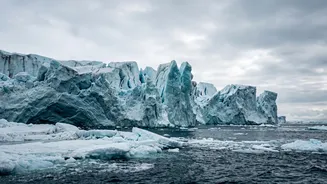
Thwaites is a colossal river of ice in West Antarctica, roughly the size of Florida. It currently contributes to about 4% of annual global sea-level rise, but its real threat lies in what it holds back. It acts as a natural cork, plugging the vast West Antarctic Ice
Sheet, which contains enough ice to raise global sea levels by a catastrophic 10 feet if it were all to collapse. For decades, scientists have watched with concern as the glacier thins and retreats at an accelerating pace. Understanding precisely how and why it's melting is one of the most urgent questions in climate science.
A New Look Under The Hood
Until recently, understanding the melt has been a major challenge. Peering beneath a glacier that is over half a mile thick is incredibly difficult. However, a recent study from the University of California, Irvine, and NASA's Jet Propulsion Laboratory has provided a breakthrough. Using high-resolution satellite radar data, scientists were able to observe the daily rise and fall of the ice in response to ocean tides. This data revealed that the boundary where the glacier meets the sea isn't a simple line, but a wide 'grounding zone' where seawater flushes in and out for miles under the ice.
The Ocean's Corrosive Touch
The study confirms what scientists have long suspected: warm, salty ocean water is the primary culprit. Changes in ocean currents, driven by climate change, are pushing relatively warm Circumpolar Deep Water towards Antarctica. This water is only a few degrees above freezing, but because it's salty, its freezing point is lower than that of freshwater, allowing it to cause 'vigorous melting' at the glacier's base. The new research shows this isn't just happening at the edge. The tidal pumping action pushes this warm, corrosive water deep into the grounding zone, creating a vast area of contact between the ocean and the ice.
Cracks and Terraces: Superhighways for Meltwater
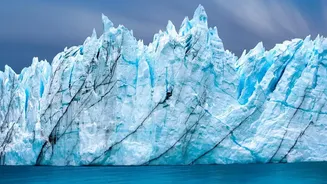
The infiltration of warm water is made worse by the glacier's own topography. Other research, using underwater robotic vehicles, has shown that the underside of the glacier is not smooth. It's scarred with deep cracks, or crevasses, and step-like formations called terraces. These features act like superhighways, allowing the warm ocean water to penetrate even further and attack the ice from multiple angles. The water widens these crevasses from within, weakening the ice shelf and accelerating the process of disintegration. This focused melting on steep surfaces is much faster than previously thought.
Recalibrating Our Future
These new findings have forced scientists to revise their projections. The new model, which accounts for the wide grounding zone, suggests that Thwaites's contribution to sea-level rise could be double previous estimates. It could contribute as much as 30 millimeters by 2100, even without any further climate warming. This faster than expected melt also weakens the glacier's connection to underwater ridges that act as stabilizing anchors. The study gives a 60% chance that Thwaites will become 'unpinned' from a key ridge by the end of the century, which would likely cause it to retreat even more rapidly.