



Meet IMAP: Our New Eye on the Sun
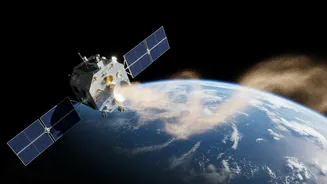
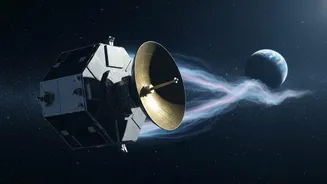
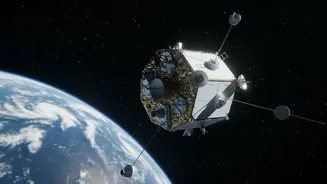
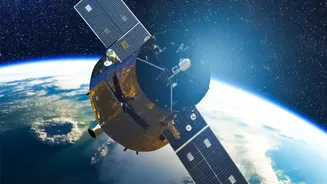
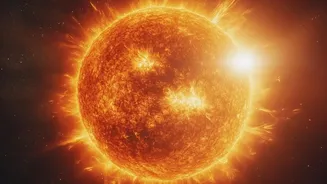
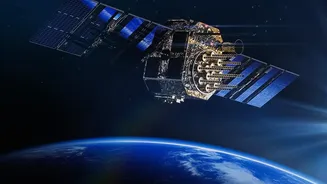
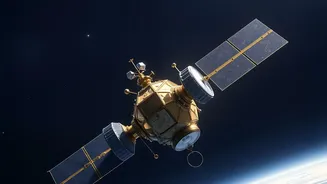
Launched in September 2025, NASA's Interstellar Mapping and Acceleration Probe (IMAP) is a state-of-the-art celestial cartographer. Its job is to study the solar wind—a continuous stream of charged particles flowing from the Sun—and its interaction with
the vast expanse of interstellar space. Positioned at a strategic point about 1.5 million kilometres from Earth towards the Sun, IMAP has a unique, unobstructed view. It's equipped with ten scientific instruments designed to measure particles and magnetic fields, essentially mapping the boundaries of our heliosphere, the protective bubble the Sun creates around our solar system.
The Solar Wind and Its Double-Edged Sword
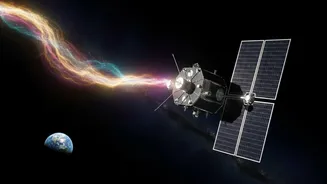
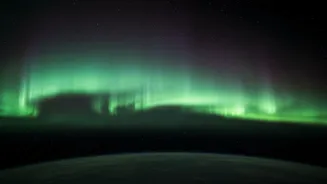
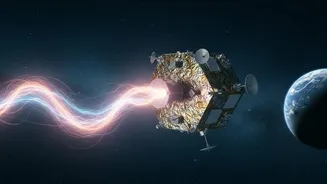
The solar wind is a powerful force that shapes our cosmic neighborhood. It inflates the heliosphere, which shields our solar system from a significant amount of harsh galactic radiation. However, this same wind can be disruptive. When strong gusts, sometimes from events called coronal mass ejections, hit Earth's magnetic field, they can cause geomagnetic storms. These storms are responsible for the beautiful auroras but can also pose a serious threat to our technology-dependent society, capable of damaging power grids, disrupting telecommunications, and harming satellites in orbit.
What the First Data Reveals
The first public data release from seven of IMAP's ten instruments marks a significant milestone. This initial dataset gives scientists an unprecedented look at the components of the solar wind and the pickup ions—particles from interstellar space that become charged within our solar system. Instruments like SWAPI (Solar Wind and Pickup Ions) and MAG (Magnetometer) are providing high-fidelity measurements of the speed, temperature, and density of the solar wind, as well as the direction and strength of the Sun's magnetic field that it carries with it. While not yet a full map, these early readings are calibrating our models and providing a much clearer picture of the heliosphere's structure and the forces at play.
Toward a Better Space Weather Forecast
This new data stream is about more than just understanding distant cosmic boundaries; it has direct, practical applications for us on Earth. IMAP provides near real-time information that acts as an advanced warning system for space weather. By getting a more accurate read on incoming solar wind events, forecasters at agencies like NOAA can provide more timely and accurate alerts. This lead time—potentially around half an hour—is crucial for satellite operators, power grid managers, and even airlines to take protective measures, mitigating the potentially billions of dollars in damage a severe solar storm could cause.
Charting the Unknown Frontier
While protecting Earth is a primary benefit, IMAP's core mission is one of fundamental discovery. The probe is designed to answer two of the biggest questions in heliophysics: how particles are accelerated to incredible speeds and how our solar system's bubble interacts with the rest of the galaxy. By collecting particles that have traveled billions of kilometres from the edge of the heliosphere, IMAP will create the first comprehensive map of this boundary. This work builds on the legacy of missions like the Voyager probes and the Interstellar Boundary Explorer (IBEX), promising to fill in the blank spots on our map of our home in the cosmos.