







The Unseen Engine of AI
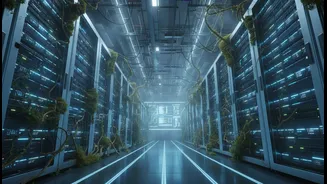
Artificial intelligence doesn't live in the cloud; it lives in massive, factory-sized buildings called data centers. These facilities house tens of thousands of powerful, specialized computer servers that perform the intense calculations needed to train
and run AI models. The recent explosion in generative AI has triggered an unprecedented construction boom for these data centers, as companies like Google, Microsoft, and Amazon race for dominance. This physical infrastructure extends beyond just buildings and servers. It includes the manufacturing of high-tech chips, which requires rare earth minerals, and the complex cooling systems needed to stop the hardware from overheating. The entire supply chain, from construction to operation and eventual electronic waste, carries a significant environmental cost.
An Unquenchable Thirst for Power
The single biggest environmental challenge is electricity consumption. AI-optimized servers are incredibly power-hungry. According to recent forecasts from Gartner, global data center electricity consumption is projected to jump 26% in 2026 alone, with AI workloads being the primary driver of this growth. By 2027, it's estimated that AI servers will consume more power than all conventional servers combined. Projections show that by 2030, data center electricity demand could more than double from 2024 levels. This surge puts immense pressure on electrical grids. Because this new demand is growing so quickly, it often has to be met with power from fossil fuel plants, even as tech companies invest in renewables. This directly undermines climate goals and has led to recent, sharp increases in reported emissions from major tech firms.
The Hidden Water Footprint
Less discussed but equally critical is water consumption. Data centers use enormous amounts of fresh water, primarily for cooling the heat-generating servers. A single large-scale data center can consume as much water as a small city. Researchers estimate that global AI demand could require between 4.2 and 6.6 billion cubic meters of water in 2027, more than the annual water withdrawal of several European nations. This puts a direct strain on local water supplies, sometimes in regions already experiencing water stress. For example, a significant portion of Google's data center water withdrawals in the U.S. have come from drinking water sources in moderately to highly stressed watersheds. While companies are exploring more efficient cooling methods, the sheer scale of the AI build-out means water use continues to climb.
From Concrete to E-Waste
The environmental impact begins before a single server is switched on. The construction of these massive data centers involves significant quantities of concrete and steel, resulting in substantial carbon emissions. One study found that the carbon emissions from the foundation systems of data centers are over 400% higher than those for residential projects. Then there is the problem of electronic waste. The AI arms race creates pressure for rapid innovation, leading to shorter lifecycles for expensive server hardware. This contributes to the growing global problem of e-waste, which often contains hazardous materials like lead and mercury.
A Contradiction in Green Pledges
For years, Big Tech companies have made ambitious public pledges to become carbon neutral or even carbon negative. Amazon, Google, and Microsoft have all set aggressive targets for 2030 or 2040. However, the explosive, energy-intensive growth of AI is putting these commitments at risk. Recent sustainability reports from these very companies have shown significant spikes in emissions, directly linked to their AI infrastructure expansion. This has created a fundamental tension: the push for AI leadership is on a direct collision course with their stated climate goals. While these firms are making major investments in renewable energy and more efficient technologies, the pace of AI growth is currently outstripping these sustainability efforts, a fact that has drawn scrutiny from activist investors.