




The Martian Moon Mystery
Phobos and Deimos don't look like typical moons. They are small, lumpy, and dark, resembling the carbon-rich asteroids found in the outer solar system. For decades, this led to the most logical conclusion: they must be captured asteroids that strayed
too close to Mars and were pulled into orbit by its gravity. However, there’s a big problem with this theory. Their orbits are unusually neat and tidy. They circle Mars almost perfectly above its equator, which is highly unlikely for objects captured randomly from elsewhere. A captured asteroid would be expected to have a more irregular, tilted orbit. This contradiction—looking like asteroids but orbiting like homegrown moons—is the core of the mystery that has puzzled planetary scientists for years.
Two Competing Origin Stories
This puzzle leaves scientists with two main competing hypotheses. The first is the 'captured asteroid' theory, which suggests that despite their neat orbits, Phobos and Deimos are indeed wanderers from the asteroid belt that were somehow wrangled into their current paths, perhaps by Mars's early, thicker atmosphere. The second, and increasingly popular, theory is the 'giant impact' hypothesis. This idea proposes that billions of years ago, a massive object—perhaps a protoplanet—slammed into Mars. The collision would have blasted a huge ring of Martian rock and debris into orbit, which then clumped together to form Phobos and Deimos. This scenario would neatly explain their circular, equatorial orbits, much like how Earth's Moon is believed to have formed.
Enter the MMX Detective
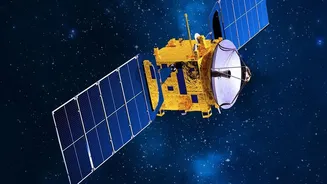
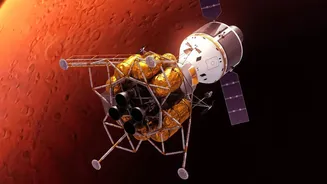
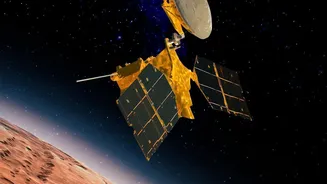
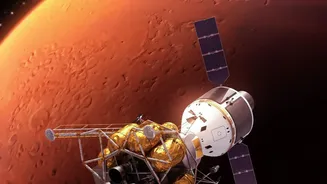
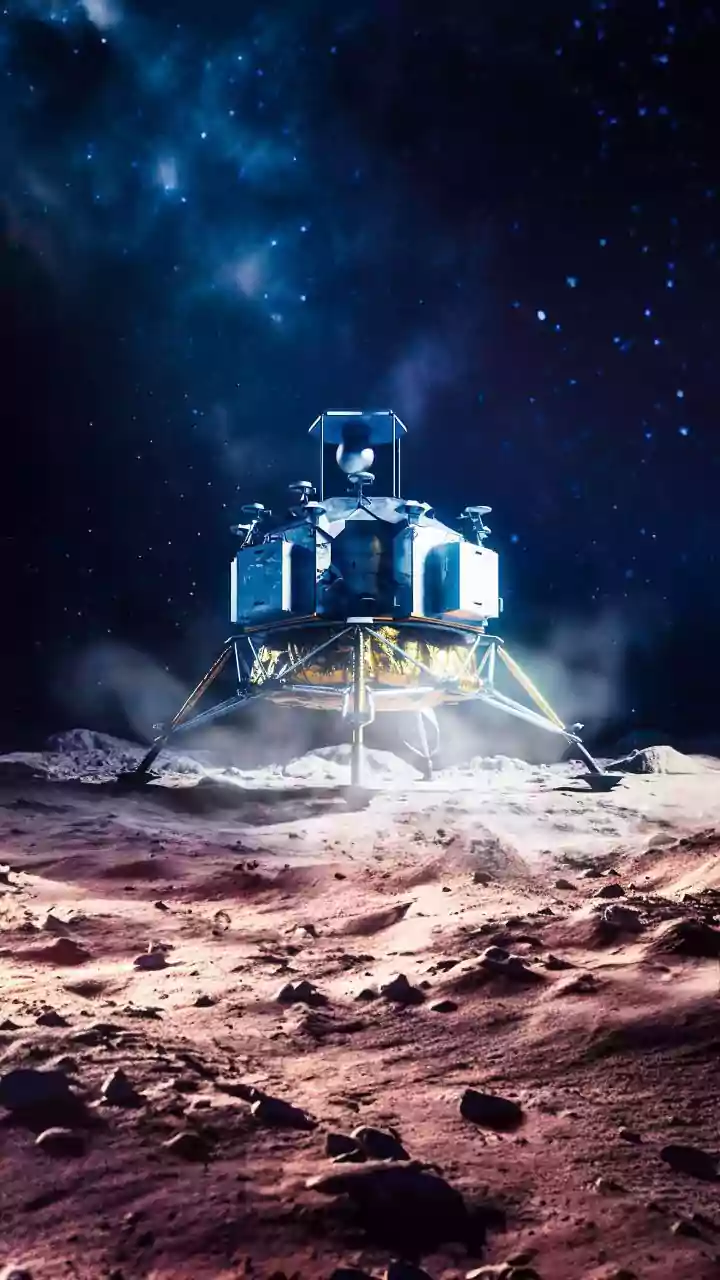
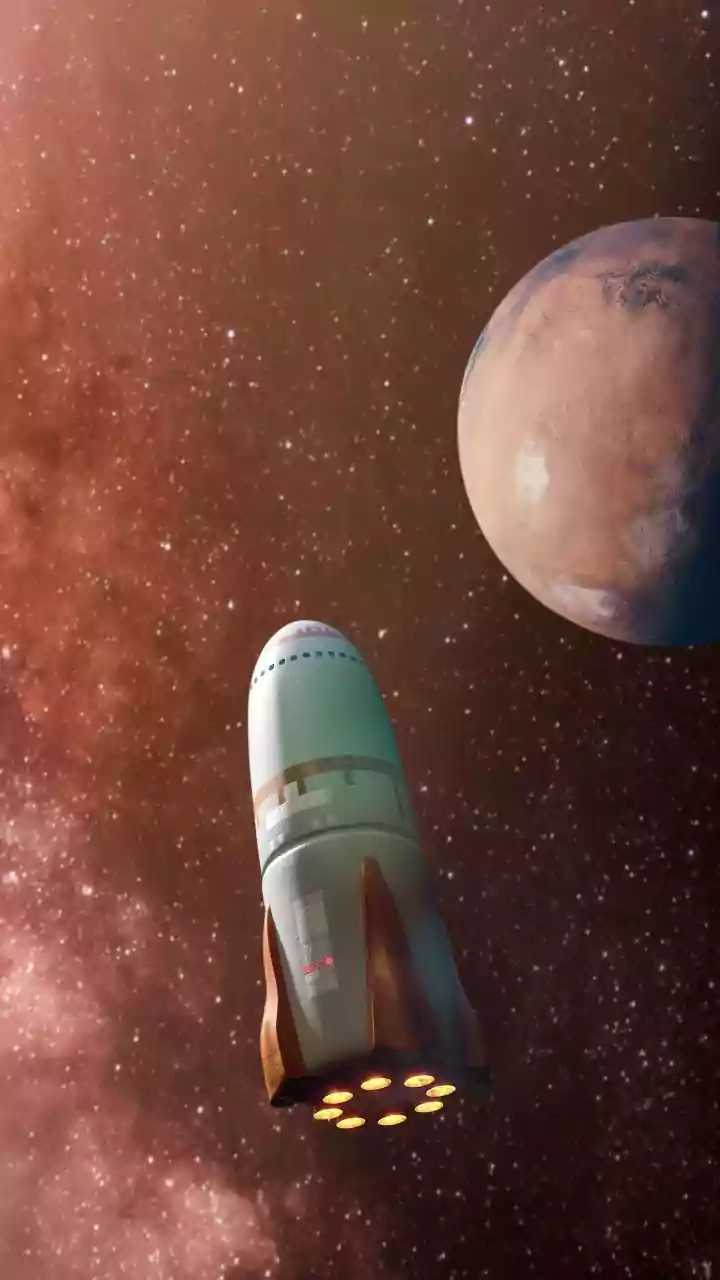
To solve this cosmic 'whodunnit', the Japan Aerospace Exploration Agency (JAXA) launched the Martian Moons eXploration (MMX) spacecraft in October 2026. This isn't just a flyby mission; it's an ambitious, multi-year deep-space investigation. MMX is a major international effort, with instruments and expertise from NASA, and the French (CNES) and German (DLR) space agencies. After arriving in the Martian system in August 2027, the spacecraft will spend about three years conducting detailed observations of both moons. It will map their surfaces, study their composition with a suite of advanced spectrometers, and even deploy a small German-French rover named 'Idefix' onto the surface of Phobos for an up-close look.
A Daring Sample Heist
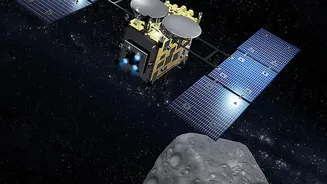
The centerpiece of the MMX mission is its plan to bring a piece of a Martian moon back to Earth for the first time ever. The spacecraft will perform at least one daring descent to the surface of Phobos, landing for a few seconds to collect a sample of its soil, or regolith. Using two different collection mechanisms—a coring device and a pneumatic system that uses compressed gas to kick up material—the goal is to secure at least 10 grams of Phobos. This is a highly complex manoeuvre on a body with almost no gravity. After completing its observations, MMX will begin its journey home, with the sample return capsule scheduled to land in Australia in 2031.
What the Samples Will Tell Us
Bringing the sample to Earth is the crucial final step. In laboratories here, scientists can use powerful equipment that could never fit on a spacecraft to analyse the material in incredible detail. The composition of the Phobos sample will provide the definitive clue. If the material closely matches primitive asteroids, it will be strong evidence for the 'captured asteroid' theory. However, if the sample is made of rock similar to the crust of Mars, it will be a clear sign that the 'giant impact' theory is correct. Either way, the results won't just solve the mystery of Phobos and Deimos; they will give us a profound new understanding of how planets and their moons form, and how water and other ingredients for life were distributed through the early solar system.