





The Billion-Dollar Ambition
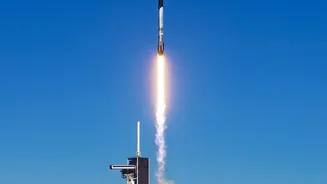
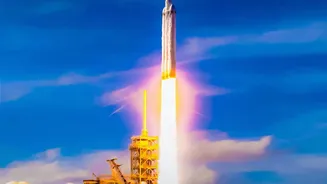
For decades, rockets were treated as disposable. Imagine flying a plane from Mumbai to London and then throwing it away. That was the reality of space travel, making each launch astronomically expensive. SpaceX’s Falcon 9 rocket changed the game with
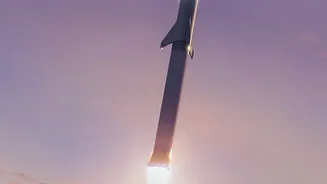
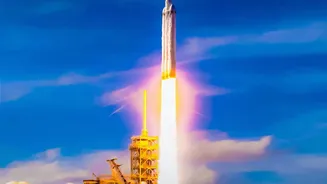
its reusable first-stage booster, which lands itself after launch. But Starship represents a much grander vision: a transportation system where every part of the rocket comes back to be flown again, and again, within hours. This concept of full reusability is the cornerstone of Elon Musk's goal to make humanity multi-planetary. By recovering both the Super Heavy booster and the Starship spacecraft, SpaceX aims to slash the cost of accessing space by a factor of a hundred or more, turning what was once a niche government activity into a routine, commercial enterprise.
Meet 'Mechazilla' and the Chopsticks
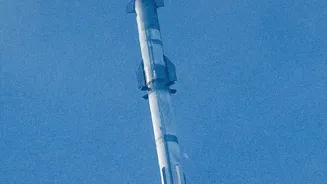
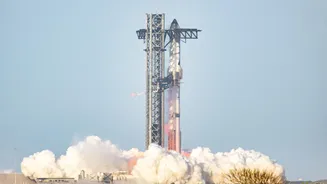
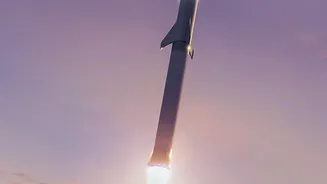
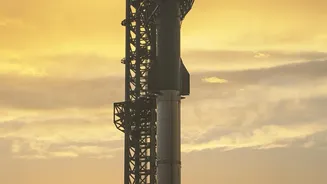
The method for achieving this vision is as audacious as the goal itself. Instead of equipping the massive Super Heavy booster with heavy landing legs, SpaceX devised a radical solution: catch it with the launch tower. Nicknamed 'Mechazilla', the launch and catch tower is fitted with two giant mechanical arms, often called the 'chopsticks'. Here’s how it works: after separating from the Starship upper stage, the 72-meter-tall booster performs a flip and fires its engines to fly back to the launch site. Guided by grid fins that steer it through the atmosphere, it executes a final landing burn with its Raptor engines, slowing to a near-hover right beside the tower. The chopsticks then close around reinforced hardpoints on the booster, taking its full weight moments before the engines shut down. This manoeuvre eliminates the weight of landing legs and places the booster directly back onto the launch mount, theoretically ready to be refuelled and flown again in under an hour.
An Unfinished Masterpiece
While SpaceX has successfully caught several Super Heavy boosters, the headline for Flight 15 highlights a crucial reality: this is still very much a work in progress. The recent Flight 15 mission, for example, achieved a historic first by catching the Starship upper stage after its return from orbit, but the booster catch was aborted. The booster's guidance system sensed it was low on fuel and not in the correct position, automatically diverting to a splashdown in the ocean. This split result perfectly illustrates the unfinished nature of the goal. Full reusability means catching both stages, every time. The margins for error are razor-thin; a miscalculation could destroy not only the rocket but also the entire launch tower, setting the program back months.
The Next Frontier: Catching the Ship
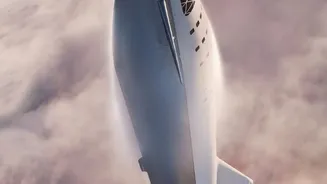
Catching the booster is only half the battle. The even greater challenge, as demonstrated by Flight 15's success, is catching the Starship upper stage. After completing its mission in orbit, the spacecraft endures a fiery reentry at over 25,000 kilometres per hour, protected by its heat shield. It then performs a 'belly flop' manoeuvre to slow down before relighting its engines at the last moment, flipping vertical, and navigating itself precisely between the waiting arms of the tower. The successful catch during Flight 15 was a monumental leap forward, proving the concept is viable. However, turning this incredible feat into a routine, reliable operation is the next major hurdle. Each successful catch provides invaluable data, but the path to the 'airplane-like cadence' Musk envisions requires perfecting not just the catch, but the inspection, refurbishment, and rapid turnaround on the ground.