




What Exactly Is the Ring of Fire?
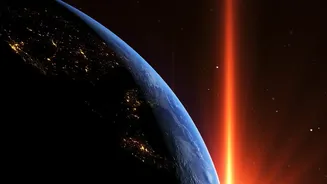
The Pacific Ring of Fire is a massive, horseshoe-shaped path stretching for about 40,000 kilometres around the Pacific Ocean. It's not a single structure but a series of tectonic plate boundaries. This zone is home to an overwhelming majority of the world's
seismic and volcanic activity. It contains more than 450 volcanoes and accounts for approximately 90% of all earthquakes globally. From the coast of South America, up through North America, across to Russia, and down through Japan, the Philippines, and New Zealand, this belt is where the Earth's crust is at its most restless. Its name comes from the sheer number of volcanoes that dot its perimeter, making it a literal ring of fire.
The Science of a Shaking Planet
To understand the Ring of Fire, you have to think about plate tectonics. The Earth's outer shell, or crust, isn't one solid piece. It’s broken into giant slabs called tectonic plates that are constantly moving, floating on the semi-molten mantle beneath them. The Ring of Fire marks the edges where these massive plates meet. The action happens at these boundaries. In many parts of the Ring of Fire, heavier oceanic plates are colliding with lighter continental plates. This process is called subduction, where one plate slides, or is forced, underneath the other. This movement isn't smooth; the plates grind against each other, building up enormous stress and energy.
Why Subduction Creates Chaos
When a plate subducts, it sinks into the Earth's mantle, where it melts under intense heat and pressure. This molten rock, now magma, is lighter than the surrounding rock and rises to the surface, creating the volcanoes that define the Ring of Fire. The friction and stress from the grinding plates don't just create volcanoes. When the built-up pressure is suddenly released, it sends out intense seismic waves, causing the ground to shake violently. This is an earthquake. Because the plates along the Ring of Fire are constantly pushing and pulling, this energy release happens frequently, making it the most seismically active region on the planet.
Japan's Unique Geological Crossroads
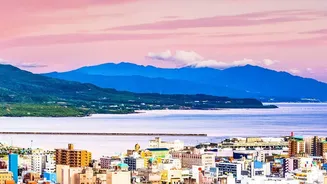
Japan is in a particularly precarious position, making it one of the most earthquake-prone countries in the world. The island nation is situated at the meeting point of four major tectonic plates: the Pacific Plate, the Philippine Sea Plate, the Eurasian Plate, and the North American Plate. This complex intersection means Japan is being squeezed from multiple directions. The massive Pacific Plate is subducting beneath the North American and Philippine Sea plates along the country's eastern coast. This intense and complicated plate interaction is why Japan experiences around 1,500 perceptible earthquakes every year and is a constant hotbed of seismic activity.
A Culture of Resilience and Preparation
Living on such volatile ground has forced Japan to become a world leader in earthquake preparedness. The country has some of the strictest building codes on the planet, which have been continually updated after major quakes. Modern buildings are engineered not just to resist collapse but to sway with the earth's movement using technologies like base isolation pads and energy-absorbing dampers. Beyond infrastructure, preparedness is deeply ingrained in the culture. The country has a sophisticated early warning system that sends alerts to phones moments before a quake hits. Regular evacuation drills are held in schools and offices, and households are encouraged to keep emergency kits ready. This constant state of readiness is a direct response to the unchangeable geological reality of living within the Ring of Fire.