








The Hidden Danger of an Outward Handle
A pot handle that juts out from the edge of the stove is an accident waiting to happen. It’s easy for a hip to bump, a sleeve to snag, or a curious child to grab. In an instant, boiling water, hot oil, or simmering food can be pulled down, causing severe
scalds and burns. This is one of the most common causes of cooking-related injuries, particularly for children who are naturally drawn to things they can reach. Fire departments and safety experts consistently list turning pot handles away from the front of the stove as a top kitchen safety rule.
Why the Quarter-Turn Is the Smart Move
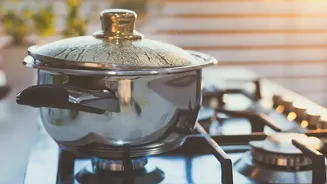
The solution is simple: a quick quarter-turn. By rotating the pot so the handle points toward the back or center of the stovetop, you move it out of the main traffic path. This small adjustment makes the handle much harder to knock accidentally. It remains accessible for you to grab safely with a potholder, but it’s no longer a risk to anyone moving around the kitchen. The goal is to ensure the handle is completely clear of any walkways and not overhanging the edge of the stove. This simple habit dramatically reduces the chance of spills and the serious burns that can result.
The Problem with a Full Rotation
While turning the handle inward is good, a full rotation isn't always the best solution. You should avoid positioning a handle directly over another active burner or a hot oven vent. A handle placed over another heat source can become dangerously hot, leading to a burn when you grab it, even with an oven mitt if it gets hot enough. It can also obstruct access to other pots and pans, making your cooking space more awkward and potentially leading to other types of accidents. The ideal position is a quarter-turn inward, keeping the handle away from the edge and away from other direct heat sources.
Make It a Habit for Every Cook
This safety practice isn't just for households with children. In any busy kitchen, distractions are common. A pet jumping up, a person rushing past, or simply turning around too quickly can lead to a disastrous spill. Making the quarter-turn an automatic part of your cooking routine provides a constant, passive layer of safety. Before you even turn on the burner, get into the habit of checking every pot handle. Center the pot on the burner, then turn the handle inward. It’s a two-second check that reinforces a safer cooking environment for everyone in the home.
More Tips for a Safer Stovetop
Beyond handle placement, other habits can further reduce risks. Whenever possible, use the back burners first, as this places hot pots and pans even further from reach. Always ensure you are using a pot that is the appropriate size for the burner to ensure even heating and stability. It's also crucial to keep flammable items like oven mitts, paper towels, and food packaging away from the stovetop to prevent fires. Creating a three-foot 'kid-free zone' around the stove is another effective strategy recommended by safety experts to prevent children from getting too close to hot surfaces.