







What is the SOLVE Motor?
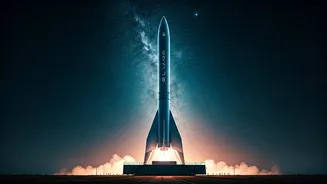
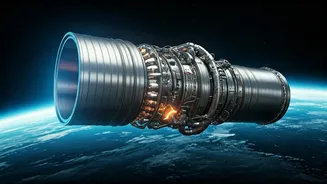
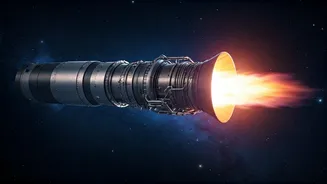
The SOLVE motor is the powerhouse for a new rocket called the Sub-Orbital Launch Vehicle for Experiments. This is not a rocket designed to go into orbit, but rather a dedicated test platform. Its main job is to support India's ambitious Gaganyaan program,
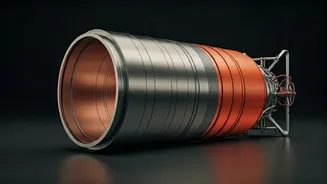
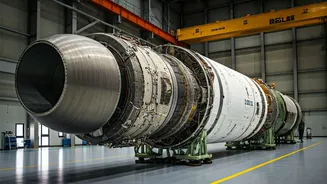
the nation's first crewed space mission. The motor is a solid-propellant engine, which means it uses a pre-packed solid fuel that burns at a controlled rate to produce thrust. This technology is known for its reliability and power, making it ideal for certain flight phases. The design of the SOLVE motor is cleverly adapted from the strap-on boosters used on ISRO's workhorse rocket, the Polar Satellite Launch Vehicle (PSLV). However, it has been significantly modified for its new role, featuring a special slow-burning propellant and an advanced steering system to meet the unique demands of testing crewed mission hardware.
A Crucial Test for Astronaut Safety
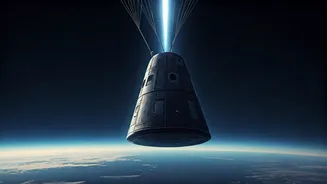
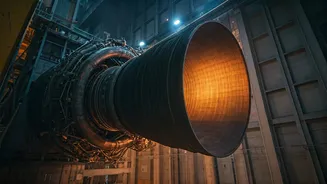
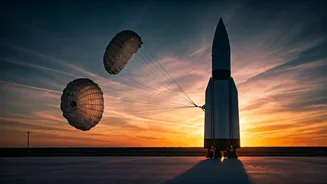
The successful static test, conducted at the Satish Dhawan Space Centre in Sriharikota, was a ground-based firing where the motor was anchored down and ignited. Engineers carefully measured its performance, ensuring that key parameters like thrust and burn time matched their predictions perfectly. While it may seem less dramatic than a launch, this test is a fundamental step in proving the motor's reliability before it's ever used in flight. The primary purpose of the SOLVE vehicle is to validate the parachute system for the Gaganyaan crew module. In future tests, the rocket will carry a replica of the crew module to an altitude of 10 to 17 kilometres. At that height, the module will separate and begin its descent, triggering a complex sequence of 10 parachutes designed to slow it down for a safe splashdown in the sea. Testing this system under realistic conditions is absolutely critical to ensuring the safety of the astronauts who will one day be inside that capsule.
The Bigger Picture: Gaganyaan and Beyond
The SOLVE motor test is a significant milestone for the Gaganyaan mission, which aims to make India the fourth country in the world to independently send humans into space and bring them back safely. By developing a dedicated and reusable test vehicle like SOLVE, ISRO gains the flexibility to conduct numerous trials of the crew module's deceleration and recovery systems under a wide variety of conditions. This ability to test, refine, and re-test is the bedrock of ensuring human safety in the harsh environment of space. Before astronauts embark on the historic flight, ISRO plans to conduct several uncrewed missions to validate every system, from launch to landing. The data gathered from the SOLVE-powered parachute tests will be invaluable for clearing these uncrewed flights, paving the way for the final crewed mission. Every successful test like this builds confidence and momentum for the entire program.
Building Blocks for Future Rockets
While the immediate focus of the SOLVE motor is on Gaganyaan, the technology and expertise gained from its development have broader implications for ISRO's future. The modifications made to the PSLV's solid motor, such as the slow-burn propellant and advanced thrust vector control, are valuable innovations. These advancements can be incorporated into future launch vehicles, potentially making them more efficient and versatile. This test is part of a larger strategy to enhance India's launch capabilities across the board. Knowledge gained from perfecting solid motors contributes to the development of more powerful boosters for rockets like the LVM3, ISRO's heavy-lift launcher, and the planned Next Generation Launch Vehicle (NGLV). The NGLV is envisioned as a future family of rockets that will eventually replace ISRO's current fleet, designed for heavier payloads and potentially partial reusability. Each successful engine test, no matter the scale, is a building block for this ambitious future.