








The Simple Idea Behind Red Warnings
For years, India’s food regulator, the Food Safety and Standards Authority of India (FSSAI), considered a straightforward system to help consumers identify unhealthy products. The plan was to implement front-of-pack labelling (FOPL) using conspicuous,
colour-coded warnings, such as a red symbol, on foods high in sugar, salt, and fat. This type of interpretive labelling is designed to be understood in seconds, cutting through complex nutritional information on the back of the pack. About 20 countries have already adopted similar systems, which serve as a quick visual cue for shoppers, especially those with limited time or nutritional literacy. The goal was clear: empower consumers to make healthier choices at a glance and help curb the country's rising rates of non-communicable diseases (NCDs) like obesity and diabetes.
A Policy Shift Under Pressure
After years of consultations that began around 2017, the FSSAI abandoned the push for mandatory colour-coded warnings. Reports from August 2026 confirm that the regulator dropped the plan following significant resistance from major food and beverage companies. During a key meeting in March 2026, industry executives argued that such interpretive labels would confuse consumers and were ill-suited for the bolder flavours of Indian cuisine. They contended that nearly 80% of packaged food products in India could end up with red warnings, which would impact sales. Instead of the simple warning system, regulators proposed displaying a black-and-white table showing the amounts of added sugar, fat, and salt.
What Consumers Actually Lost
The primary loss for consumers is clarity. A simple red warning is an unambiguous signal to limit consumption. In its place, systems like the proposed Health Star Rating (HSR), which was also considered, create confusion. Public health experts argue that star ratings are misleading because they can be manipulated. For example, a product high in sugar could still receive a deceptively positive rating by adding small amounts of 'positive' nutrients like protein or fibre. This creates a "health halo," making an unhealthy product seem better than it is. Consumers lose the ability to quickly identify and avoid products high in harmful ingredients. A shopper with high blood pressure, for instance, cannot instantly see if a product is high in salt via a star rating. The clear, educational message of a direct warning is lost entirely.
The Double Standard in Your Grocery Aisle
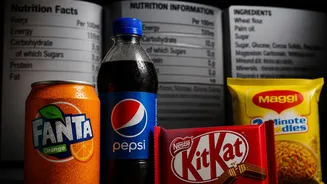
The arguments against warning labels in India appear inconsistent with the practices of the same multinational companies elsewhere. Many of the same corporations that opposed red warnings in India, including Coca-Cola and Nestlé, voluntarily use traffic-light-style labels in European markets. This has led to glaring discrepancies. A can of Fanta sold in India, for example, contains three times more sugar than the same product in London, and it includes an artificial dye that requires a health warning in Europe but only a small-print mention in India. This dual standard means Indian consumers are provided with less protection and transparency than their counterparts in other countries, a point that has drawn criticism from the Supreme Court, which is now scrutinising the FSSAI's decision.
The Long-Term Public Health Cost
The decision to forego clear warning labels is not just an issue of consumer choice; it has significant public health implications. India is facing a growing crisis of obesity and diet-related diseases. One study published in The Lancet estimates that 450 million Indians could be overweight or obese by 2050. Public health advocates argue that clear FOPL is one of the most effective policy tools to combat this trend by encouraging healthier eating habits. Lobbying by interest groups has been described as having "almost paralyzed" regulators from enacting tougher standards that could protect the health of millions. By dropping a simple, proven system in favour of a less direct one, the ability for consumers to easily manage their intake of unhealthy foods has been significantly compromised, potentially exacerbating a national health crisis.