


The Triggers for a Swift Descent
A rapid, or emergency, descent is not a maneuver pilots decide to do lightly. It's a specific response to situations where altitude itself becomes a hazard. The most common and critical reason is a loss of cabin pressurization. At high altitudes, the
air is too thin to breathe, so aircraft cabins are pressurized. If that pressure is lost, pilots must quickly get the plane down to an altitude below 10,000 feet, where the air is breathable without supplemental oxygen. Other serious triggers include an onboard fire, smoke in the cabin, or a critical medical emergency where a passenger needs urgent hospital care. In these cases, losing altitude quickly is the safest course of action.
The Pilot's Well-Rehearsed Playbook
When an emergency descent is needed, pilots don't panic—they execute a well-rehearsed plan. The steps are drilled repeatedly in flight simulators. The first actions are committed to memory. If it's a depressurization event, the crew will immediately don their own oxygen masks before initiating the descent. They will reduce engine power to idle, and may bank the aircraft into a turn. This turn serves two purposes: it helps the aircraft descend more efficiently and allows the pilots to scan for other air traffic below. They will also alert Air Traffic Control (ATC) about the emergency, if possible, to ensure the airspace below them is cleared. The entire process is about maintaining full control while losing altitude as quickly and safely as possible.
Tools of the Trade: Speed Brakes and Spoilers
To descend rapidly without gaining excessive speed, pilots use special control surfaces on the wings called speed brakes or spoilers. If you look out the window during descent and see panels rise from the top of the wings, you're seeing them in action. These panels disrupt the smooth flow of air over the wing, which accomplishes two things: it increases drag, acting like an air brake, and it 'spoils' some of the wing's lift. This allows the aircraft to adopt a much steeper descent angle without accelerating into a dangerous dive. Some aircraft may also use their landing gear and flaps to create additional drag. This combination of techniques enables a descent rate of thousands of feet per minute, while the aircraft's speed remains within safe limits.
What Passengers Will Experience
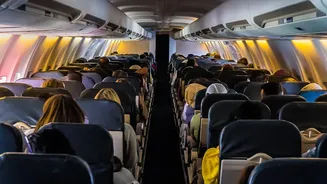
For passengers, the experience can be unsettling. You will feel a distinct 'dropping' sensation, though it's important to remember this is a steep forward movement, not a freefall. The deployment of speed brakes can create a loud rushing or buffeting sound. In a depressurization, the oxygen masks will automatically drop from the ceiling, and you should put yours on immediately. The rapid change in altitude will also cause your ears to pop. It's crucial to remain seated with your seatbelt fastened, as the maneuver can be abrupt. While it feels dramatic, the entire descent to a safe altitude often takes only a matter of minutes.
A Controlled Maneuver, Not a Freefall
It is the single most important thing to understand: a rapid descent is a controlled maneuver, not an uncontrolled plunge. The aircraft is never 'falling' and remains under the complete command of the flight crew at all times. Pilots must fly within the aircraft's structural limitations, ensuring they do not exceed maximum speeds for the airframe, flaps, or landing gear. News reports often use dramatic words like 'plummet' or 'plunge', but these are misleading. The reality is that an emergency descent is a testament to pilot training and aircraft design. It's a proactive safety procedure designed to resolve a problem by moving the aircraft from a hazardous environment (high altitude) to a safe one (lower altitude) as efficiently as possible.