







The Maharaja’s New Clothes
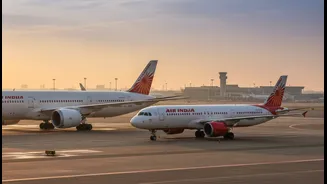
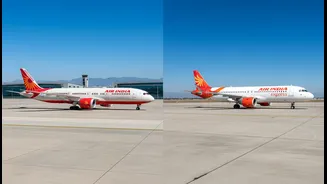
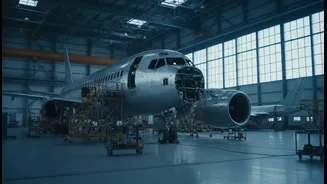
At the core of Air India's passenger-facing transformation is a colossal investment to upgrade its existing wide-body fleet. The airline is in the process of completely retrofitting its legacy Boeing 787-8 and Boeing 777 aircraft. This involves stripping
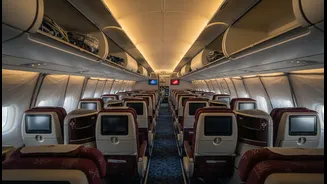
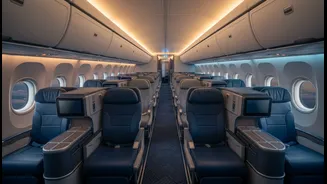
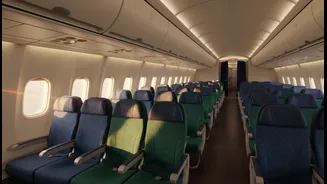
the old cabins and installing brand-new seats, advanced in-flight entertainment (IFE) systems, and modern interiors that align with the airline's new brand identity. A key part of this upgrade is the introduction of a Premium Economy cabin, a first for many of these aircraft. This three-class configuration—featuring Business, Premium Economy, and Economy—is designed to cater to a wider range of travellers and compete more effectively on international routes. For instance, the new Premium Economy offers significantly more legroom, wider seats, and enhanced amenities, providing a clear step up from standard economy. The retrofitting of the Boeing 787 fleet is expected to be completed by mid-2027, while the Boeing 777s are slated for their full upgrade between 2027 and late 2028, although some have received a soft refresh in the interim.
A Fleet for the Future
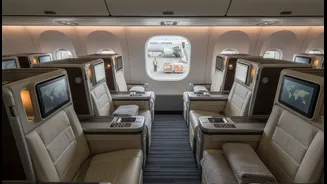
Beyond refurbishing its existing planes, Air India has placed one of the largest aircraft orders in aviation history. The airline has firm orders for hundreds of new planes from both Airbus and Boeing. This dual-manufacturer strategy provides flexibility and hedges against production delays from a single supplier. The order book is a mix of narrow-body and wide-body jets, including the technologically advanced Airbus A350, Boeing 787-9 Dreamliner, and the upcoming Boeing 777X. For domestic and short-haul international routes, a large number of Airbus A320neo family and Boeing 737 MAX aircraft are joining the fleet. New aircraft have already started arriving, with brand-new 'line-fit' A350s and B787-9s entering service. These jets come straight from the factory with Air India’s custom-designed interiors, featuring lie-flat business class suites, 4K entertainment screens, and Bluetooth headphone pairing. This steady induction of new planes, with plans to add 50-60 aircraft annually, is crucial for expanding the network and improving operational reliability.
The Passenger Experience Revolution
The new and retrofitted cabins are designed to offer a world-class experience. In Business Class on the new wide-bodies, passengers can expect private suites with sliding doors, fully flat beds, wireless charging pads, and ample storage. The introduction of Premium Economy across the long-haul fleet is a game-changer, offering a comfortable middle ground for those seeking more space and better service without the full cost of a business class ticket. Even in Economy, passengers will see improvements with lighter, more ergonomic seats and large, high-definition screens. The entire experience is being rethought, from the cabin mood lighting, inspired by Indian wellness traditions, to the upgraded food and beverage service. This focus on product consistency is a direct response to years of criticism over tired interiors and aims to make Air India a preferred choice for discerning travellers.
The Strategic Imperative for Growth
This multi-pronged fleet strategy is not just about aesthetics; it's a calculated business move. A modern, fuel-efficient fleet reduces operating costs and environmental impact. A superior cabin product allows the airline to command higher yields, particularly from premium and corporate travellers who may have previously opted for Middle Eastern or other international carriers. By investing heavily in its product, Air India is positioning itself to not just serve the booming Indian travel market but to establish a major global transit hub in India. CEO Campbell Wilson has been clear that while the Indian market is price-sensitive, the focus is on providing a consistent, high-quality product to win loyalty. The transformation aims to boost Air India Group's domestic market share to 30% while significantly strengthening its position on lucrative international routes to Europe, North America, and Asia.