





The Scale of the Digital Juggernaut
With over a billion internet users and a smartphone in nearly every other hand, India has cemented its position as a global digital powerhouse. The digital economy, valued at over $400 billion in 2025, is growing 2.8 times faster than the national economy.
This surge is fueled by the 'India Stack'—a suite of public digital platforms like Aadhaar and UPI that enable everything from instant payments to digital document verification. The rapid adoption of Artificial Intelligence (AI), with the domestic market projected to hit $17 billion by 2027, is adding another explosive layer of demand for data processing and storage. These numbers paint a picture of a nation undergoing a profound transformation, but this very success is creating an enormous bottleneck.
The Hidden Cost of Growth
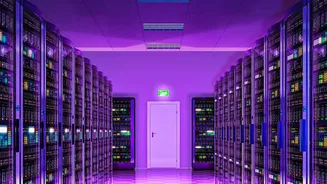
Every digital transaction, video stream, and AI query relies on a physical data center. As India's data consumption soars, so does the strain on this critical infrastructure. The country's data center capacity is set to triple by 2029, yet it struggles to keep pace with demand from global hyperscalers and domestic enterprises. This explosive growth comes with a significant environmental and logistical cost. Data centers are incredibly power-hungry; their electricity consumption is expected to rise from less than 1% of India's total today to around 3% by 2030. An AI-focused data center can consume as much electricity as hundreds of thousands of Indian households. Furthermore, these facilities require immense amounts of water for cooling and face challenges in acquiring land, creating a complex web of economic and environmental pressures.
What 'Efficient' Infrastructure Really Means
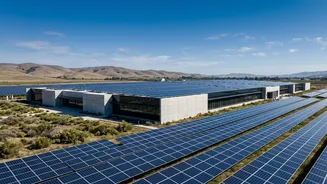
Solving this challenge isn't just about building more data centers; it's about building them smarter. Efficient computing infrastructure focuses on three key areas: energy, distribution, and design. The first is 'green computing'— a shift towards sustainability by using renewable energy sources, energy-efficient hardware, and advanced cooling technologies like liquid cooling, which can reduce a data center's power and water consumption. The second is about distribution. Instead of relying solely on massive, centralized data centers, 'edge computing' processes data closer to where it is created. This reduces latency for users and eases the load on the core network, which is crucial for delivering real-time AI applications and extending digital services to rural areas. Finally, efficiency is about intelligent design, from server virtualization that reduces the number of physical machines needed to AI-powered software that optimises workloads and power usage.
The Race to Build Smarter
Recognizing the stakes, both the public and private sectors are making massive investments. Over $50 billion in commitments have been made by global hyperscalers to build their own capacity in India. Domestic players are also scaling up rapidly, with total investment commitments since 2021 nearing $173 billion. These new facilities are increasingly being designed with efficiency in mind. Developers are exploring greener power sources, and some are implementing cutting-edge solutions like direct-to-chip liquid cooling to handle the high-density racks required for AI workloads. Government initiatives like the 'Digital India' program and policies providing infrastructure status to data centers are creating a supportive environment for this next wave of growth, with the goal of building a resilient and sustainable digital backbone for the nation.