



A More Realistic Digital Twin
For years, scientists have used computer models to forecast the future of Thwaites. These models, however, treated a crucial area—the 'grounding line' where the glacier lifts off the seabed and starts to float—as a sharp, fixed boundary. But recent observations
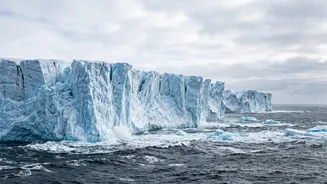
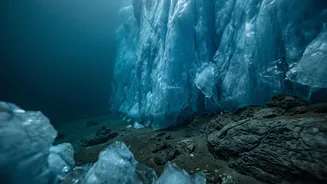
show this isn't the case. A new model, developed by glaciologists at the University of California, Irvine, and NASA's Jet Propulsion Laboratory, incorporates a more realistic 'grounding zone'. This is a wider, slushier area several kilometres long where warm, dense ocean water can intrude deep beneath the ice that is still partially resting on the seafloor. This process, called 'tidal pumping', flushes warm seawater far inland, causing vigorous melting from below.
What the New Model Found
By adding this grounding zone physics, the new model was able to accurately reproduce the glacier's observed retreat, thinning, and acceleration over the last three decades—something previous models struggled to do. When run forward, the results were sobering. The model projects that Thwaites alone could contribute up to 30 millimeters (1.2 inches) to global sea level by 2100. This is approximately double the amount projected by earlier models, even without assuming any additional climate warming beyond what we've already experienced. The findings were published in the journal Nature Communications in October 2026.
The Risk of Coming 'Unpinned'
A key reason for the increased urgency is an underwater feature known as the Mouginot Ridge. This seabed rise currently acts as a stabilizing anchor, helping to 'pin' the glacier and slow its slide into the ocean. The new, more aggressive melting from below dramatically increases the chances of Thwaites detaching from this ridge. The model suggests there is a 60% probability of this unpinning happening before the year 2100, with some simulations showing it could occur as early as the late 2030s. If the glacier loses contact with this critical ridge, its retreat could accelerate significantly, triggering a more rapid discharge of ice into the sea.
Why Thwaites Matters to Everyone
The fate of a remote, Florida-sized glacier in Antarctica can feel abstract, but its impact is global. Thwaites currently contributes about 4% of all annual sea-level rise. If it were to collapse entirely, it holds enough ice to raise global sea levels by about 65 centimeters, or over two feet. But the concern is even greater than that. Thwaites acts as a natural cork, holding back the rest of the massive West Antarctic Ice Sheet. Its collapse could destabilize neighboring glaciers, potentially leading to an eventual sea-level rise of around 3 meters, or 10 feet, over subsequent centuries, which would devastate coastal communities worldwide.
An Unavoidable Future?
The new model highlights how sensitive the glacier is to processes that were previously overlooked. Worryingly, other recent research suggests some of this melting may now be locked in. A separate study led by the British Antarctic Survey found that even if ocean warming were to stop completely, Thwaites would continue to lose ice for at least the next 150 years due to the dynamics already set in motion. Scientists behind the grounding zone model emphasize that their findings do not predict a complete collapse this century, but rather highlight a greater risk and a much faster contribution to sea-level rise than previously anticipated.