



The 'Doomsday Glacier' Explained
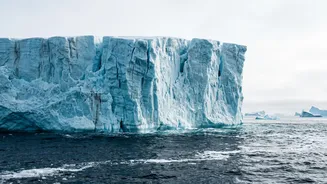
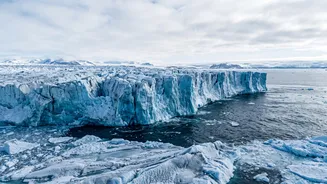
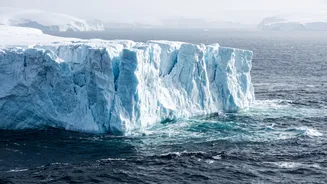
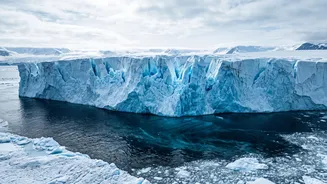
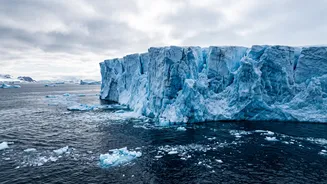
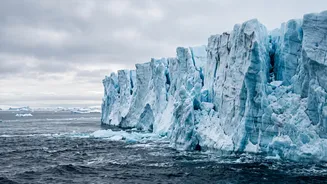
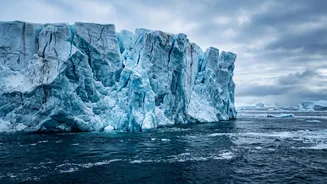
Thwaites Glacier is one of the widest on Earth, covering an area roughly the size of Gujarat. It currently contributes to about 4% of annual global sea-level rise. Scientists are deeply concerned about Thwaites not just because of its immense size, but because it acts
like a natural dam, holding back the rest of the vast West Antarctic Ice Sheet. If Thwaites were to collapse completely, it could raise global sea levels by over two feet on its own, and its failure could trigger a wider collapse leading to a catastrophic 10 feet of sea-level rise over the long term.
A Hidden Process Revealed
For years, scientists have monitored the 'grounding line' of the glacier—the point where the ice leaves the land and begins to float. However, a new study from researchers at the University of California, Irvine, and NASA's Jet Propulsion Laboratory has revealed a far more dynamic and worrying process. Using advanced satellite observations and computer models, they discovered that warm, salty ocean water is not just nibbling at the edge of the glacier. Instead, tidal forces are pumping this warm water several kilometres inland beneath the glacier, creating a wide 'grounding zone' of vigorous melting that was largely unaccounted for in previous models.
Doubling the Threat
This newly understood mechanism of 'tidal pumping' has profound implications. By incorporating this hidden melting into their models, the researchers projected that Thwaites could contribute up to 30 millimetres (1.2 inches) to global sea levels by the year 2100. This figure is roughly double the average estimate from earlier collections of ice-sheet models, which had projected about 15 millimetres. Worryingly, this new, higher projection was calculated even without factoring in any additional global warming, suggesting that past warming has already locked in a more severe outcome.
Losing Its Grip
One of the key factors stabilising Thwaites is its connection to an underwater mountain called the Mouginot Ridge, which acts as a brake on its slide into the ocean. The new simulations show there is now a roughly 60% chance that the glacier will detach from this vital ridge by 2100. Some scenarios even suggest this could happen as early as the late 2030s. Losing this grip point would likely accelerate the glacier's retreat significantly, fundamentally altering projections for sea-level rise within decades and placing coastal communities at even greater risk.
From Antarctica to India's Coastline
While a few centimetres of sea-level rise might not sound like much, it has a dramatic magnifying effect on coastal hazards. Higher sea levels lead to more destructive storm surges, accelerated coastal erosion, and increased frequency of 'nuisance' flooding. For India, with its 7,500-kilometre coastline and densely populated low-lying cities like Mumbai, Chennai, and Kolkata, these global changes have direct and severe local consequences. The threat isn't just from flooding, but also from saltwater intruding into freshwater sources and agricultural land, impacting livelihoods and food security for millions.