








The Inclusive Gaze: Focus in Yoga
In yoga, particularly during challenging balance poses like Tree Pose (Vrikshasana), mental focus is a practice of broad, internal awareness. Yogis are often instructed to use a 'Drishti', which is a steady, soft gaze on a fixed point. This isn't a hard
stare, but a tool to stop the eyes from wandering, which in turn helps to quiet the mind. However, the gaze is only one part of the equation. The true work is internal. Practitioners cultivate interoception, the awareness of inner body sensations like breath and muscle tension, and proprioception, the sense of the body's position in space. The goal isn't to block out sensations of wobbling or fatigue, but to notice them without judgment, make micro-adjustments, and remain present. This type of focus is inclusive and accepting; it's about being with the body's experience in the moment.
The Exclusive Point: Focus in Archery
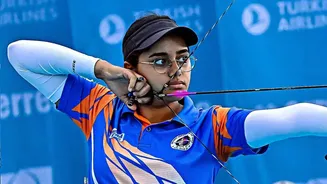
Archery demands a completely different flavour of concentration. The archer's focus is sharp, external, and exclusionary. The primary objective is to direct all mental energy onto a single point: the target. From the moment the bow is drawn, the archer engages in a highly structured mental checklist, often called the shot process. This involves consciously executing each step—stance, grip, draw, anchor, aim, release—with unwavering consistency. Any thought that deviates from this process, whether it's about a previous bad shot, the pressure of competition, or what's for dinner, is considered a distraction that can ruin accuracy. Unlike the yogi who observes and allows, the archer must actively block out internal and external noise to create a sterile mental environment for the perfect shot.
Internal Awareness vs. External Precision
The core difference lies in the direction and quality of attention. Yoga's balance focus is a state of 'being with'. It's an open awareness that monitors the internal landscape. Your mind acts like a sensitive instrument, detecting subtle shifts and responding with gentle corrections. The Drishti point serves as an anchor, but the awareness is diffuse, encompassing breath, alignment, and the subtle dance of muscles keeping you upright. Archery's focus is a state of 'doing to'. It is a laser beam of intention directed outward. The mind is a project manager, ensuring every step of a pre-planned sequence is executed flawlessly. While archers must be aware of their body (form), it's in service of an external goal. A common mental error in archery is the 'archer's paradox' in a psychological sense: the harder you consciously try to hit the bullseye, the more tension you create, and the more likely you are to miss.
Responding to Mental Distractions
How each practice handles inevitable mental chatter is also telling. In yoga, a wandering mind is treated as a normal event. The instruction is to simply notice that you've been distracted and gently guide your focus back to the breath or the Drishti point, without self-criticism. It is part of the training to cultivate non-judgmental awareness. In archery, a mental distraction at a critical moment, especially at full draw, is more problematic. Many coaches advise archers to develop a 'reset ritual'. If focus is lost, it's often better to let down the bow, take a breath, and restart the entire shot sequence rather than trying to force the shot while distracted. Pushing through a moment of lost focus almost guarantees a poor outcome.
What Each Practice Can Teach the Other
The two disciplines,' while different,' offer complementary skills.' An archer can benefit immensely from yoga's mindfulness training.' Learning to be a non-'judgmental observer of one's own anxiety and physical sensations can help manage performance pressure and prevent the mental spirals that lead to inconsistency.' The breathing techniques from yoga are also directly applicable to calming the nervous system before a critical shot.' Conversely,' a yogi can learn from the archer's structured discipline.' When learning a complex new balance pose,' applying the archer's concept of a mental checklist—checking alignment,' engagement,' and gaze in a specific order—can provide a framework for success.' This structured approach can help demystify a challenging posture and make progress feel more systematic and less like a matter of luck.