







The Next Great Eye on the Sky
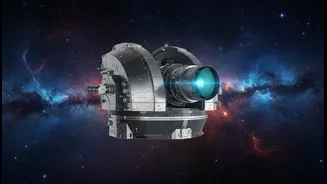
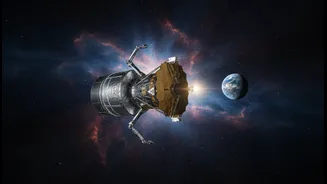
Set to launch in the 2040s, the Habitable Worlds Observatory is NASA's designated successor to the James Webb and Hubble space telescopes. Its primary mission is nothing short of revolutionary: to directly image Earth-like planets orbiting Sun-like stars
and scan their atmospheres for signs of life, known as biosignatures. This means searching for gases like oxygen and methane that could indicate biological processes. To achieve this, the HWO will be an incredibly powerful and complex machine, positioned about 1.5 million kilometers from Earth at a gravitationally stable spot known as Lagrange Point 2 (L2), the same region where the Webb telescope operates. The goal is to identify and characterize at least 25 potentially habitable worlds, a sample size large enough to transform our understanding of life in the universe.
A Multi-Billion Dollar Problem
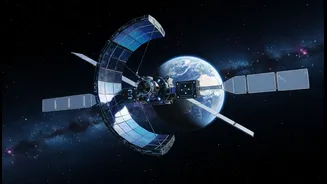
Finding a faint, pale blue dot next to a star a billion times brighter is an immense technical challenge. One of the leading concepts to make this possible involves an external, unattached spacecraft called a starshade. This massive, precisely shaped shield, potentially tens of meters in diameter, would fly in perfect formation with the telescope, tens of thousands of kilometers away. Its job is to block the blinding glare from the host star, allowing the telescope's sensitive instruments to detect the faint light reflected from an orbiting planet. However, this elegant solution comes with a major drawback: fuel. To observe multiple targets, the starshade would have to constantly fire its thrusters to reposition itself, burning through its propellant. Once the fuel runs out, the mission to characterize new worlds would effectively be over, limiting the observatory's scientific return.
Enter the Robotic Mechanics
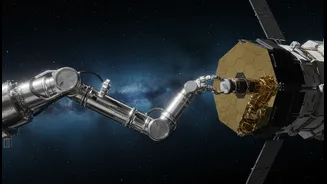
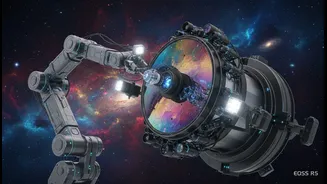
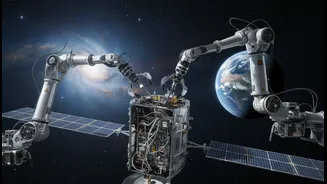
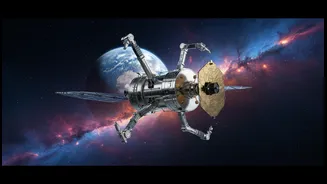
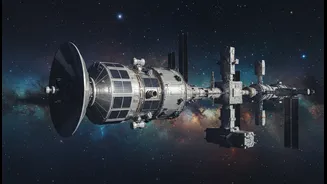
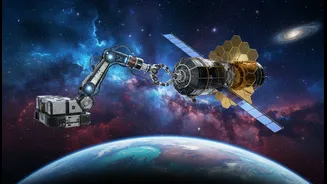
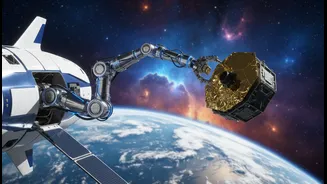
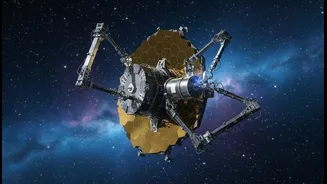
This is where robots change the game. From its inception, the HWO is being designed for a feature its predecessors lacked: in-space servicing. But unlike the Hubble Space Telescope, which was serviced by astronauts on Space Shuttle missions, HWO's distant L2 location makes human missions unfeasible with current technology. Instead, NASA plans to rely on sophisticated robotic servicing spacecraft. These autonomous or remotely-operated robots would be designed to rendezvous with and dock to the observatory. According to recent announcements from NASA officials, this capability is now considered a core requirement for the mission. The plan is to create a modular telescope where key components can be accessed and replaced, a dramatic shift from the fixed-lifecycle designs of past observatories.
A Mission That Never Ends?
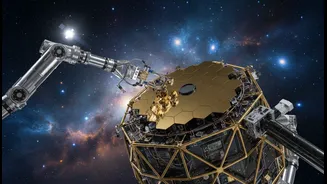
The implications of robotic servicing are profound. For the starshade, a robotic refuelling mission could replenish its propellant tanks, essentially resetting the clock on its mission and allowing it to target dozens of additional stars. But the possibilities extend far beyond just refuelling. Robotic servicers could perform critical repairs, replace aging parts, and even upgrade the observatory with entirely new scientific instruments that don't even exist yet. This would allow the HWO to adapt to new scientific goals and benefit from technological advances made decades after its initial launch. It transforms the multi-billion-dollar observatory from a single-use mission into a sustainable, long-term platform for discovery, much as the Hubble servicing missions extended its life for decades.
Building an Industry for Space
Mandating robotic servicing for HWO is also expected to jumpstart a commercial industry for in-space servicing, assembly, and manufacturing (ISAM). While NASA has been developing these capabilities through projects like OSAM-1, which was designed to demonstrate robotic refuelling, creating a clear demand with a flagship mission like HWO provides a powerful incentive for private companies to develop their own servicing vehicles. In the future, NASA could simply contract a commercial servicer to deliver and install a new instrument on the observatory. This approach not only makes ambitious missions more sustainable and cost-effective but also builds a robust infrastructure in space that will benefit future exploration efforts, from science to human settlement.