



What is the New Scheme?
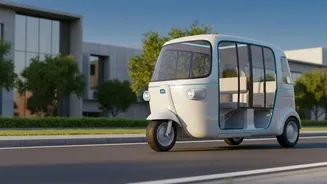
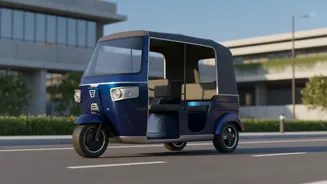
The Telangana government has approved the 'Telangana Auto Rickshaw Electric Conversion Scheme-2026', a landmark initiative with a budget of Rs 200 crore. The primary goal is to convert or replace existing fossil fuel-powered auto-rickshaws with electric
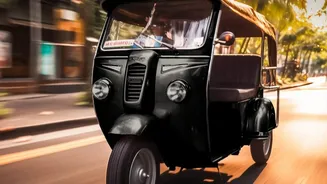
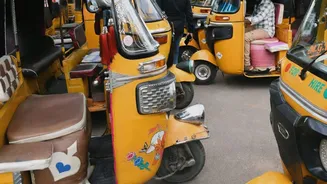
alternatives within Hyderabad's Core Urban Region Economy (CURE) area. The plan specifically targets the 18,766 autos currently running on petrol or diesel in the region. This move is part of the state's broader 'Telangana Rising Vision–2047', which aims to make Hyderabad a more sustainable city with cleaner public transport. By tackling vehicle emissions head-on, the government hopes to reduce pollution and lessen the financial strain on drivers facing high fuel prices.
Two Paths to Electric: Retrofit or Replace
Auto drivers eligible for the scheme are given two distinct choices. The first option is retrofitting. This allows an owner to keep their existing auto-rickshaw's chassis and convert it to run on electricity using an approved electric kit. The second option is replacement. Here, a driver can surrender their old petrol or diesel auto and purchase a brand-new, factory-manufactured electric auto-rickshaw. The government is providing significant financial aid for both paths. For either retrofitting or buying a new vehicle, a subsidy of up to Rs 1.5 lakh will be provided. For retrofits, the assistance covers the cost of the kit and installation, up to Rs 1.5 lakh or the actual cost, whichever is lower. For new purchases, it's a fixed Rs 1.5 lakh subsidy that approved dealers will deduct directly from the on-road price.
How the Funding Works
The Rs 200 crore fund is being pooled from four different welfare departments: the SC, ST, BC, and Minority Welfare departments will each contribute Rs 50 crore. A key feature of the scheme is that it is open to all eligible auto owners in the designated region, regardless of their social category. To ensure the process is transparent and effective, a three-tier monitoring system will be established. This includes a state-level steering committee, a scheme implementation committee, and district-level sanction committees headed by district collectors. This structure is designed to manage the application and disbursement process smoothly, ensuring the subsidies reach the intended beneficiaries efficiently.
The Bigger Picture: Cleaner Air and Driver Savings
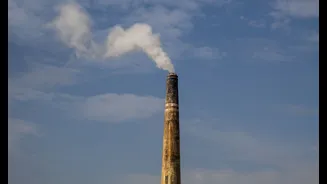
This initiative is not just about upgrading vehicles; it's about transforming urban life. The transport sector is a major contributor to air and noise pollution in cities like Hyderabad. By phasing out nearly 19,000 internal combustion engine (ICE) autos, the government aims to significantly improve air quality and move towards its net-zero carbon emission goals. For the auto drivers themselves, the economic benefits are a primary draw. While the upfront cost of an EV is a barrier, the running costs are substantially lower than for petrol or diesel vehicles. This scheme's subsidy directly addresses that initial financial hurdle. Furthermore, when retrofitting, drivers can choose between fixed or swappable battery systems, offering flexibility to suit their operational needs.
Implementation and What's Next
The scheme targets the 11,254 diesel and 7,512 petrol autos currently active in Hyderabad's CURE region. For retrofitting, owners must use government-approved AIS-123 standard kits installed by empanelled vendors, ensuring safety and quality. This organised approach, combined with the upfront subsidy deduction for new vehicles, is intended to make the transition as seamless as possible for drivers. The programme represents a critical balance between environmental responsibility and protecting the economic interests of thousands of auto drivers who form the backbone of the city's transport network. As the scheme rolls out, it will serve as a major test case for electrifying public transport on a large scale in other Indian cities.