




A Cosmic Collision Course
The alert was first raised by astronomer Bill Gray, who runs software to track near-earth objects. He identified a piece of space hardware, designated WE0913A, that was projected to slam into the far side of the Moon on March 4, 2022. The object was tumbling
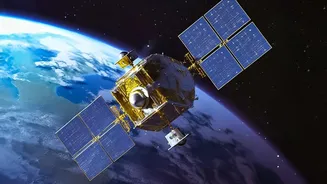
through space in a chaotic orbit and weighed several tonnes. Travelling at more than 5,000 miles per hour, its impact would be the first documented case of space debris unintentionally crashing into the lunar surface. Initially, circumstantial evidence pointed to the object being the second stage of a SpaceX Falcon 9 rocket that launched the Deep Space Climate Observatory (DSCOVR) satellite for NOAA in 2015. The news quickly spread, framing the event as an issue of a private company's leftover hardware.
The Astronomical Detective Story
However, the story took a sharp turn. An engineer at NASA's Jet Propulsion Laboratory, Jon Giorgini, contacted Gray with a crucial question. He pointed out that the DSCOVR spacecraft's trajectory never took it particularly close to the Moon, making it odd for its discarded rocket stage to be there. This prompted Gray to re-examine years of observational data. The initial identification had been based on the rocket stage's expected orbit, but the new query showed a significant discrepancy. Gray and other astronomers went back to the drawing board, sifting through launch records and orbital data to find the true culprit. This collaborative, painstaking process is a testament to the scientific community's dedication to accuracy.
Unmasking the Real Culprit
The investigation soon zeroed in on a new suspect: the upper stage of a Chinese Long March 3C rocket. This rocket had launched the Chang'e 5-T1 mission in 2014, a test flight for a future lunar sample return. The trajectory and timing were a much better fit. Further evidence came from spectral analysis by students at the University of Arizona, who studied how light reflected off the object. The data matched the properties of paint used on Chinese rockets, not SpaceX ones. Despite China's Ministry of Foreign Affairs denying the rocket stage was from their mission, the astronomical evidence was compelling. The object that would soon hit the Moon was almost certainly Chinese, not American.
The Impact and a Surprising Discovery
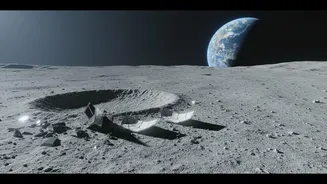
On March 4, 2022, right on schedule, the rocket piece slammed into the Hertzsprung crater on the Moon's far side, hidden from Earth-based observers. For months, the exact location of the new crater was unknown. Then, on June 24, 2022, NASA announced that its Lunar Reconnaissance Orbiter (LRO) had found the crash site. What it revealed was a surprise: not one crater, but two. The impact created an unusual double crater, with an 18-meter-wide crater overlapping a 16-meter-wide one. This was unexpected, as spent rockets are typically just an empty fuel tank with a heavy engine at one end. The double crater suggested the Chinese rocket body had large, heavy masses at both ends, prompting speculation about an undisclosed payload on the 2014 mission.
A Wake-Up Call for a Crowded Sky
While the impact caused no real harm, the episode served as a crucial wake-up call. The initial misidentification and the difficulty in tracking the object highlighted a major gap in our ability to monitor debris in deep space, beyond the more congested low-Earth orbit. Currently, tens of thousands of objects larger than a softball are tracked, but millions of smaller, untraceable pieces also pose a threat. There is no international air traffic control for space, and the 1967 Outer Space Treaty is ill-equipped to handle the modern era of crowded orbits and private spaceflight. This event underscores the urgent need for better tracking systems and international agreements to manage space junk, preventing our cosmic backyard from becoming an unmanageable and hazardous junkyard.