








Why the Western Ghats Matter
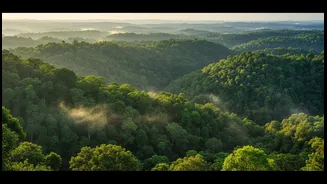
Stretching over 1,600 kilometres along India's western coast, the Western Ghats are more than just a mountain range; they are a UNESCO World Heritage site and one of the world's most important biodiversity hotspots. Older than the Himalayas, these mountains
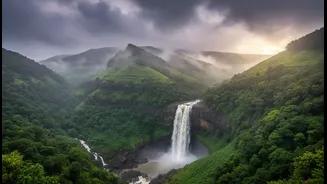
are crucial for India's climate, acting as a barrier for the monsoon winds and determining rainfall patterns for a massive part of the country. They are the source of major rivers like the Godavari, Krishna, and Kaveri, which support agriculture and provide water to millions. Home to thousands of species of plants and animals found nowhere else on Earth, the Ghats are an ecological treasure whose health is directly linked to India's environmental and economic stability.
A Surprising Climate Prediction
A recent study from the Indian Institute of Tropical Meteorology (IITM), Pune, has projected that the Western Ghats, along with the Himalayas and Northeast India, could become one of India's most significant carbon sinks by the end of the century. The research, published in the 'International Journal of Climatology', analysed what is known as Gross Primary Productivity (GPP) — the rate at which plants capture and store carbon dioxide during photosynthesis. The models predict that a combination of rising atmospheric CO2 and increased rainfall could actually boost this process, effectively making the forests more efficient at pulling carbon from the atmosphere.
The Double-Edged Sword of Warming
While the idea of a supercharged carbon sink is appealing, the researchers behind the study are quick to issue a strong warning. This increased carbon absorption should not be mistaken for a sign that climate change is good for these forests. The very same factors driving this change also bring immense risks. The lead author of the study, Dr. Smrati Gupta, pointed out that higher temperatures suppress plant productivity by increasing heat and moisture stress. Even as overall carbon uptake might rise, the ecosystem's health is threatened by the increasing frequency of heatwaves, droughts, and other extreme weather events which can weaken its long-term resilience and devastate biodiversity.
Not A Get-Out-Of-Jail-Free Card
The core message from the scientists is one of caution. The potential for the Western Ghats to absorb more carbon is a testament to the resilience of nature, but it does not cancel out the broader ecological damage caused by warming. Other studies have already highlighted the vulnerability of the Ghats, with some forest types predicted to shrink while drier, less diverse forests expand. The region is already facing threats from deforestation, habitat fragmentation, and changes in rainfall patterns that have led to landslides and water scarcity. Therefore, the new findings on carbon sequestration don't offer a simple solution but rather add a complex new layer to our understanding of how this vital ecosystem is responding to unprecedented environmental pressure.
The Path Forward
This research underscores the critical importance of conservation efforts in the Western Ghats. While the forests may have a surprising capacity to absorb carbon, this ability is finite and depends on the overall health of the ecosystem. Protecting these forests from deforestation and degradation is essential to maintaining this natural climate-regulating service. The study serves as a crucial input for India's climate policies and carbon budgeting, highlighting that natural sinks are a valuable ally but not a substitute for aggressive action to reduce emissions. The future of the Western Ghats hinges not on this one surprising benefit, but on a holistic approach to conservation that protects its biodiversity and respects its ecological limits in a rapidly warming world.