


What is Colour Blocking?
Originally popular in fashion, colour blocking has made a major splash in interior design. The technique involves pairing two or more distinct blocks of colour together to create a striking and intentional visual statement. This can range from contrasting,
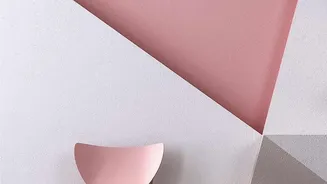
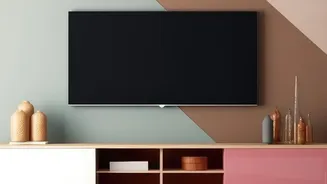
high-energy combinations to subtle, tonal variations of the same hue. The goal is to move beyond a single accent wall and use colour in more graphic, geometric ways to highlight architecture, create zones in an open-plan room, or simply add a dose of personality. Think of it as creating modern art directly on your walls.
The Direct Approach: Using Paint
The most common way to colour block is with paint, and the possibilities are endless. You can create the illusion of a headboard in a bedroom, frame a piece of furniture, or make a low ceiling feel higher. Popular shapes include arches behind a bed, large rectangles to define a home office nook, or a 'split wall' effect where the lower half of the wall is one colour and the top is another. The key to a professional finish is careful preparation. You’ll need painter’s tape, a level, a pencil, and a measuring tape to create crisp, clean lines for your geometric designs.
Tips for a Perfect Paint Job
To achieve those satisfyingly sharp edges, start by mapping out your design with a pencil and a level. Apply high-quality painter's tape firmly along your pencil lines. A pro tip is to seal the edge of the tape by painting over it with your original wall colour first; this prevents the new colour from bleeding underneath. Once that's dry, apply your new colour. It’s best to use a small roller for the main area and a brush for cutting in. For curved shapes like arches, you can create a perfect line by tying a pencil to a piece of string, tacking the string to the center point, and drawing your arc. Always apply at least two coats for full, even coverage.
The Flexible Alternative: Framed Art
If committing to painted blocks feels too permanent, you can achieve a similar effect with framed art. This approach offers more flexibility, allowing you to change the look as your tastes evolve. The idea is to group several pieces of art to form a larger colour block. You can do this by curating art prints that share a dominant colour or by creating your own simple colour block art. For a simple DIY project, buy several identical frames and fill them with high-quality coloured paper or scrapbooking paper in a coordinated palette. Arranged in a tight grid, this creates a sophisticated and impactful display.
Creating Your Colour-Blocked Gallery
To create a colour-blocked gallery wall, start by choosing a colour scheme. You can select prints that all feature shades of blue, for example, or a mix of contrasting colours like pink and green. The key is to arrange them so the collective effect is a block of colour. For a more integrated look, consider painting the frames themselves to match the dominant colour in the artwork. Another creative technique involves painting a block of colour directly onto an existing piece of framed art, covering a portion of the image and the frame to give a dated print a modern, 'dipped' look. This method allows for endless personalisation and can be a great way to upcycle thrift store finds.
Choosing Your Perfect Palette
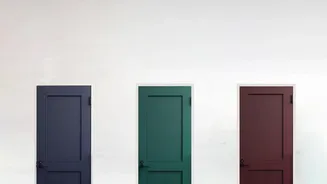
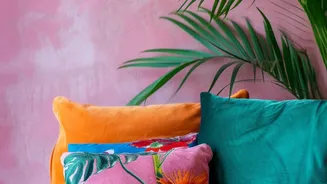
Whether you choose paint or art, your colour selection is crucial. The 60-30-10 rule is a helpful guideline: 60% of the space should be a dominant colour, 30% a secondary colour, and 10% an accent. For a harmonious feel, choose different tones from the same colour family (monochromatic). For a bolder statement, pick complementary colours that sit opposite each other on the colour wheel, like blue and orange. Don't forget to consider the room's lighting, as natural and artificial light can change how colours appear. Before you commit, test your chosen shades on the wall to see how they look throughout the day.