






The Beloved Queen Veeravati
The legend begins with a beautiful queen named Veeravati. She was the cherished only sister of seven loving brothers and was happily married to a king. Being the sole sister, she was adored and pampered by her parents and brothers alike. Her life was one
of joy and comfort, surrounded by a family that doted on her every move. When the time came for her first Karwa Chauth after her marriage, she was at her parents' home, ready to observe the sacred fast for her husband's long life and well-being.
A Deception Born of Love
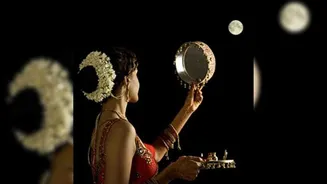
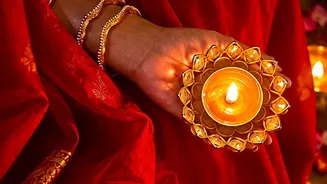
Veeravati began the strict 'nirjala' fast at sunrise, abstaining from all food and water. As the day wore on, the queen, unaccustomed to such hardship, began to suffer from intense hunger and thirst. Seeing their beloved sister grow weak and even faint, her seven brothers were overcome with concern. Unable to watch her suffer any longer, they devised a plan. They knew Veeravati's resolve was strong and she would only break her fast after seeing the moon. So, they created an illusion, holding a mirror or a sieve with a lamp behind it through the leaves of a Peepal tree, tricking her into believing the moon had risen. Thinking her fast was complete, Veeravati made an offering to the false moon and took her meal.
The Heartbreaking Consequence
The moment Veeravati broke her fast, the consequences were immediate and tragic. She received word that her husband, the king, had suddenly died or fallen gravely ill. In some versions of the tale, she arrived at his palace to find him unconscious, his body pierced by countless needles. Heartbroken and inconsolable, Veeravati knew that a mistake in her ritual was the cause of this misfortune. She began a desperate journey back to her husband's kingdom, weeping and praying for a way to reverse the tragedy.
Divine Intervention and Penance
On her journey, she encountered Goddess Parvati (or in some versions, Goddess Indrani), who appeared before her. The goddess revealed the truth of her brothers' deception and explained that breaking the fast prematurely had led to her husband's demise. Seeing Veeravati's sincere remorse and devotion, the goddess did not forsake her. Instead, she offered a path to redemption. She instructed Veeravati to observe the Karwa Chauth fast again, this time with absolute devotion, and in some tellings, to repeat the fast every month for a full year to atone and accumulate enough merit to save her husband.
The Power of True Devotion
Veeravati followed the goddess's instructions with unwavering faith. She undertook the fasts with meticulous care and served her ailing husband devotedly. When the next Karwa Chauth arrived, she observed the 'nirjala' fast with renewed determination, patiently waiting for the real moon to appear. Her profound devotion and steadfastness pleased Yama, the lord of death, who was compelled to restore life and health to her husband. Her trial ended, and she was happily reunited with her king, her faith having conquered even death. This miraculous conclusion cemented the story as a testament to the power of a wife's devotion.
Why the Katha Remains Central
The story of Veeravati is not just a myth; it is the spiritual backbone of Karwa Chauth. Listening to or narrating this 'katha' during the evening puja is an essential part of the ritual for women observing the fast. It serves as a powerful reminder of the festival's core values: patience, faith, and the importance of completing the ritual with full sincerity. The story underscores that the fast is more than an act of endurance; it is a profound expression of love and spiritual commitment. By recounting Veeravati’s trial and triumph, women reinforce the sacred significance of their own fast, drawing strength and inspiration from her timeless example.