
A Mysterious Red Dot
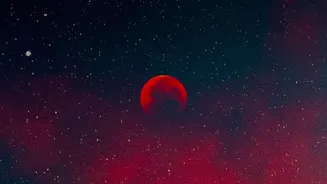
Deep in one of Webb’s images of the early universe, taken just 660 million years after the Big Bang, astronomers noticed an exceptionally bright, red object. Initially, it was one of many so-called “little red dots” that have been puzzling scientists
since the telescope began operations. These objects are far too luminous to be normal stars or even young galaxies. This particular object, officially named MoM-BH-1, was so uniquely bright and red that it demanded a closer look. Its light, having traveled for over 13 billion years, held secrets that challenged existing theories.
What is a 'Black Hole Star'?
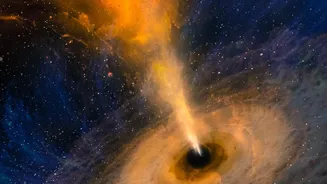
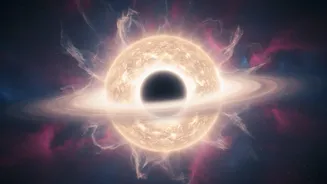
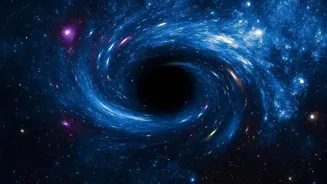
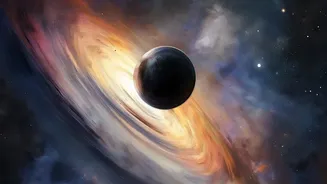
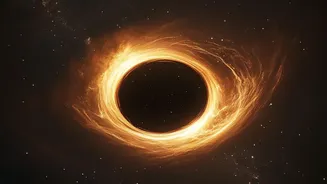
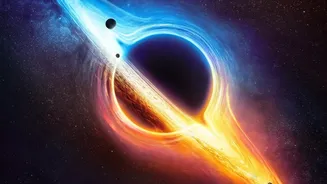
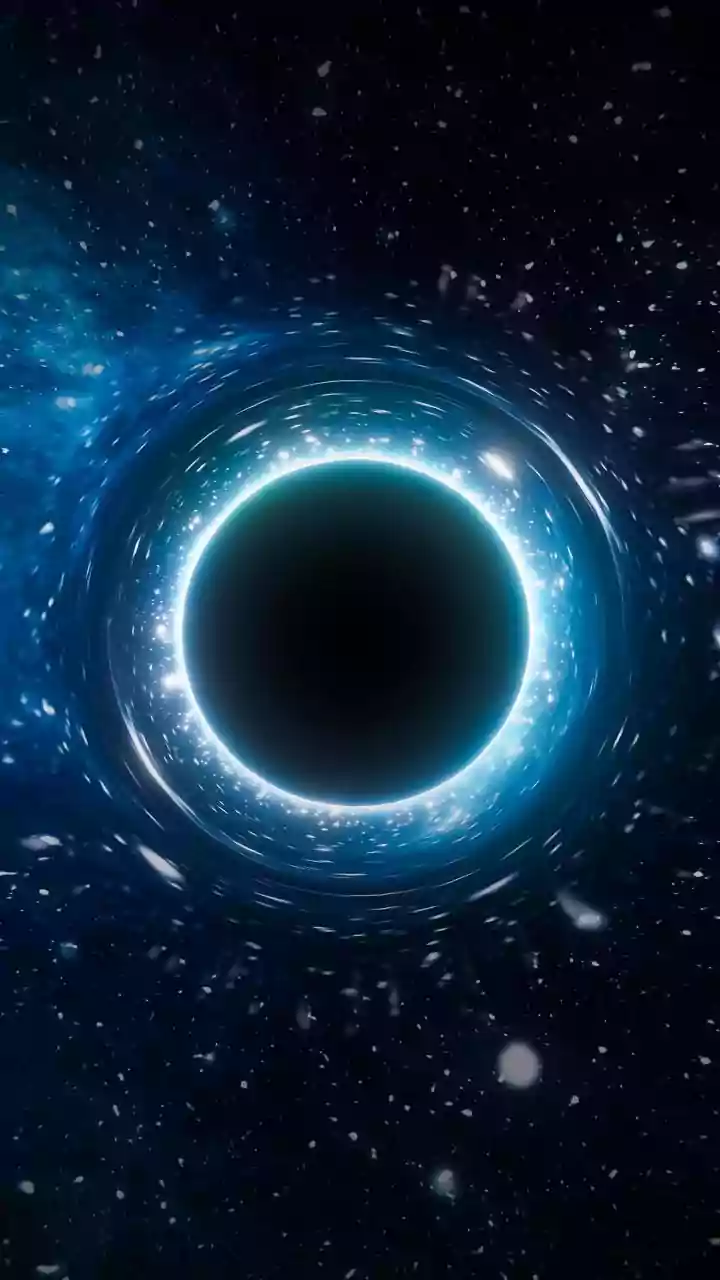
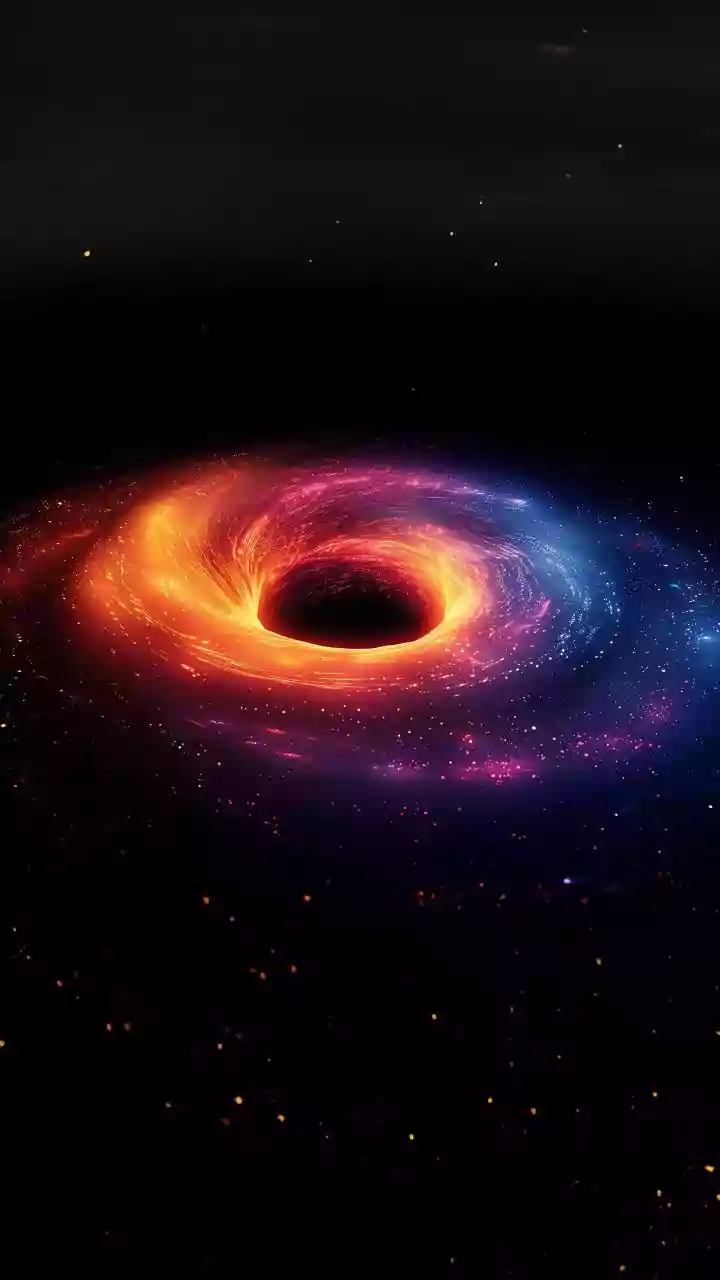
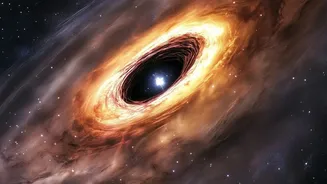
The leading theory to explain this bizarre object is the concept of a quasi-star, also known as a black hole star. This is a hypothetical type of object thought to have existed only in the very early universe. Unlike a normal star powered by nuclear fusion at its core, a quasi-star would be powered by a different engine: a black hole. The idea is that an enormous cloud of hydrogen and helium gas, potentially the size of our solar system, collapses not into a star, but around a growing black hole at its center. The immense energy would come from material falling into this central black hole, causing the surrounding gas to glow with unimaginable brightness.
The Evidence Unpacked
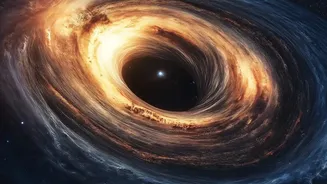
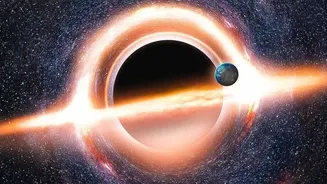
So why do scientists think MoM-BH-1 is a black hole star candidate? The main clue is its impossible brightness. Researchers calculate it is putting out 100 billion times more energy than any star could physically generate through fusion. This level of energy output is more in line with an actively feeding supermassive black hole. Furthermore, analysis of the object's light revealed it was composed almost purely of hydrogen and helium, with none of the heavier elements you'd expect from a mature star or dusty galaxy. The model that best fits all the data is a central black hole about 100,000 times the mass of our sun, shrouded in a super-dense cocoon of primordial gas.
Solving a Cosmic Puzzle
If confirmed, the existence of black hole stars could solve two major cosmic mysteries. First, it would explain the origin of those numerous "little red dots" that Webb keeps finding in the early universe. These might be the fleeting, fiery infancy of many galaxies. Second, it could explain how supermassive black holes grew so large, so quickly after the Big Bang. Current models struggle to account for the gargantuan black holes we see in the early cosmos. Black hole stars could be the missing link—a crucial growth phase where a black hole seeds itself inside a massive gas cloud, rapidly gaining mass before becoming the anchor of a new galaxy.
What Happens Next?
It's important to remember that MoM-BH*-1 is still a candidate. While the black hole star model is a strong fit, science requires rigorous verification. Astronomers are planning follow-up observations with the James Webb Space Telescope to gather more data and test their hypothesis. They will look for more subtle signatures in the object's light that could either confirm the presence of a central, accreting black hole or point toward an alternative, perhaps equally strange, explanation. The object is so unusual that researchers have called it a "one-in-a-billion" find, with no direct comparisons in existing astronomical archives.