



A Wall of Rock and Debris
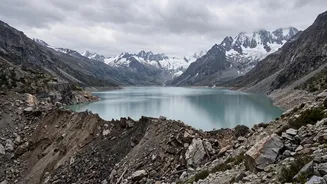
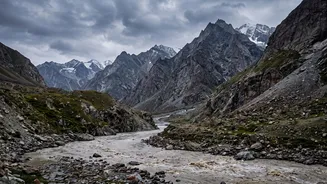
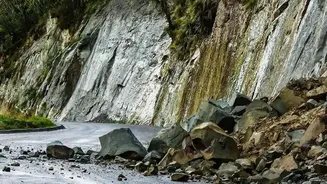
The latest crisis stems from a massive flash flood and landslide near the Nepal-China border. Debris, rock, and ice have blocked major rivers like the Bhote Koshi, creating an impromptu dam. Satellite imagery has confirmed the blockage, showing a large
lake forming behind this wall of rubble. This isn't a stable, engineered structure; it's a precarious pile of loose material. The dam formed after a glacier collapse triggered a massive flow of debris, which then choked the river valley. These landslide dams are a known, terrifying hazard in geologically active regions like the Himalayas. While some can last for years, most are incredibly short-lived. Studies show that more than half of all landslide dams fail within a week, and nearly 90% fail within a year.
The Science of a Catastrophic Failure
A natural dam can fail in several ways, but the most common is overtopping. As the river continues to pour into the new lake, the water level rises until it spills over the top of the debris wall. This initial trickle quickly erodes the loose material, carving a wider channel. This process creates a dangerous feedback loop: the more the dam erodes, the more water is released, which in turn accelerates the erosion, leading to a sudden, complete collapse. Another failure mechanism is seepage or piping, where water finds paths through the dam itself, weakening its internal structure until it gives way. Less common, but exceptionally dangerous, is a secondary event like another landslide crashing into the lake, creating a massive wave that overtops and breaches the dam in an instant.
A Deluge in Waiting
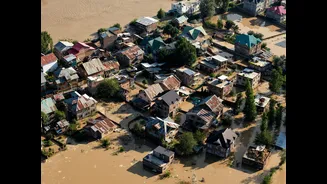
The failure of such a dam would be catastrophic, unleashing what is known as a landslide dam outburst flood (LDOF). This isn't just a flood; it's a high-velocity torrent of water mixed with the debris from the dam itself—boulders, mud, and trees. This destructive slurry can be far more damaging than water alone, scouring valleys and destroying everything in its path, including villages, roads, bridges, and critical infrastructure like hydropower plants. Nepalese authorities have been warning residents and rescue workers in downstream areas to move to safety, highlighting the extreme risk. With heavy rains forecast, the volume of water behind the dam is expected to keep increasing, placing ever more pressure on the unstable barrier.
The Cross-Border Ripple Effect
The threat doesn't stop at Nepal's border. Many of the major Himalayan rivers, including the Bhote Koshi, are transboundary, flowing south into India. The Gandak river system, known as the Narayani in Nepal, flows directly into Bihar and Uttar Pradesh. A surge of floodwater in Nepal would be reflected downstream in India, putting districts in northern Bihar and eastern UP on high alert. Indian authorities have positioned National Disaster Response Force (NDRF) teams in these sensitive border areas and are closely monitoring water levels. This highlights a crucial reality of the region: a natural disaster in the high Himalayas can quickly become a regional emergency, demanding cross-border cooperation and communication for effective early warnings.
Racing Against an Unstable Clock
Responding to a natural dam is a high-stakes race against time. Authorities in both Nepal and China are closely monitoring the situation. Military personnel and rescue teams working near the dam have been pulled back as a precaution. The options are limited and dangerous. Engineers could attempt to create a controlled spillway to slowly drain the lake, reducing the pressure on the dam. However, the remote, mountainous terrain and the inherent instability of the dam itself make such operations incredibly hazardous. For now, the primary response is to issue warnings and evacuate downstream communities. This event is a stark reminder of the cascading hazards in the Himalayas, where one disaster like a landslide can trigger another, and where climate change is making the landscape increasingly unstable.