








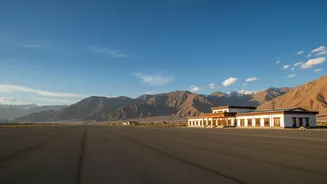
A Modern Gateway in the Himalayas
The centrepiece of the upgrade is a new terminal building at Kushok Bakula Rimpochee Airport, designed to handle a massive increase in passenger traffic. Constructed by the Airports Authority of India (AAI), the state-of-the-art facility will significantly
boost capacity, from the current 18 flights a day to a potential 54. This addresses the growing demand from tourists and locals, with the new terminal capable of serving up to 3.5 million passengers annually. The design is not just functional but also cultural, incorporating local Buddhist philosophy and design elements to reflect the unique heritage of Ladakh. Spanning approximately 19,000 square metres, the terminal will feature modern amenities like aerobridges, numerous check-in counters, and advanced baggage handling systems, a world away from the existing, often congested, facility.
Harnessing the Sun and Earth
What makes this project truly pioneering is its commitment to sustainability. The headline-grabbing rooftop solar plant is a key part of a larger strategy to make Leh Airport India's first carbon-neutral airport. The plan includes a 700 KW solar power system, with panels installed on the terminal's roof and car park areas. However, the innovation goes deeper—literally. The airport will also feature one of India's largest geothermal energy systems for heating and cooling. This involves exchanging heat with the ground through a network of hundreds of borewells, a technology perfectly suited for Ladakh's extreme climate. By combining solar power with geothermal technology, the airport aims to dramatically reduce its carbon footprint, with one estimate suggesting a reduction of 900 tons of carbon emissions annually. This hybrid green energy system will cater to the building's heating, cooling, and hot water needs, reducing reliance on conventional power.
Engineering at Extreme Altitude
Building such a sophisticated structure in Leh presents formidable challenges. The construction window is limited to about six months a year due to the harsh winter, when temperatures can plummet and heavy snowfall halts work. The high-altitude environment at 3,256 meters above sea level complicates logistics, labour, and machinery operations. Despite these hurdles, officials have been pushing for a swift completion. As of mid-2026, the project was reported to be in its final stages, with a significant portion of the structural work complete. The latest official timelines point towards a completion date around August or September 2026, with authorities deploying additional manpower to expedite the final phases of construction.
Boosting Ladakh's Future
The new terminal is more than just an infrastructure project; it's a catalyst for the region's economy. Enhanced air connectivity is expected to provide a major boost to tourism, which is the backbone of Ladakh's economy. With the ability to handle more flights and passengers, the airport will make travel to the Union Territory smoother and more accessible. The project also stands as a powerful symbol of Prime Minister Narendra Modi's vision for a carbon-neutral Ladakh, demonstrating how development and environmental responsibility can go hand-in-hand. By becoming a model for green aviation in a sensitive high-altitude region, Leh's new airport is set to become a landmark of sustainable progress for the entire country.