







A Global Growth Engine
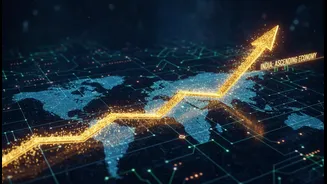
While many of the world's largest economies face a slowdown, India continues to demonstrate robust growth. According to the International Monetary Fund's (IMF) July 2026 update, India’s economy is projected to grow by 6.4% in the current fiscal year.
This figure positions India firmly as the fastest-growing major economy, well ahead of projected global growth of 3.0%, China's 4.6%, and the Euro Area's 0.9%. Both the IMF and Moody's have highlighted that even with a slight moderation due to global factors like energy prices, India's growth trajectory remains exceptionally strong, supported by powerful domestic demand and a booming services sector. The World Bank also echoes this sentiment, noting that while growth is expected to moderate slightly from the previous year, the country's economic fundamentals remain solid.
Building the Nation: The Infrastructure Push
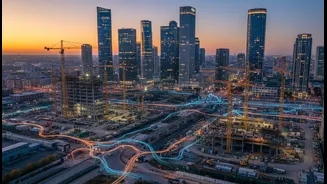
A key pillar of this economic outperformance is an unprecedented, government-led capital expenditure push into infrastructure. Programmes like the National Infrastructure Pipeline (NIP) and PM Gati Shakti are transforming the country's physical landscape. The Gati Shakti master plan, for instance, has brought numerous ministries and state governments onto a single digital platform to coordinate the planning and execution of large-scale projects, reducing delays and improving efficiency. As of early 2026, the Gati Shakti framework had evaluated hundreds of critical infrastructure projects worth trillions of rupees, aiming to enhance multimodal connectivity. This focus is visible on the ground, with new expressways, dedicated freight corridors, modernised airports, and recently approved railway expansions in key industrial regions designed to lower logistics costs and boost economic activity.
The Digital Superhighway
Parallel to the physical build-out, India is constructing a world-leading digital public infrastructure that is supercharging its economy. The Unified Payments Interface (UPI) has become a global benchmark, processing a staggering 23.2 billion transactions in May 2026 alone. This payments backbone, part of the broader 'India Stack', has revolutionised commerce for millions, from small street vendors to large corporations. Initiatives like the Open Network for Digital Commerce (ONDC) are further democratising e-commerce, aiming to bring millions of small and medium-sized enterprises into the digital fold. This digital ecosystem not only boosts efficiency and formalises the economy but also fuels a vibrant fintech and startup culture, creating new services and jobs. A recent report ranked India as the fifth most digitalised economy globally in 2026, highlighting the rapid adoption of digital technologies.
The Twin Engines' Synergistic Power
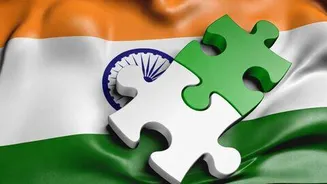
The real magic happens where these two strategies—physical and digital—intersect. The combination creates a powerful multiplier effect. Better highways and railways, planned through the Gati Shakti portal, allow goods to move faster and more cheaply across the country. Simultaneously, digital platforms like ONDC enable a small producer in a Tier-2 city to find customers anywhere in India and receive payments instantly via UPI. This fusion of physical connectivity and digital access empowers businesses, enhances supply chain resilience, and drives consumption. It’s this integrated approach that underpins the strong domestic demand that institutions like the World Bank and IMF have identified as a core strength of India’s economy.