








The 'Greening Planet' Hypothesis
The basic science is straightforward. Plants use CO2 for photosynthesis, the process that fuels their growth. In a controlled environment like a greenhouse, pumping in more CO2 can indeed lead to faster growth and bigger yields. Satellite data has even
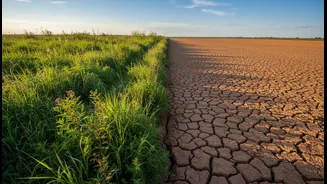
shown a significant 'greening' of the Earth over the last few decades, with up to half of the planet's vegetated lands showing an increase in leaf area. Studies have attributed a large portion of this greening, up to 70%, directly to the increased availability of atmospheric CO2. This has led some to argue that rising CO2 levels are fundamentally a good thing for plant life.
Why More Isn't Always Better
The problem is that the real world isn't a greenhouse. The CO2 fertilisation effect has significant limitations that are often overlooked. For one, the effect diminishes over time as plants acclimate to higher CO2 levels. More importantly, plants don't just need CO2 to thrive; they also require essential nutrients like nitrogen and phosphorus from the soil. Many climate models have historically overestimated the availability of these nutrients, meaning the potential for CO2-fueled growth is much smaller than once thought. Furthermore, any potential growth benefits are often cancelled out by the very climate change that higher CO2 levels cause. Plants also need stable temperatures and a reliable water supply, both of which are being disrupted.
A Harvest of Empty Calories
Even where elevated CO2 does boost plant growth, it comes with a hidden and alarming trade-off: a decline in nutritional quality. A large body of research now shows that staple crops like wheat, rice, and soybeans grown under high-CO2 conditions contain less protein, iron, and zinc. Declines can range from 3% to 17% for these vital nutrients. This phenomenon, sometimes called 'hidden hunger', means that people could be eating enough calories but still suffer from malnutrition because their food is less nutritious. For a country like India, where a majority of the population relies on these staple crops, the implications for public health and food security are profound. The plants grow faster and produce more carbohydrates, but they don't absorb the necessary micronutrients from the soil at the same rate, essentially leading to a more calorific but less nourishing harvest.
The Real Cost of Carbon
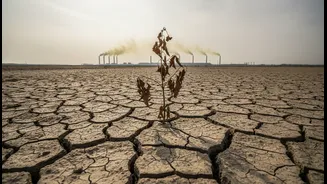
The small and temporary boost to plant growth pales in comparison to the widespread damage caused by rising CO2. As a primary greenhouse gas, CO2 traps heat in the atmosphere, driving up global temperatures. This leads to a cascade of devastating effects. In India, this translates to more frequent and intense heatwaves, which stress both crops and people. It disrupts traditional monsoon patterns, leading to erratic rainfall, with longer droughts in some areas and catastrophic floods in others. This directly impacts agricultural yields for major crops like rice and wheat, which are highly vulnerable to these changes. Furthermore, rising temperatures accelerate the melting of Himalayan glaciers, threatening the long-term water supply for millions, while also causing sea levels to rise and increasing the acidity of the oceans, which harms marine life.