







The Golden Halo: Why We See Honey as Healthy
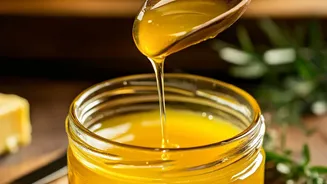
Honey's reputation as a 'healthy' sweetener isn't new; it's one of the world's oldest sweeteners, with roots in ancient traditions and kitchens long before refined white sugar was available. Its appeal is easy to understand. It comes from nature, created
by bees from flower nectar, giving it a pure and unprocessed image. Unlike white sugar, which is heavily refined, raw honey is a complex substance containing not just sugars but also water, pollen, enzymes, and other compounds from the bees and plants. This natural origin story is powerful, leading many to believe it's a fundamentally different and better choice. We add it to tea for a sore throat, drizzle it on yoghurt for a guilt-free treat, and feel good about choosing it over a sugar packet. But how different is it really once it passes your lips?
A Look Inside: Honey's Chemical Makeup
To understand how your body treats honey, we first have to look at what it's made of. At its core, honey is a liquid mixture of two simple sugars: fructose and glucose. A typical jar of honey is roughly 38% fructose and 31% glucose, with water and small amounts of other sugars making up most of the rest. White table sugar, known chemically as sucrose, is also made of fructose and glucose, but they are bonded together in a neat 50-50 pairing. When you eat table sugar, your digestive system has to use an enzyme to break that bond before your body can absorb the two sugar units. With honey, the bees have already done most of that work. Their enzymes split the nectar's sucrose into separate fructose and glucose molecules, meaning they are largely free and ready for your body to absorb directly.
How Your Body Processes Honey vs. Sugar
Because honey is primarily pre-broken-down sugars, it affects your body slightly differently than table sugar. This is measured by the glycemic index (GI), a scale of how quickly a food raises blood sugar levels. Table sugar has a GI of around 65. Honey’s GI is generally lower, with an average often cited around 58, though it can vary widely from as low as 32 to over 70 depending on the floral source. This means many types of honey will raise your blood sugar a bit more gradually than an equivalent amount of table sugar. However, this difference is often modest. Ultimately, both honey and sugar deliver a rush of fructose and glucose to your liver and bloodstream. Your body uses these simple sugars for energy, but when consumed in excess, both are treated similarly, contributing to the same health risks associated with high sugar intake.
Beyond Sugar: The Case for Honey's 'Extras'
So, if it’s mostly sugar, are there any other benefits? Yes, but it’s a matter of scale. Raw honey contains trace amounts of vitamins, minerals, and amino acids. Darker honeys, like buckwheat, are also sources of antioxidants like flavonoids and phenolic acids, which can help protect the body from cellular damage. Honey also has well-known antibacterial properties and can be effective in soothing coughs. The critical question, however, is whether you get enough of these beneficial compounds in a typical spoonful to make a meaningful health impact. Most experts agree that while these extras are a nice bonus, the amounts are too small to count as a significant source of nutrients in a normal diet. You would get far more antioxidants from a handful of berries or a cup of green tea.
The Verdict on Your Parfait
Bringing it back to your breakfast bowl, that spoonful of honey does indeed count as 'added sugar'. Global and national health bodies like the World Health Organization (WHO) and the Indian Council of Medical Research (ICMR) are clear: 'free sugars' include all sugars added to foods, plus those naturally present in honey, syrups, and fruit juices. For adults, the recommendation is to limit these added sugars to about 20 - 25 grams per day. A single tablespoon of honey contains about 17 grams of sugar and 64 calories, which uses up a significant portion of that daily budget. While it is slightly denser and more caloric than table sugar (which has about 12 .5 grams of sugar and 48 calories per tablespoon), honey is also sweeter , so you might use less.