



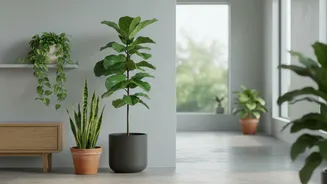
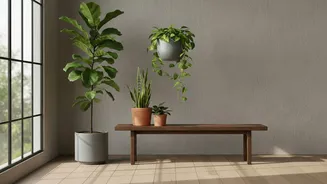
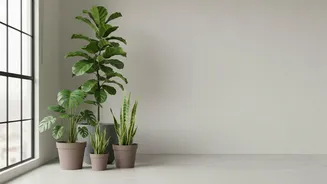
The Unseen Dance for Sunlight
That persistent lean you see in your potted plants has a name: phototropism. It’s the natural ability of a plant to orient its growth towards a light source. Think of your plant’s leaves as tiny solar panels. To create food through photosynthesis, they
need to capture as much light as possible. This bending and twisting is an active, continuous process, a silent and slow-motion pursuit of the energy it needs to survive and thrive. This behaviour is most obvious in houseplants because, unlike their outdoor counterparts, the light in our homes almost always comes from one primary direction—a window or a balcony door. This constant, one-sided stimulus makes their quest for light easy to observe.
The Science Behind the Bend
So, how does a plant, without a brain or muscles, manage this movement? The secret lies with a powerful plant hormone called auxin. This chemical is produced at the very tips of the stems and is sensitive to light. When sunlight hits one side of the plant, the auxin on that bright side breaks down or moves away. This causes a higher concentration of auxin to build up on the shadier side of the stem. Here's the crucial part: auxin stimulates cell elongation. With more auxin present, the cells on the shaded side grow longer and faster than the cells on the sunny side. This uneven growth is what physically causes the stem to bend towards the light. It's a simple yet brilliant mechanism that ensures the plant is always optimising its position for energy production.
Why This Lean Is a Good Sign
While a lopsided plant might not always look perfect, its ability to bend is a strong indicator of its health. Phototropism is a sign that the plant is actively responding to its environment and has the energy to seek out what it needs. This process is vital for its survival, especially for young seedlings that need to find light quickly after germinating. By angling its leaves and stems correctly, the plant maximizes its photosynthetic capacity, leading to more robust growth, stronger stems, and more vibrant foliage. So, when you see your plant leaning, don't view it as a problem, but as a sign that it is alive and actively working to flourish in the space you've given it.
Should You Keep Turning Your Plants?
Given that plants will always turn back to the light, you might wonder if rotating them is a futile effort. The answer is a definite no; in fact, regular rotation is highly recommended. While the plant’s instinct is to lean, letting it grow too far in one direction can lead to a permanently lopsided and weak structure. The side facing away from the light can become sparse, with fewer and smaller leaves. By rotating your plant a quarter turn every week or so, you encourage balanced, symmetrical growth. This ensures all sides of the plant receive their fair share of light, promoting a fuller, healthier, and more aesthetically pleasing appearance. It also helps the plant develop a stronger central stem, making it more stable as it grows.
Common Plants with a Strong Sun-Seeking Habit
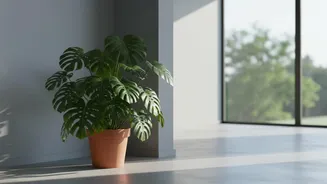
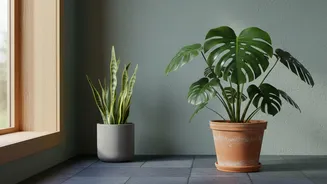
Some plants are more dramatic in their light-seeking dance than others. Many popular houseplants in Indian homes are known for their strong phototropic responses. Vining plants like Pothos (Epipremnum aureum) and Heartleaf Philodendron are classic examples, often sending their tendrils directly towards the nearest window. The trendy Pilea peperomioides, or Chinese Money Plant, is famous for its circular leaves that orient themselves towards the light, and it benefits greatly from regular rotation to maintain its signature shape. Other common favourites like the Snake Plant (Sansevieria), Monstera, and even succulents will all exhibit this lean, reminding you of their constant, quiet connection to the sun.