



The Allure of the Wild
Chefs and home cooks are increasingly looking beyond markets to rediscover India's rich bounty of wild produce. This trend is about more than just novel flavours; it is a way to connect with food at its most primal level. Foraging offers a taste of ingredients
that have been known to indigenous communities for generations but are new to mainstream urban plates. Visionary chefs like Vanika Choudhary of Noon in Mumbai and Prateek Sadhu of NAAR in Kasauli are championing this movement, bringing ingredients like Himalayan sea buckthorn, wild garlic chives (skotse), and Maharashtrian wild greens (takla) into their celebrated kitchens. This practice not only introduces incredible new tastes but also shines a light on biodiversity and supports the rural communities who are the traditional custodians of this knowledge.
The First Golden Rule: Certainty Above All
The single most important rule of foraging is absolute, 100% positive identification. If you are not completely certain what a plant is, do not pick it, and certainly do not eat it. Many edible plants have poisonous lookalikes, and a mistake can be dangerous, even fatal. For example, the Cerbera odollam, or “suicide tree,” bears fruit that resembles a small, unripe mango but is highly toxic and has been responsible for numerous deaths in parts of South India. The beautiful flowers of the Datura plant, often used in religious offerings, contain potent alkaloids that can cause severe poisoning. Your foraging journey should begin not in the forest, but with books, local field guides, and ideally, an experienced mentor who can teach you how to safely identify plants.
The Ethical Harvest: Forage Like a Guardian
Responsible foraging is about a relationship of respect and reciprocity with nature. It is guided by a simple principle: leave the environment in a better state than you found it. Ethical foragers follow a code of conduct to ensure wild plant populations remain healthy for generations to come. A key guideline is to never take the first plant you see, and never take the last. A common rule is the “one in ten” principle: for every ten plants you find in a patch, harvest only one, and only if the patch is abundant and thriving. Never take more than you can realistically use. Be mindful of the entire ecosystem; by taking only a few leaves from a plant like wild garlic instead of its bulb, you allow it to return the following year. Avoid foraging in protected areas like nature reserves or on private land without permission.
A Beginner's Basket: Easy-to-Spot Edibles
For those starting out, it is wise to focus on a few common and easily identifiable plants. Purslane, a succulent weed with smooth, fleshy leaves, was a favourite of Mahatma Gandhi and can be eaten raw or cooked. The flowers of the Buransh tree (Rhododendron) are used to make juices and chutneys in the Himalayas. In many parts of India, tender moringa leaves are a staple, as are the leaves and flowers of amaranth (chaulai). Another widely recognised fruit is the 'jungle jilebi' (Madras thorn), whose sweet-sour fleshy pulp is a popular snack. Many seemingly invasive weeds can also be a good place for beginners to start, as harvesting them can actually help local ecosystems. However, even with these common plants, it is vital to get confirmation from a local expert before your first harvest.
The Tools for the Trail
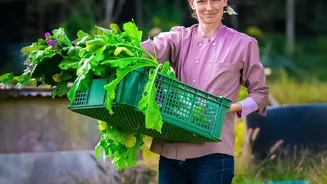
Being a responsible forager also means being prepared. You don't need much, but the right tools make the process safer and more sustainable. A good pair of gloves will protect your hands, while a knife or pruning shears allow for a clean cut that minimises damage to the plant. Carry your harvest in a wicker basket or a cloth bag; unlike plastic bags, these allow spores from mushrooms and seeds from plants to disperse as you walk, aiding in their regeneration. A local field guide is an indispensable companion for cross-referencing what you find. Finally, always carry a basic first-aid kit and be aware of your surroundings, including any wildlife in the area.