
The Invisible Threat From Our Sun
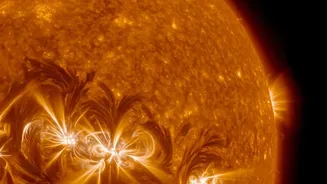
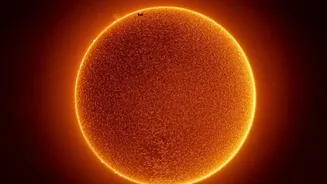
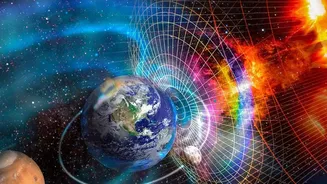
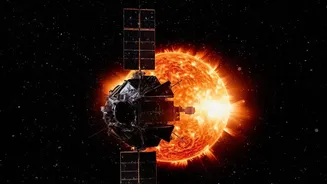
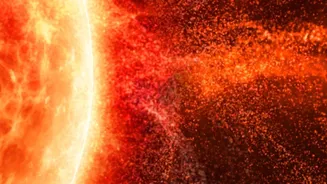
Imagine a wind that travels at over a million kilometres per hour, not of air, but of charged particles—protons and electrons—constantly blowing from the Sun. This is the solar wind. While mostly harmless to humans on the surface thanks to Earth's protective
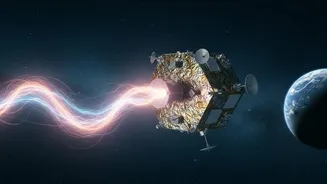
magnetic field, it's a different story for the technology that underpins modern society. Particularly intense bursts of solar wind, known as solar storms or coronal mass ejections (CMEs), can have devastating effects. These events can induce powerful electrical currents in power grids, leading to widespread blackouts like the one that struck Quebec, Canada, in 1989. They can also disrupt high-frequency radio communications, damage sensitive electronics on satellites, and affect GPS accuracy, impacting everything from navigation to financial transactions. In an increasingly connected world, this 'space weather' is a significant national security and economic concern.
A New Sentinel in Space
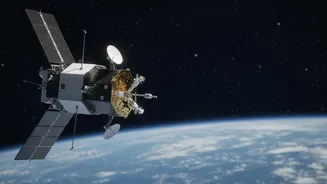
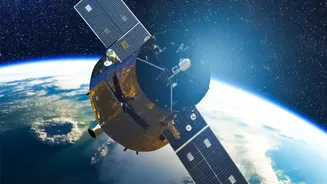
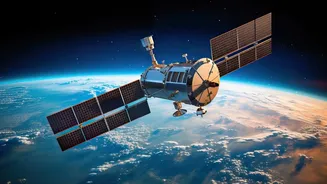
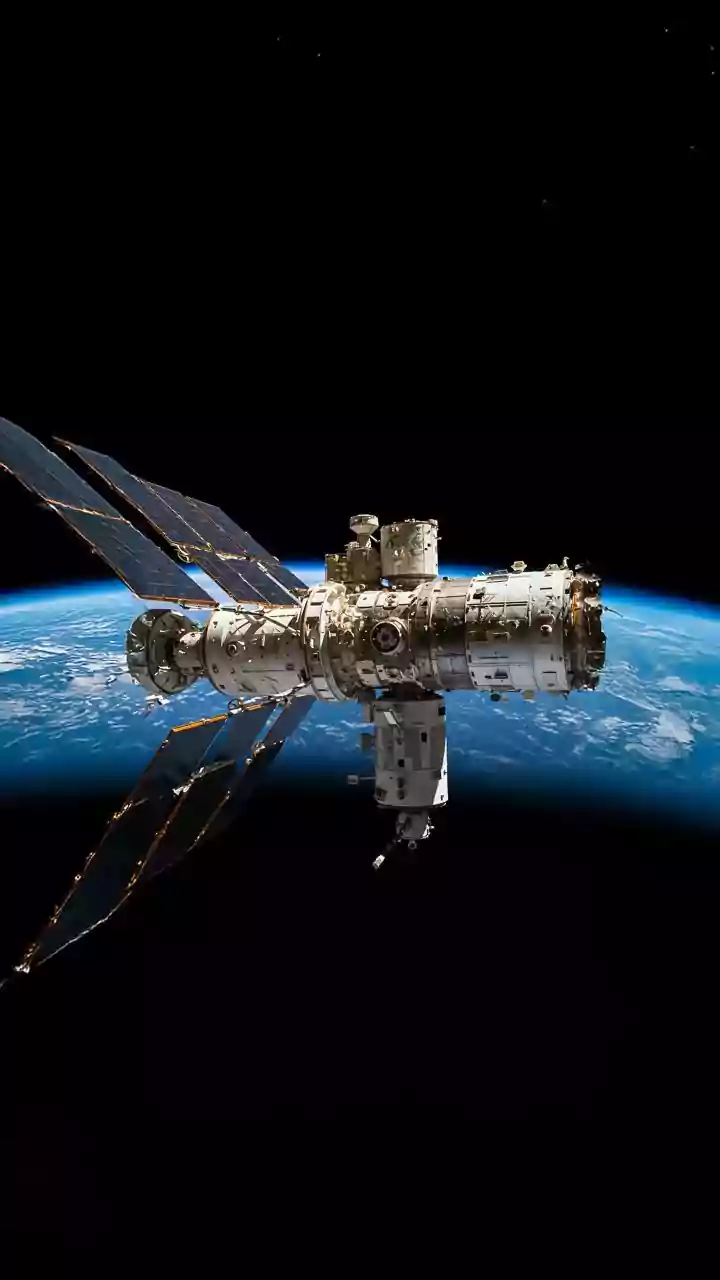
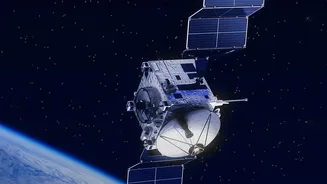
For years, scientists have used satellites to monitor space weather, but the warnings often came with little lead time. Enter the Interstellar Mapping and Acceleration Probe, or IMAP. Launched in September 2025, IMAP is a state-of-the-art observatory now positioned at a strategic location one million miles from Earth, directly in the path of the oncoming solar wind. From this vantage point, known as Lagrange Point 1 (L1), IMAP uses a suite of ten advanced instruments to 'taste' the solar wind, measuring its speed, density, temperature, and magnetic field direction. Its primary mission is twofold: to understand the boundary where the Sun's influence ends and interstellar space begins, and to provide a high-fidelity, real-time feed of the space weather heading our way.
The Power of an Early Warning
The game-changing capability of IMAP lies in its 'near-real-time' data stream. Through a system called the IMAP Active Link for Real-Time (I-ALiRT), crucial data is continuously broadcast back to Earth. This gives space weather forecasters about a 30-to-60-minute head start on disruptive events, a significant improvement over previous capabilities. While it might not sound like much, this warning window is critical. It allows power grid operators to take protective measures to prevent overload, satellite operators to place their spacecraft into a safe mode to protect sensitive electronics, and can provide astronauts with crucial time to seek shelter from harmful radiation. The data from IMAP is already being used by agencies like the National Oceanic and Atmospheric Administration (NOAA) to improve the timeliness and accuracy of their space weather alerts and forecasts.
Fresh Clues and Future Protection
The "fresh clues" from IMAP are not just about a single storm, but about transforming our fundamental understanding of the Sun's behaviour. After beginning its prime science mission in February 2026, IMAP has been collecting a torrent of high-quality data. For the first time, forecasters are getting real-time information on new data types like helium ion counts and solar wind charge state ratios, which offer deeper insights into the structure and origin of solar events. One of its instruments has already captured comprehensive measurements of an intense solar flare that forced other instruments into safe mode, highlighting its robust design. By feeding this steady stream of detailed information into our predictive models, scientists can refine their forecasts, moving from just knowing that something is coming to better understanding what it will do when it arrives. This continuous flow of data promises to build a far more accurate and nuanced picture of the complex relationship between the Sun and Earth, ensuring we are better prepared for whatever our star sends our way.