




An Unforgiving Landscape Meets Unchecked Ambition
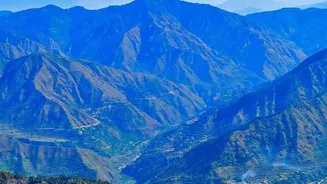
The story of the last twelve years of Himalayan emergencies begins with a fundamental conflict: the collision of a geologically fragile, young mountain range with humanity’s relentless push for development. The 2013 Kedarnath floods were a brutal awakening.
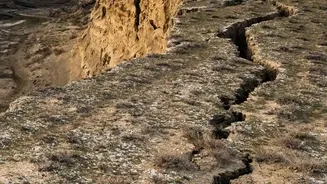
Triggered by unprecedented rainfall, the disaster saw flash floods and landslides claim over 5,700 lives. While the rains were the trigger, experts quickly pointed to the unregulated construction of roads, hotels, and hydropower projects that had destabilised slopes and choked riverbeds. This lesson, however, went largely unheeded. A decade later, in January 2023, the town of Joshimath began to physically sink, with hundreds of buildings developing deep cracks. Studies confirmed that the town, built on ancient landslide debris, was collapsing under the pressure of rapid, unplanned urbanisation which had doubled the built-up area in a decade. These events are not isolated; they are symptoms of a systemic failure to respect the mountains' inherent fragility.
Climate Change: The Great Threat Multiplier
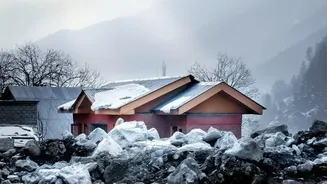
If haphazard development loaded the gun, climate change is pulling the trigger with increasing frequency. The Himalayas are warming at a rate nearly twice the global average, a change that is supercharging the region’s natural hazards. This isn't an abstract future threat; its effects are visible now. The 2021 Chamoli disaster, which washed away two hydropower projects and left over 200 people dead or missing, was caused by a massive rock and ice avalanche. While not directly a climate event, scientists noted that rising temperatures contribute to the instability of glaciers and mountain slopes, making such catastrophic failures more likely. The increasing intensity of the monsoon, interacting with western disturbances, is leading to more frequent and powerful cloudbursts and extreme rainfall events. The devastating floods in Himachal Pradesh in 2023, which caused widespread destruction, were a direct consequence of this lethal combination of weather patterns amplified by a warming climate.
A Cascade of Ignored Warnings
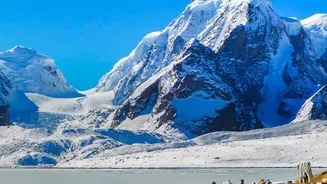
Perhaps the most frustrating lesson is that many of these tragedies were foreseeable. The risks associated with building on the unstable slopes of Joshimath were documented decades ago, yet construction continued unabated. Across the region, scientists have repeatedly warned that the high density of dam construction in a seismically active and fragile zone is a recipe for disaster. The Himalayas are home to thousands of glaciers, and as they melt, they form unstable glacial lakes. The risk of Glacial Lake Outburst Floods (GLOFs), like the one that devastated parts of Sikkim in October 2023, has been flagged for years by multiple agencies. The recurring theme is a disconnect between scientific knowledge and on-the-ground policy. Reports are filed and warnings are issued, but short-term economic and political compulsions often override long-term ecological wisdom, leading to predictable and painful consequences.
The Human Cost and the Path Forward
Beyond the geology and climate science, the ultimate lesson is about people. Each disaster leaves a trail of human tragedy—lives lost, livelihoods destroyed, and communities displaced. The victims are often workers at construction sites or residents of remote villages with nowhere else to go. While disaster response, led by agencies like the NDRF and local forces, has shown incredible bravery and improved evacuation capabilities, the focus must shift from post-disaster rescue to pre-disaster prevention. The emergencies of the last twelve years are not a series of disconnected 'natural disasters.' They are a clear and consistent warning that the current model of development in the Himalayas is broken. It treats the mountains as a resource to be extracted rather than a fragile ecosystem to be preserved.