




A New Kind of Explorer Lifts Off
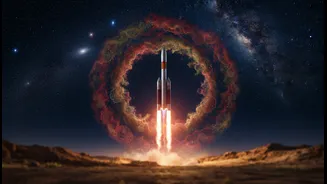
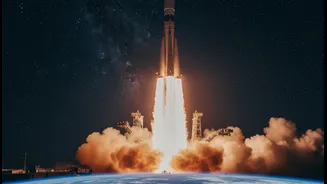
This week, NASA astronaut and U.S. Space Force Col. Dr. Anil Menon blasted off from the Baikonur Cosmodrome, beginning a historic eight-month mission aboard the International Space Station (ISS). Flanked by two Russian cosmonauts, Menon’s journey is more
than just another trip to the orbiting laboratory; it signifies a pivotal moment in human spaceflight. As a flight engineer for Expeditions 74 and 75, he carries not only the hopes of a planet but also a rare combination of expertise that makes him exceptionally suited for the frontiers of science and survival. His mission is a testament to how the profile of an astronaut is evolving for an era of longer, more ambitious voyages beyond Earth's cradle.
The Making of a Multi-Skilled Astronaut
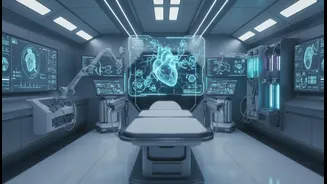
Anil Menon is not just an astronaut; he is a practicing emergency medicine physician and a mechanical engineer. Born in Minnesota to Indian and Ukrainian immigrants, his career path has been a masterclass in interdisciplinary excellence. After studying neurobiology at Harvard, he earned medical and engineering degrees from Stanford. His experience is incredibly diverse, ranging from serving as a first responder in earthquakes in Haiti and Nepal to providing medical care to climbers on Mount Everest. Before joining the astronaut corps in 2021, Menon was a flight surgeon for NASA, supporting crews on the ISS. He then became SpaceX’s first-ever flight surgeon, where he helped build the company's medical program for its pioneering human spaceflights. This unique blend of hands-on emergency care and aerospace engineering makes him a walking, talking embodiment of what future space missions will demand.
A Laboratory Above the World
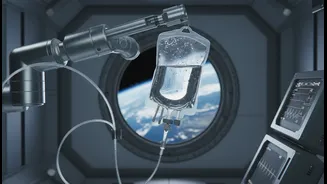
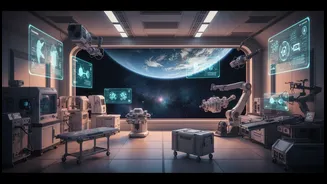
An eight-month stay in space is a profound challenge, both for the human body and for technology. Menon's mission will focus on a host of scientific investigations designed to push the boundaries of both. A key area of research will be understanding and mitigating the health effects of long-duration spaceflight, such as muscle atrophy and bone density loss. Experiments like the Advanced Diagnostic Ultrasound in Microgravity will continue to be crucial. His medical background will be invaluable in overseeing these human science experiments. Simultaneously, his engineering skills will be put to the test. One planned investigation involves producing intravenous fluids from the station's existing potable water supply—a critical step toward medical self-sufficiency on future missions to the Moon or Mars.
Why This Skillset Is the Future
For decades, NASA has sent highly specialised individuals into space. But as missions get longer and travel farther from home, the need for versatile, multi-skilled crew members becomes paramount. It's no longer just about having a doctor on call on Earth; it's about having a doctor in the room—or in this case, in the capsule—who can also fix a malfunctioning life-support system. A physician-engineer can diagnose a medical emergency with one hand and troubleshoot a faulty circuit with the other. This integrated expertise drastically improves mission safety and efficiency, reducing reliance on ground control for critical, time-sensitive decisions. Menon's mission serves as a real-world test case for this new archetype of explorer, one who is prepared not just to follow instructions but to adapt, innovate, and solve complex problems autonomously.
The Human Element of Deep Space
Beyond the technical and scientific goals, an eight-month mission is an immense psychological and physiological marathon. Astronauts face isolation, confinement, and the constant stress of living in a hazardous environment. Here, too, Menon's background as a physician provides a distinct advantage. His training in emergency and wilderness medicine has taught him how to make calm, effective decisions under extreme pressure. As a flight surgeon, he is intimately familiar with the physical and mental toll of spaceflight on his crewmates. This dual perspective allows him to function not just as a scientist and engineer, but as a uniquely qualified caretaker for his crew, enhancing the cohesion and resilience of the entire team as they navigate their long journey together, 260 miles above the Earth.