





An Unshakeable Cultural Foundation
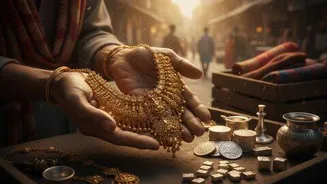
For centuries, gold has been central to Indian life. It is a star attraction at weddings, a symbol of blessings during festivals like Diwali and Akshaya Tritiya, and a trusted family heirloom passed across generations. This isn't just about ornamentation;
gold is seen as a tangible form of security. For millions, especially in rural India where access to formal banking can be limited, it serves as a reliable store of value and a safe-haven asset that protects wealth from inflation and economic uncertainty. This deep cultural and financial connection ensures that demand remains consistently high, making India one of the world's largest consumers of the precious metal. In early 2026, demand continued to show its strength, with the first quarter seeing a 10% rise in volume year-on-year.
The Economic Cost of Tradition
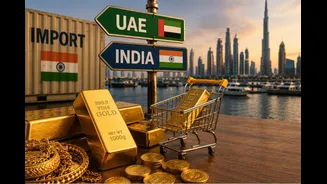
India's immense appetite for gold comes at a steep price, as domestic production is almost negligible. The country mines only about 1.5 to 2 tonnes of gold annually, a tiny fraction of its demand which can range from 700 to 900 tonnes per year. This massive shortfall is met through imports, making gold one of the largest items on the nation's import bill, alongside crude oil. In the 2026 fiscal year, gold imports reportedly hit a record $71.98 billion. These enormous outflows of foreign currency put pressure on the Indian rupee and the country's trade deficit. The domestic price of gold is therefore a combination of international rates, the US dollar-rupee exchange rate, and government-imposed import duties, which as of early September 2026, made gold in India significantly costlier than in markets like Dubai.
The 'Atmanirbhar Bharat' Dilemma
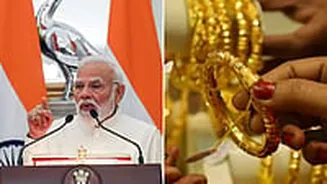
Herein lies the conflict with 'Atmanirbhar Bharat,' or the national mission for a self-reliant India. The initiative aims to strengthen domestic capabilities and reduce dependency on imports. However, India's reliance on foreign gold stands in stark contrast to this goal. The government has frequently found itself in a difficult position, balancing the cultural demand with economic prudence. Prime Minister Narendra Modi has recently urged citizens to curtail non-essential gold buying to protect foreign exchange reserves, a move that aligns with the self-reliance initiative but also sends ripples of concern through the jewellery industry. This highlights the core tension: can a country striving for self-sufficiency afford such a large and consistent import dependency driven by cultural norms?
Policy Fixes: From Taxes to Monetization
The government has deployed several strategies to manage this paradox. Raising import duties is a common tool used to make gold more expensive and temper demand, though this can also fuel smuggling. A more ambitious approach has been the Gold Monetisation Scheme (GMS), launched in 2015. The scheme encourages households and institutions to deposit their idle gold with banks in exchange for interest, with the aim of recycling this domestic stock to reduce the need for fresh imports. However, the GMS has seen limited success, mobilising only a small fraction of the estimated 25,000 tonnes of gold held privately in India. Low awareness and a deep-seated reluctance to part with heirloom jewellery have been major hurdles, prompting discussions about revamping the scheme to involve trusted local jewellers.
A Shift Towards Investment
Interestingly, recent trends show a significant shift in the nature of gold demand. In the first quarter of 2026, investment demand (in the form of bars, coins, and Exchange Traded Funds or ETFs) outpaced jewellery demand for the first time. Investment demand surged by 54% year-on-year, nearly matching the volume of jewellery consumed. This suggests a growing sophistication among buyers, who are increasingly viewing gold as a financial asset for portfolio diversification, especially amid market volatility and inflation. This trend towards financial instruments like Sovereign Gold Bonds and ETFs could be a potential pathway to channel savings into gold without physically importing it, partially aligning with the self-reliance goal.