

A Mission of Historic Ambition
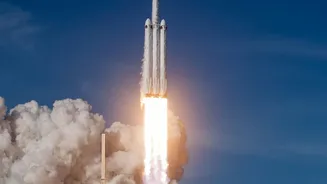
SpaceX's Flight 15, which launched from Starbase in Texas on November 13, 2026, was slated to be the most ambitious test yet for the world's most powerful rocket. The primary goal was unprecedented: to launch the two-stage Starship vehicle into orbit
and then recover both the Super Heavy booster and the Starship upper stage by 'catching' them with the giant mechanical arms of the launch tower, nicknamed 'Mechazilla'. This 'double catch' was intended to be the first full recovery of an orbital-class rocket system in history, a milestone Elon Musk has described as profound for the future of spaceflight. Successfully catching both components is the key to SpaceX's vision of rapid and complete reusability, which is necessary to achieve its goals of frequent, low-cost launches for satellite deployment and, eventually, missions to the Moon and Mars.
The Booster's Aborted Return
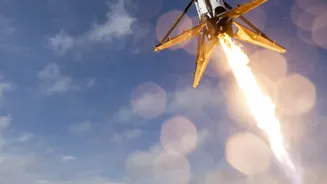
The first half of the ambitious plan did not go as hoped. After a successful liftoff and stage separation, the Super Heavy booster began its journey back to the launch site. However, its automated systems detected a problem during the coast phase. Early indications suggest the booster's boostback burn, designed to put it on course for the tower, ended early due to a low fuel mass alarm. This may have been caused by a slight underperformance of its Raptor engines. The onboard guidance, navigation, and control (GNC) system performed its job correctly, determining that the booster was not in the correct position for a safe catch. It then triggered an automatic abort, diverting the massive rocket to a contingency splashdown site in the Gulf of Mexico, where it was destroyed just above the water's surface about six and a half minutes after launch.
Starship's Flawless Orbital Mission
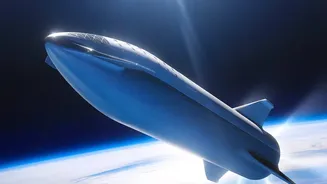
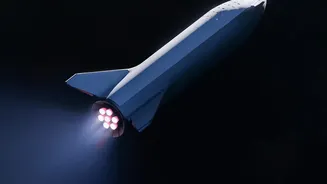
Despite the booster's fate, the mission was far from over. The Starship upper stage, known as Ship 42, continued its nominal ascent, successfully reaching orbit. Once there, it completed a key commercial objective by deploying 26 of SpaceX's next-generation Starlink V3 satellites. This demonstrated the vehicle's capability as a payload-delivery platform even while still in its testing phase. The spacecraft then entered a long-duration coast, circling the Earth approximately 14 times over 22 hours, allowing SpaceX teams to monitor its systems in the space environment—the longest Starship flight to date. This extended orbital phase was a crucial test of the vehicle's endurance and systems ahead of its dramatic return.
A Historic Catch for the Ages
On November 14, Ship 42 began its fiery descent through Earth's atmosphere. After performing a 'belly-flop' maneuver to scrub off speed, it used its engines to flip upright for landing. In a spectacle watched by millions, the 171-foot-tall spacecraft descended precisely toward the launch tower. The 'chopstick' arms of Mechazilla closed in, securing the vehicle in a controlled catch—the first time an orbital-class upper stage had ever been recovered this way. SpaceX commentator Dan Huot called it the 'holy grail of spaceflight', declaring, 'We caught a Starship, and now everything changes'. The successful recovery of the ship marks a monumental step toward a fully reusable launch system, a technology that could dramatically lower the cost of accessing space.