






The Old Idea of Memory
For a long time, many of us thought of memory as a giant, dusty library or a computer's hard drive. We imagined that our experiences were 'encoded' and 'stored' like files, waiting to be pulled out perfectly intact whenever we needed them. Forgetting,
in this old model, was seen as a failure of this system—either the file was lost, corrupted, or we just couldn't find the right one. This 'filing cabinet' metaphor is simple and intuitive, but scientists now know it's fundamentally incomplete. Memory is not a passive recording that you simply play back. It is a far more active, dynamic, and sometimes messy process.
Remembering Is An Act of Creation
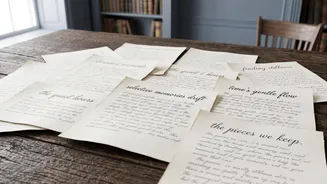
Groundbreaking new research is building on a revolutionary idea: the very act of remembering changes the memory itself. Every time you recall an event, you are not just playing back a video. Instead, your brain actively reconstructs the memory from scattered pieces of information. As one study from Rice University highlighted, this process of reconstruction can leave a trace that changes how the memory is represented in the brain the next time you access it. This is a concept known as reconsolidation. Each time a memory is brought into your conscious mind, it becomes temporarily fragile and open to modification before being stored again. Your current mood, new information, and even the reason you are recalling the memory can subtly—or sometimes significantly—alter it. This means your most frequently recalled memories might, paradoxically, be the least accurate.
How Retrieval Shapes Recall
So, how does this work? The new research focuses on the powerful role of retrieval. When you try to remember something, your brain doesn't just search for that one piece of information. It often has to deal with competing memories. Recent studies show that the process of selecting and retrieving one memory can actively suppress or inhibit related, competing ones. This is known as retrieval-induced forgetting. For example, if you are trying to remember the name of your new colleague, 'Rahul', your brain might suppress the names of other colleagues, like 'Rohan' or 'Raj'. This makes the memory for 'Rahul' stronger, but can make it harder to recall the other names later. Furthermore, researchers are finding that voluntary recall (deliberately trying to remember) and involuntary recall (when a memory just pops into your head) engage different patterns of brain activity, showing how complex the act of remembering truly is.
Making It Work For You
This new understanding isn’t just fascinating science; it has powerful real-world applications, especially for learning. It explains a phenomenon called the 'testing effect'. Studies have consistently shown that actively testing yourself on material is far more effective for long-term retention than simply re-reading it. Why? Because each time you force yourself to retrieve information, you are engaging in this active reconstruction process, strengthening the memory trace and making it easier to access in the future. This process can even revive forgotten memories. For students preparing for exams or professionals trying to learn a new skill, this is a game-changer. Instead of passively reviewing notes, a better strategy is to actively quiz yourself. Create flashcards, answer practice questions, or try to explain the concept to a friend. These retrieval practices build stronger, more durable memories.