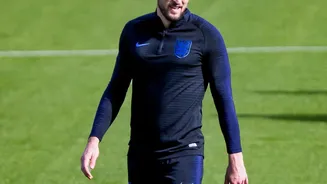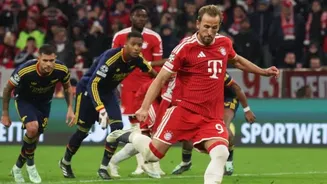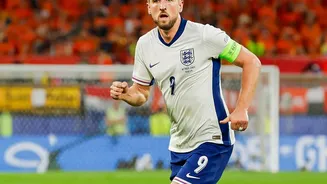





In an era of congested fixtures and punishing schedules, Harry Kane remains a constant. The England captain's remarkable durability isn't luck; it's a masterclass in athletic longevity, built on a foundation of meticulous planning and discipline.
From Ankle Woes to Iron Man
It's
easy to forget that Kane's career was once hampered by recurring ankle injuries. A significant hamstring tear in January 2020 proved to be a turning point. Frustrated by the cycle of injury and recovery, Kane decided to overhaul his approach. He began working with a private Spanish physiotherapist, recommended by another athlete, to fundamentally change his body mechanics. This specialist, who flies in for one week each month, has worked with Kane for hours on end to build resilience and correct the imbalances that led to previous breakdowns. Kane himself says he is now in a 'totally different place' physically, a transformation that has allowed him to play more consistently than ever before.
Fueling the Goal Machine
Modern football success is built in the kitchen, and Kane has taken this to an elite level. For nearly a decade, he has employed a personal chef and qualified nutritionist, Dan Sargeant, to manage his diet with scientific precision. This isn't about restriction, but about providing the body with the right fuel at the right time. A typical day involves lean proteins like fish and chicken, complex carbohydrates, and plenty of vegetables. The key is the strategic timing of carbohydrates, which are increased or decreased based on training intensity and match schedules. This approach, fine-tuned over years, has been credited with enhancing his performance and speeding up recovery. Even his 'cheat meal' is a specially prepared bone-broth lasagna, a dish so beloved he has reportedly requested it for Christmas dinner.
The Gospel of Recovery
As players enter their thirties, recovery becomes as crucial as training itself, a fact Kane has fully embraced. He speaks openly about the importance of sleep, calling it an underrated but vital component of his routine. This is supplemented by a range of modern and traditional techniques, including ice baths, massages, mobility work, and even infrared saunas. This holistic approach ensures his body can withstand the rigours of playing a match every three to four days. It reflects a shift in mindset for the modern athlete: understanding that the work done between games is what allows for peak performance during them. His investment in an AI-driven fitness startup also shows his commitment to leveraging data for injury prevention.
Training with Intelligence
Kane’s physical evolution is also a story of training smarter, not just harder. Once viewed as a late developer who was 'a bit chubby' in his academy days, he grew into his frame and developed a unique physical profile. He is not the most explosive athlete, but his elite goalscoring comes from incredible efficiency and repeatable technique, honed through dedicated practice. As he has matured, he has learned to listen to his body, understanding when to push and when to ease off. Instead of smashing 50 balls after every training session, he might now hit just 15, prioritising being available for the next match over relentless volume. This intelligent self-management is a key reason why, at an age when many strikers are declining, Kane's physical data shows he is running faster than ever.
The Uneniable Payoff
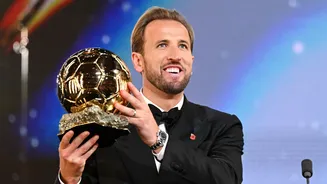
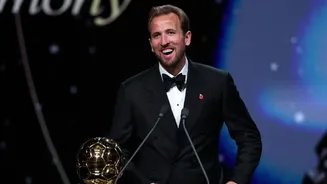
The results of this disciplined lifestyle are evident on the pitch. Since moving to Bayern Munich, Kane has shattered records, becoming the fastest player to reach 100 Bundesliga goals. His first seasons in Germany have yielded a Bundesliga title, a European Golden Shoe, and the 2026 Ballon d'Or, the first for an English player in 25 years. His availability is his greatest ability; he rarely misses matches, allowing him to maintain a relentless goalscoring rhythm. For a player who once struggled with recurring injuries, his ability to consistently perform at the highest level across a 50-plus game season is the ultimate validation of his meticulous fitness and recovery practices.