
What the First Trial Involves
According to statements from Railway Minister Ashwini Vaishnaw, the first trial runs are anticipated to begin around May or June of 2027. These tests will not cover the entire 508-kilometre route but will focus on a specific, nearly-completed section
in Gujarat. The initial phase is slated to run between Surat and Bilimora, a stretch where construction has advanced significantly. Following a testing period of two to four months to ensure all systems are functioning perfectly, the first commercial service on this part of the corridor is expected to be inaugurated. This phased approach allows the National High Speed Rail Corporation Limited (NHSRCL), the body executing the project, to validate the technology and operational protocols before a full-scale launch.
Current State of Construction
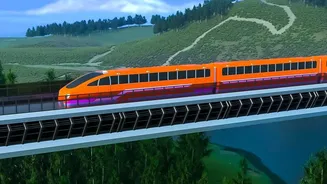
The project has been divided into sections across Gujarat and Maharashtra, with progress moving at different paces. In Gujarat, construction is well advanced. As of mid-2026, work on piers and viaducts has covered the vast majority of the 352-km stretch in the state. Work is also progressing on eight stations, including major hubs like Ahmedabad, Vadodara, and Surat. In contrast, the Maharashtra section faced initial delays, primarily due to challenges in land acquisition. However, with 100% of the required land now acquired across both states, construction in Maharashtra has gained significant momentum. Work is active on the 135-km elevated portion in the state, which includes complex engineering feats like mountain tunnels and major river bridges, including a 2.32-km bridge over the Vaitarna river. Excavation for the underground station at Bandra-Kurla Complex (BKC) in Mumbai is also nearing completion.
The Technology Driving the Dream
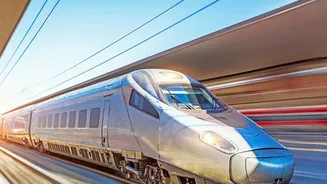
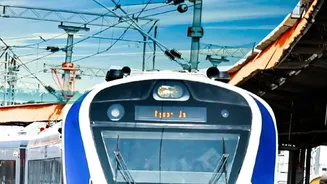
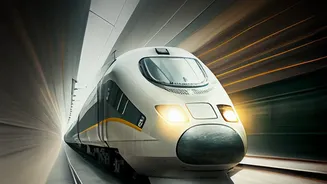
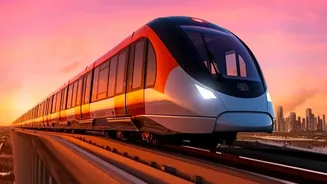
The Mumbai-Ahmedabad corridor is being built using Japan's renowned Shinkansen technology, known globally for its exceptional safety record and punctuality. The trains are designed to operate at a speed of 320 km/h, which will drastically cut travel time. The full journey between Mumbai and Ahmedabad, which currently takes several hours by conventional rail, is expected to be completed in just under two hours with limited stops. While the core technology is Japanese, there is a strong push for indigenous manufacturing under the 'Atmanirbhar Bharat' initiative. Indian companies are involved in manufacturing components and even developing train sets designed to run at high speeds, aiming to build a domestic ecosystem for future high-speed rail projects.
More Than Just Speed
The bullet train is positioned as more than just a transportation upgrade; it is seen as a catalyst for economic growth. The project is expected to create jobs, spur development in towns along the corridor, and boost industrial and commercial activity by connecting two of India's most important economic centres. The construction itself involves huge logistical and engineering efforts, contributing to skill development. Furthermore, the NHSRCL is building modern stations integrated with other transport modes like local trains and bus depots, as seen in the plans for Vadodara station, which will feature travelators and multiple foot overbridges for seamless passenger movement. The vision extends beyond this single corridor, with the learnings from the Mumbai-Ahmedabad line intended to create a template for seven other proposed high-speed rail routes across the country.