



The Galaxy's Most Common Planet
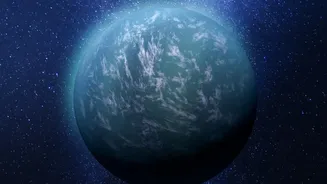
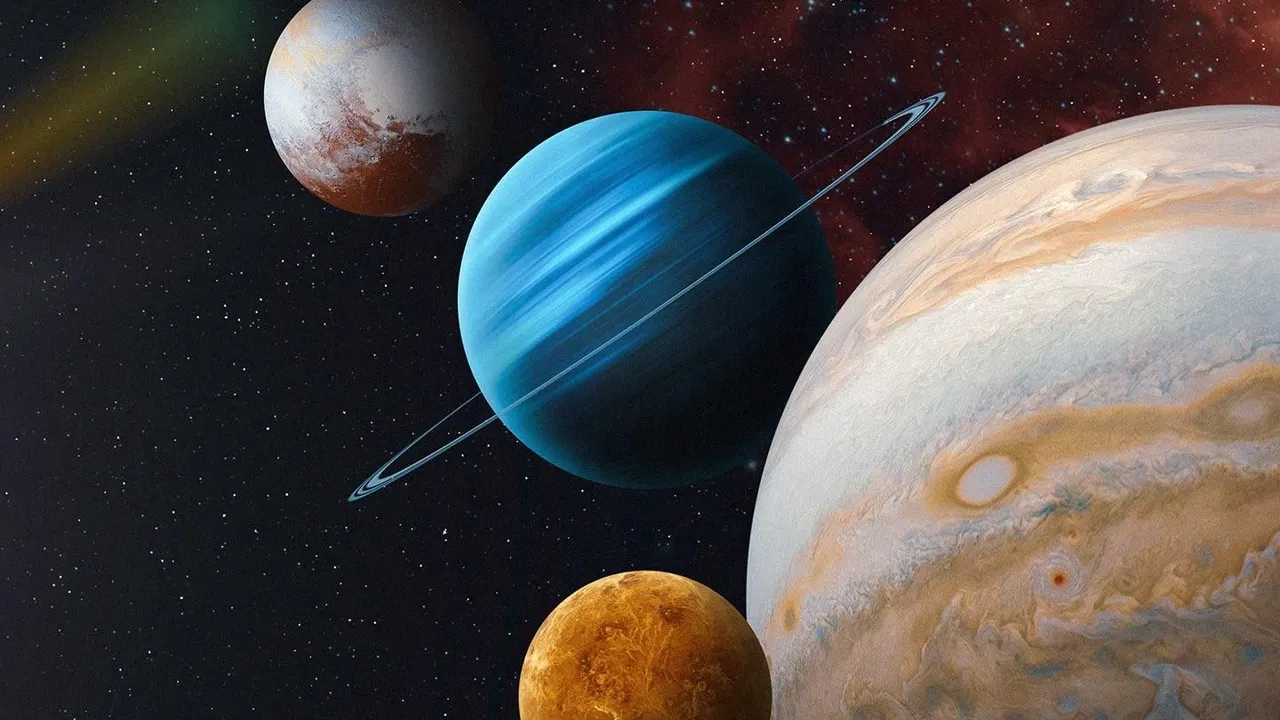
First, what exactly is a Super-Earth? The term refers to a planet with a mass greater than Earth's but significantly less than that of our ice giants, Uranus and Neptune. These worlds, typically two to ten times the mass of our own, are a galactic staple.
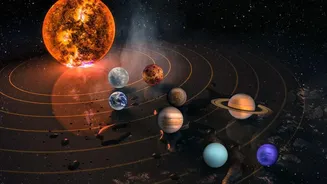
Studies suggest around a third of all known exoplanets fit this description, making them incredibly common. They can be rocky worlds like ours or smaller versions of Neptune, sometimes called 'mini-Neptunes'. Until recently, we mostly found them orbiting close to their stars, but newer findings from 2025 have shown they are also abundant in colder, more distant orbits, similar to where our own gas giants reside. This makes their complete absence from our solar system even more of a puzzle for astronomers. We have small, rocky inner planets and giant outer planets, with a conspicuous gap in between.
Meet the Prime Suspect: Jupiter
For years, the leading explanation for our missing Super-Earth has centered on our solar system’s largest resident: Jupiter. The prevailing theory, known as the 'Grand Tack' hypothesis, paints a picture of a chaotic and violent youth for our planetary family. According to this model, Jupiter didn't form in its current, stable orbit. Instead, it was born further out before beginning a slow, destructive migration inward toward the Sun, at one point reaching as close as the modern orbit of Mars. Imagine a wrecking ball careening through a construction site. Jupiter’s immense gravity would have acted in a similar way, disrupting the delicate disc of gas and dust from which the planets were forming. It would have shepherded vast quantities of planetary building blocks, known as planetesimals, either flinging them into deep space or sending them on a collision course with the Sun.
A Starved Inner Solar System
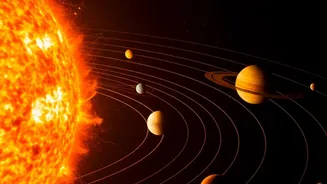
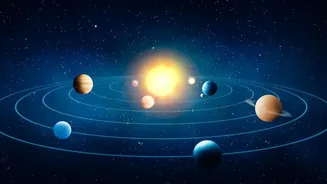
The destructive journey of Jupiter is key to understanding why our inner solar system looks the way it does. The 'Grand Tack' model proposes that after its inward march, Jupiter was caught in an orbital resonance with the newly forming Saturn, which pulled both giants back out to their current positions in the outer solar system. But the damage was done. Jupiter's round trip had effectively cleared out a massive amount of material from the inner solar system. This planetary starvation meant there simply wasn't enough raw material left for a large planet to form. Instead of a massive Super-Earth, the leftovers coalesced into the four smaller, rockier terrestrial planets we know today: Mercury, Venus, Earth, and Mars. In this scenario, Jupiter acted as a cosmic bouncer, preventing a Super-Earth from ever growing close to our Sun.
A New, More Dramatic Theory
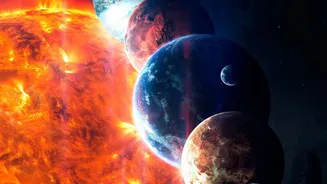
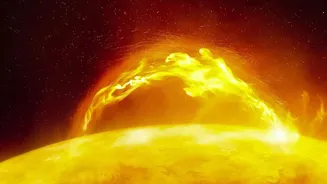
While the Grand Tack hypothesis is a powerful explanation, a brand-new model from September 2026 offers a more dramatic and direct possibility: what if a Super-Earth did form, and our Sun ate it? Researchers led by Professor Mutlu Yildiz at Ege University ran simulations suggesting that a rocky planet five to ten times Earth's mass could have formed early on, only to spiral into our young Sun and be consumed. The evidence for this act of planetary cannibalism is hidden in the Sun's chemistry. Stellar models predict our Sun should have over 100 times more lithium on its surface than it actually does. Swallowing a massive, rocky planet — which is poor in lithium but rich in heavier elements — could perfectly explain this chemical discrepancy, as the planet's material would have been dragged deep into the star's interior. This tantalising new evidence suggests that rather than being prevented from forming, our solar system's Super-Earth might have met a fiery end.