


A Long and Fruitless Wait
For nearly two decades, from 1989 to 2007, Indian mangoes were banned from the United States. The reason was not a lack of demand but a serious agricultural concern. U.S. authorities, specifically the Animal and Plant Health Inspection Service (APHIS),
were worried that pests like fruit flies, which were endemic to parts of India, could hitch a ride on the fruit and devastate American crops. This created a significant trade barrier that kept India, one of the world's largest mango producers, out of the lucrative American market. For years, this impasse seemed unbreakable, leaving Indian exporters frustrated and American consumers unaware of what they were missing.
The Deal Behind the 'Nuclear Mango'
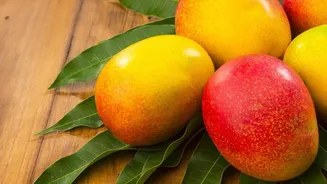
The breakthrough came in the mid-2000s, intertwined with a major geopolitical development: the U.S.-India civil nuclear deal. During a visit to India in 2006, then-U.S. President George W. Bush was reportedly served an Alphonso mango and declared it a "hell of a fruit." This personal endorsement happened alongside high-stakes negotiations. The resulting arrangement was dubbed the "nuclear mango deal" by commentators. In a classic display of trade reciprocity, the U.S. agreed to open its market to Indian mangoes, and in exchange, India made concessions, most famously by allowing the import of iconic American Harley-Davidson motorcycles. It was a clear case of using a culturally significant agricultural product as a sweetener for a broader diplomatic and economic partnership.
The Science of Safe Passage
Lifting the ban wasn't as simple as a presidential declaration. To address the pest concerns, a stringent scientific protocol was required. The agreed-upon solution was irradiation. All commercial shipments of mangoes from India bound for the U.S. had to undergo this phytosanitary treatment at a USDA-approved facility in India. The process involves exposing the mangoes to a minimum absorbed dose of 400 Gray of gamma radiation, a method designed to sterilize any potential pests like fruit fly larvae without making the fruit radioactive or significantly altering its taste and texture. This 'cold process' ensures safety and compliance, with each box of irradiated fruit bearing the international 'Radura' symbol as proof of treatment.
The Other Side of the Bargain
The mango-for-motorcycle swap is the most famous part of the deal, but it highlights the fundamental principle of trade negotiations: reciprocity. For India to gain access for its prized fruit, it had to provide access for a prized American product. India had previously restricted Harley-Davidson imports due to emissions standards, which had to be amended for bikes over 800cc as part of the agreement. This quid pro quo demonstrated that the U.S.-India trade relationship was maturing, moving toward a more transactional and balanced partnership. Each side had to give something to get something, using mangoes and motorcycles as symbolic bargaining chips in a much larger economic game.
The Sweet Taste of Mango Diplomacy
Since the first shipment arrived in 2007, the export of Indian mangoes to the U.S. has steadily grown, celebrated by the large Indian diaspora and an increasing number of curious American consumers. The phenomenon of "mango diplomacy" has become a real tool of soft power, with Indian consulates hosting mango festivals and promotional events across the U.S. to showcase varieties like the Alphonso and Kesar. These events generate excitement and strengthen cultural ties. While challenges in scaling up infrastructure and cold-chain logistics remain, the initial bargain has proven to be a win-win, turning a simple fruit into a powerful and delicious symbol of the complex, multifaceted relationship between the two nations.