





Beyond the Hills of Mahabaleshwar
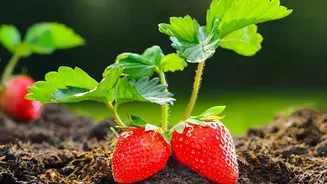
For decades, strawberry cultivation in India was synonymous with one place: Mahabaleshwar. This hill station in Maharashtra, with its cool climate and well-drained soil, accounts for about 85% of the country's strawberry production. However, this geographical
dependence makes the crop vulnerable to unpredictable weather, which can wipe out a season's harvest and investment. But now, a new wave of agritech innovation is breaking this dependency. Farmers and entrepreneurs are proving that strawberries can be grown profitably in diverse climates across the country, from the plains of Uttar Pradesh to the nurseries of Madhya Pradesh, by fundamentally changing how the crop is grown.
The Rise of Precision Farming
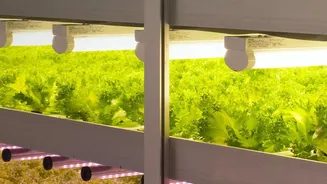
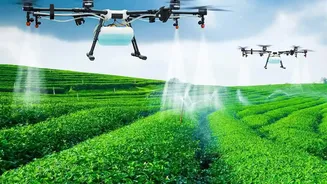
The secret to growing a temperate fruit in a sub-tropical climate lies in precision farming. This modern agricultural concept uses technology to control the growing environment with immense accuracy. Instead of planting in open fields, farmers are using protected polyhouses and soilless methods like hydroponics and aeroponics. In hydroponics, plants are grown in a nutrient-rich water solution, while aeroponics involves misting the suspended roots with nutrients. These systems allow for precise control over water, nutrients, and temperature. Agritech startups offer IoT-enabled sensors that monitor soil moisture and weather conditions in real-time, triggering automated drip irrigation systems only when needed. This not only conserves 70-80% more water than traditional farming but also significantly reduces the risk of soil-borne diseases.
The Power of Plant Science
Alongside precision hardware, plant science is playing a critical role. Currently, Indian farmers rely heavily on imported strawberry varieties from places like California and Spain. These plants are not always best suited to local conditions. To solve this, Indian agricultural universities are now at the forefront of developing indigenous, climate-resilient cultivars. Researchers are using techniques like low-dose gamma irradiation to induce genetic mutations, aiming to fast-track the creation of a strawberry variety that can tolerate Indian heatwaves while still producing large, flavourful fruit. Furthermore, plant tissue culture is being used to propagate virus-free and robust saplings, ensuring that farmers start with the healthiest possible plants, which is crucial for a successful and high-yield harvest.
A More Profitable Harvest
This combination of science and technology is transforming the economics of strawberry farming. While the initial investment in a polyhouse or hydroponic system can be high, the returns are compelling. Precision farming allows for a much higher density of plants per acre—up to 30,000 in a soilless polyhouse compared to 20,000 in an open field. Yields increase dramatically, with farmers reporting harvests of over a kilogram per plant over a season. By eliminating middlemen and connecting directly with markets through digital platforms, farmers are securing better prices. Well-managed farms have reported net profits of ₹10-15 lakh from just half an acre, making it one of the most lucrative horticultural crops.
Challenges on the Vine
The path to nationwide strawberry abundance is not without its obstacles. The primary barrier for many small and marginal farmers is the significant upfront cost of setting up high-tech farming systems. Running these operations also requires a new set of skills in technology and agronomy, from managing nutrient solutions to operating monitoring software. Pests and diseases, while reduced, can still pose a threat, requiring careful environmental management to prevent outbreaks. However, government subsidies for polyhouses and growing interest from venture capital are helping to mitigate these challenges, making modern farming more accessible.