



A Child of Fire Awakens
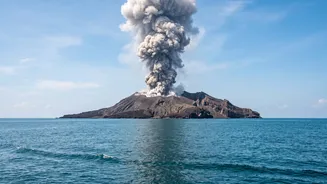
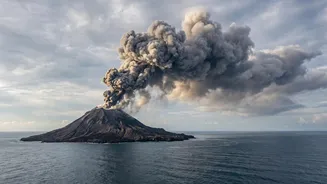
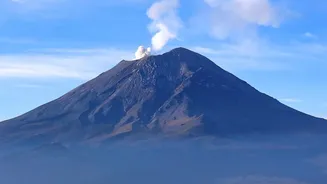
Anak Krakatau, which translates to “Child of Krakatoa,” is a volcanic island located between the Indonesian islands of Java and Sumatra. It is the geological successor to the infamous Krakatoa, whose cataclysmic 1883 eruption was one of the most destructive
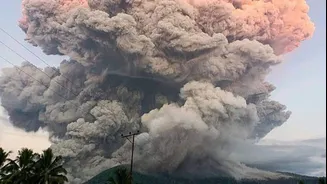
volcanic events in recorded history, killing over 36,000 people, mostly due to massive tsunamis. The current volcano emerged from the sea in 1927 and has been intermittently active ever since, a constant process of creation and destruction. In early September 2026, Anak Krakatau entered a new eruptive phase, sending plumes of volcanic ash tens of thousands of feet into the atmosphere. This activity prompted Indonesian authorities to raise the alert level and led to the closure of at least seven airports, including Jakarta's main Soekarno-Hatta International Airport, affecting hundreds of thousands of passengers and thousands of flights.
Why Ash and Aircraft Don't Mix
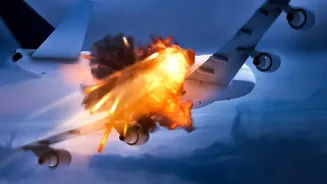
To a passenger, a volcanic ash cloud might look like a regular weather cloud, but for an aircraft, it's a minefield of microscopic dangers. Volcanic ash is not soft like the ash from a fire; it is made of tiny, jagged particles of rock and glass. When a plane flies through this abrasive material at high speed, the effect is like sandblasting. It can scour cockpit windows, rendering them opaque, and erode critical components like wings and turbine blades. The most severe danger occurs inside the jet engines. Modern engines operate at temperatures higher than the melting point of volcanic ash. When ash is ingested, it melts and then fuses onto cooler parts of the engine, such as turbine blades and fuel nozzles. This can disrupt airflow, causing the engine to surge or lose power completely—a condition known as a “flameout,” which has led to several near-catastrophic incidents in aviation history.
The Global Alert System
The threat is so significant that a global system was established to keep aircraft far from these hazardous clouds. This network consists of nine Volcanic Ash Advisory Centers (VAACs), each responsible for a specific region of the globe. Operated by national weather services, such as the UK's Met Office or the US National Weather Service, these centers work around the clock. When a volcano erupts, the responsible VAAC uses satellite data, pilot reports, and sophisticated computer models to predict where the ash cloud will travel. They then issue Volcanic Ash Advisories (VAAs) to air traffic controllers, airlines, and meteorological offices. This information allows airlines to reroute flights, delaying or cancelling them if necessary, to ensure that aircraft never enter a zone where ash concentration could be dangerous. The recent flight disruptions in Indonesia are a direct result of this safety system working as intended.
A Persistent Regional Hazard
Anak Krakatau's location in the Sunda Strait places it directly beneath some of the most vital air routes in Southeast Asia, connecting major hubs in Singapore, Jakarta, and Kuala Lumpur with the rest of the world, including routes to and from India, Australia, and the Middle East. The 2010 eruption of Iceland's Eyjafjallajökull volcano demonstrated how a single eruption could paralyze air travel across a continent, and the risk in Southeast Asia is just as potent. Indonesia sits on the Pacific “Ring of Fire” and has more active volcanoes than any other country. The ongoing activity of Anak Krakatau, which caused a deadly tsunami after a flank collapse in 2018, underscores the dynamic and unpredictable nature of the region's geology. For airlines and passengers, this means that volcanic activity is not a rare anomaly but a constant factor that must be managed.