



The Planet's Deepest Scars
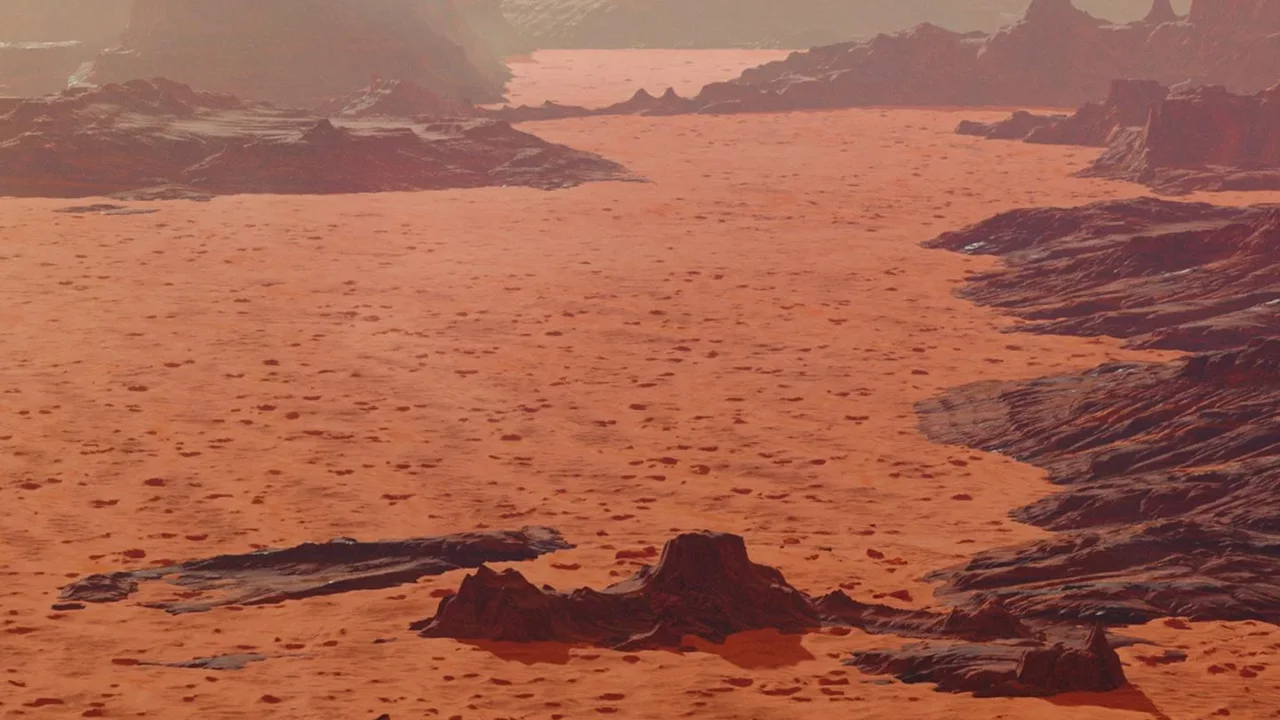
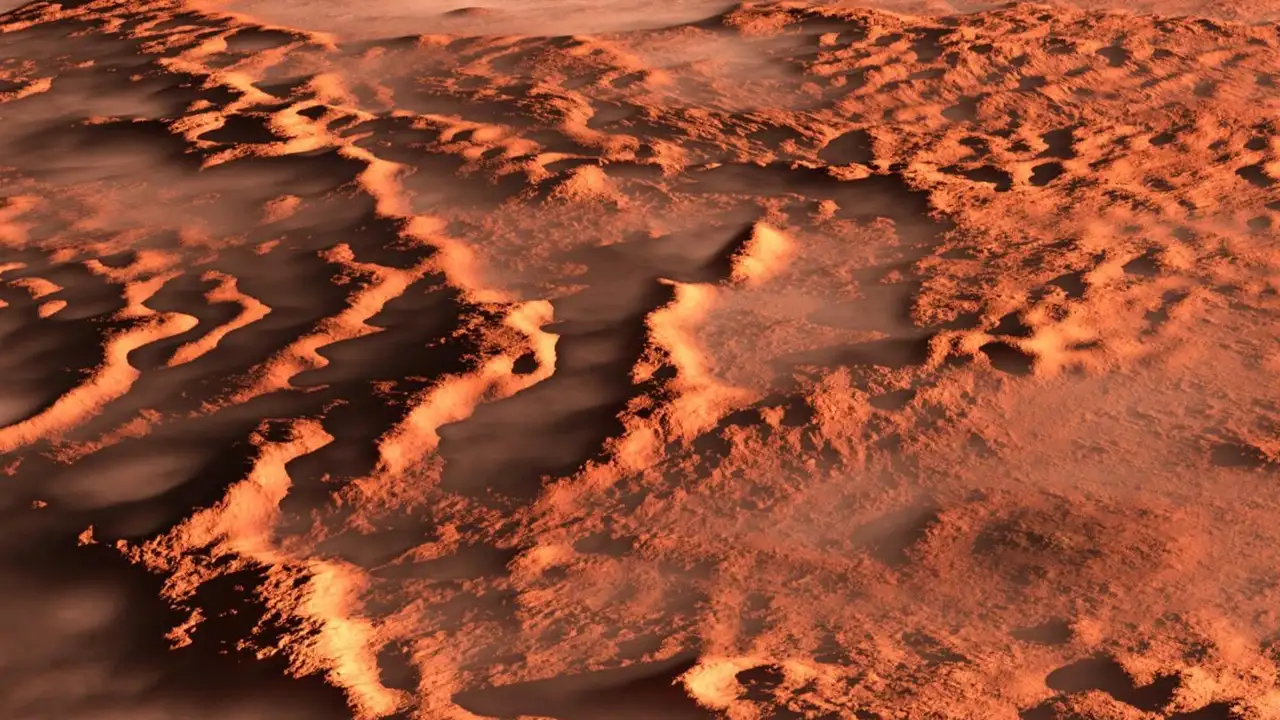
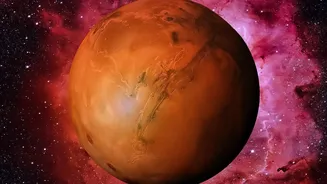
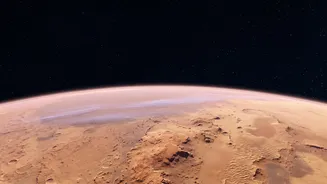
Hellas Planitia and Argyre Planitia are not just craters; they are colossal scars from cosmic impacts that occurred around four billion years ago. Hellas, in particular, is one of the largest and deepest impact structures in the entire solar system, spanning
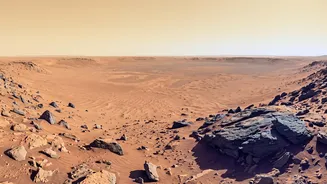
over 2,200 kilometers in diameter and plunging more than 8 kilometers below the Martian 'sea level'. This extreme depth is crucial. The atmosphere at the bottom of Hellas is nearly twice as dense as it is at the surrounding surface. This creates a unique micro-environment where atmospheric pressure is higher, temperatures can be warmer, and conditions are occasionally right for liquid water to be stable, at least for brief periods. These two basins, therefore, act as natural laboratories for studying atmospheric processes under conditions that exist nowhere else on the planet.
Mysterious Atmospheric Waves
Scientists using data from orbiters like the Mars Reconnaissance Orbiter (MRO) have been studying the Martian atmosphere in unprecedented detail. One phenomenon of great interest is atmospheric gravity waves—not to be confused with gravitational waves from space. These are ripples in the air caused when stable air flow is disturbed, often by passing over massive geological features like mountains or crater rims. On Mars, where topography is extreme and winds are fierce, these waves are far more powerful than on Earth. Recent research shows that these waves play a dominant role in circulating air in Mars's middle atmosphere, transferring heat and momentum in ways that global climate models have struggled to capture. The areas around the Hellas and Argyre basins show particularly complex gravity wave activity, suggesting these giant depressions are major drivers of atmospheric dynamics.
Challenging Existing Models
Current General Circulation Models (GCMs) for Mars are sophisticated, but they often struggle with the planet's localized extremes. For instance, models have had difficulty explaining the formation of carbon dioxide ice clouds at altitudes where the atmosphere was predicted to be too warm. Studies have shown that intense gravity waves can create pockets of air cold enough for CO2 to freeze, a phenomenon observed near large topographic features. The unique temperature and pressure profiles within Hellas and Argyre create conditions that are outliers in the global climate system. By observing how dust storms are generated in these basins and how seasonal temperature shifts occur, scientists can gather data that directly tests and challenges the assumptions built into their models. For example, the way heat is retained or lost at the bottom of these deep basins provides a critical data point for how the thin Martian atmosphere really behaves.
Why Better Climate Models Matter
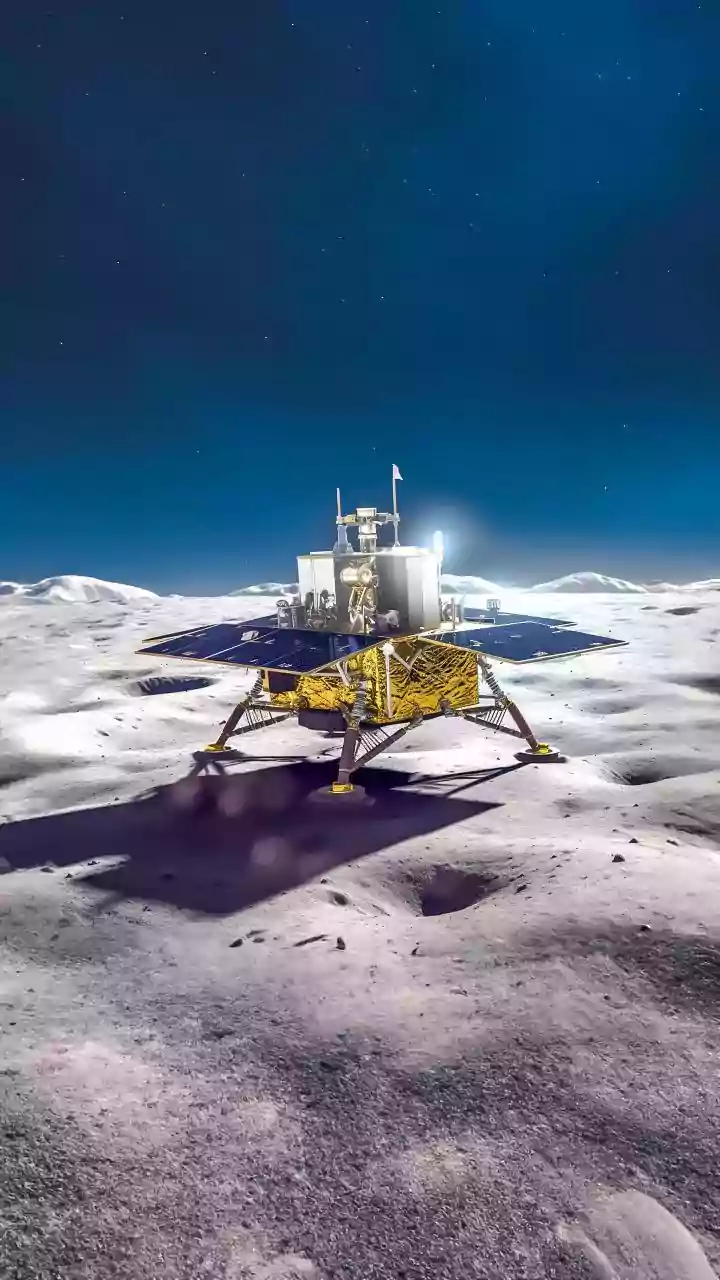
Refining these climate models is not just an academic exercise. For future robotic and human exploration of Mars, accurate weather forecasting is a matter of mission survival. Better models can predict the formation and movement of planet-circling dust storms, which can threaten solar-powered rovers and future habitats. They can help identify regions where resources like water ice might be most accessible or where conditions for landing a spacecraft are safest. Understanding the intricacies of Mars's climate, from the global circulation down to the microclimates within craters like Hellas, is fundamental to planning the next generation of exploration. The discoveries being made about the temperature patterns and atmospheric waves in these giant basins provide the ground truth needed to build more robust and reliable predictive tools.