

The Art of Moving Meditation
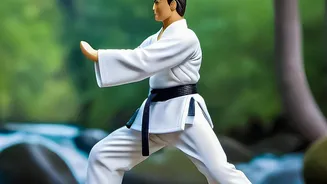
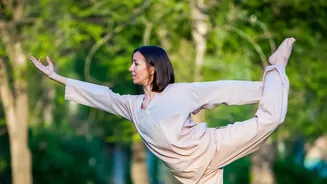
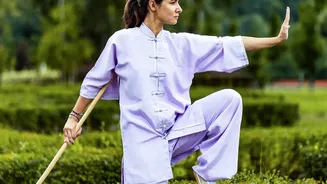
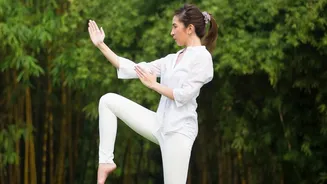
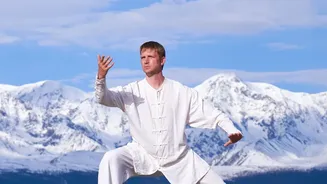
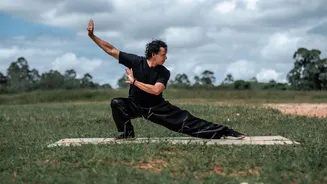
At first glance, a Tai Chi class can be puzzling. Participants glide through a series of graceful, unhurried movements, their focus inward, their breath steady. It looks like a dance in slow motion. This slowness is not incidental; it is the core principle
of the practice. Originally a Chinese martial art, Tai Chi is now predominantly practiced for health and wellness, often described as a form of moving meditation. The goal is to unite mind and body, promoting a state of relaxed awareness known as 'song'. This concept goes beyond simple relaxation; it is an active state of releasing unnecessary physical and mental tension, allowing movements to become fluid, connected, and reflexive. By slowing down, practitioners are forced to become aware of every detail of their posture, balance, and breathing—details often missed in the rush of daily life or faster exercises.
Building Strength from Stillness
It’s a common misconception that slow means easy or ineffective. In Tai Chi, moving slowly forces your muscles to work harder and with greater control throughout a full range of motion. While you aren't lifting heavy weights, your body itself becomes the source of resistance. Studies from institutions like Harvard Health have shown that regular practice can build both upper and lower-body strength, comparable to brisk walking or even some forms of resistance training. The deliberate, weight-shifting motions are particularly effective at improving balance and proprioception—your body's ability to sense its position in space. This trains the small, stabilizing muscles in the joints and core, which is crucial for preventing falls, especially as we age.
A Workout for a Restless Mind
Perhaps the most significant rewards of Tai Chi are mental. The intense focus required to perform the slow, coordinated movements leaves little room for a wandering mind. This fosters a deep state of mindfulness, calming the nervous system and triggering a relaxation response. Research has shown this can lead to lower blood pressure, reduced levels of the stress hormone cortisol, and an improved mood. In a culture that prizes multitasking and constant stimulation, Tai Chi teaches the art of single-minded focus. It cultivates patience, not just during the session, but as a skill that can be carried into everyday life. By learning to move with deliberation and without rushing, you are training your brain to remain calm and centered amidst chaos.
An Antidote to 'Faster Is Better'
High-Intensity Interval Training (HIIT) and other fast-paced workouts promise maximum results in minimum time. While effective for cardiovascular fitness, they can also be a source of physical and mental stress, spiking cortisol levels. Tai Chi offers a different path to well-being. It is not about pushing your body to its absolute limit, but about working at a sustainable level—often called the "70% rule"—that allows the body to heal and strengthen without strain. While HIIT might burn more calories in a shorter burst, Tai Chi's benefits are cumulative and long-lasting, focusing on joint health, stress reduction, and creating a practice that can be sustained for a lifetime. It serves as a necessary and powerful antidote to our cultural impatience, reminding us that sometimes, the greatest gains come from slowing down.