





The New Bullish Forecast
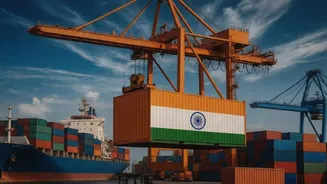
In its latest World Economic Outlook report released in October 2026, the IMF projected that India's economy will grow by 7.0% in the current fiscal year (2026-27). This is a substantial upgrade from its earlier projection of 6.4% made in July. The optimism
extends further, with the forecast for the next fiscal year (2027-28) also pegged at a robust 7.0%. This upgrade is not just a statistical adjustment; it reflects a stronger-than-expected momentum in India’s economic engine, even as many other parts of the world grapple with uncertainty. The revision comes shortly after the Reserve Bank of India (RBI) also raised its own growth estimate, suggesting a broad consensus among key financial institutions about the country's economic health.
What's Driving the Upgrade?
The IMF has pointed to several key factors behind its renewed optimism for India. The primary driver is resilient domestic demand. This means Indian consumers and businesses are continuing to spend and invest, creating a powerful internal engine for growth that is less dependent on global trends. Another significant factor is the strength of India's services sector, which continues to show robust activity and contributes heavily to the overall Gross Domestic Product (GDP). The report also acknowledges India's favourable demographics, an expanding domestic market, and the positive impact of ongoing structural reforms as foundational strengths that support sustained growth potential over the medium term.
India's Standing in a Slowing World
India's upgraded forecast is particularly noteworthy when placed in its global context. The IMF projects global growth to slow to 3.1% in 2026, highlighting a fragile and uneven recovery worldwide. India's 7.0% growth stands in stark contrast to other major economies. For instance, China's economy is forecast to grow by 4.5% in 2026. Advanced economies like the United States are projected to grow at 2.3%, while Germany and the United Kingdom are both expected to expand by just 1.3%. This divergence clearly positions India as a key driver of global growth. While many emerging markets are seeing their forecasts downgraded, India is an outlier, demonstrating resilience in the face of global headwinds like geopolitical tensions and volatile energy prices.
Navigating the Risks Ahead
Despite the positive outlook, the IMF report also highlights potential risks that could challenge India's growth trajectory. Persistently high global oil prices remain a key concern for an energy-importing nation like India. The IMF's forecast assumes an average crude oil price of nearly $96 per barrel in 2026, a significant increase from the previous year. Furthermore, geopolitical uncertainties, including the conflict in the Middle East, could disrupt global supply chains and fuel inflation, putting pressure on the economy. While domestic demand has been a strong buffer, a prolonged global slowdown could eventually impact India's export sector. Managing inflation, which is projected to average around 5% in the current fiscal year, will also remain a crucial policy focus for the government and the RBI.